




Understanding Why Drivers Are Satisfied With Their Jobs
Four of five school bus drivers are satisfied or very satisfied with their jobs, according to a recent SBF survey. But what’s behind this high ...

Four of five school bus drivers are satisfied or very satisfied with their jobs, according to a recent SBF survey. But what’s behind this high rate of job satisfaction?
We talked with several bus drivers to dig deeper into their motivations for taking on such a tremendous responsibility. With all of the challenges facing school bus drivers — behavior management, split shifts, relatively low pay, training requirements, conflicts with parents — they must have a special commitment to their jobs. Here’s what we discovered.
Drawn to children
By and large, the greatest level of contentment for most drivers comes from the children they transport daily. For many, children are their primary motivation for returning to work each day.
“I like working with kids; it’s rewarding,” says Marthe Konczal, a 17-year school bus driver for the Manchester (N.J.) Board of Education. “I wouldn’t be doing anything other than what I’m doing.”
Konczal says few people understand her love for the job. “People are intimidated by things they hear on the news about bus drivers,” she says. “We get a bad rap.”
Cathy Jackson, a special-needs driver at York (Neb.) Public Schools, says she constantly fights the public’s negative image of the job. “I’ve had people say they wouldn’t take my job in a million years,” she says. “But you know, there’s nothing nicer than to walk into the Wal-Mart store and have some kid come up to you and say, ‘Hi, bus driver! Mom, this is my bus driver.’”
Anne Paradis drives a school bus for Harford County Public Schools in Bel Air, Md. She enjoys the children, too, but finds other aspects of the job just as fulfilling. “I like the kids,” she says, “but I also like the pay and the convenience of the split shift.”
Paradis, who has driven buses for five years, started a real estate business and drives to support herself as it grows. “I can’t afford to quit driving my bus because I am not making enough in real estate yet,” she says.
Tools of the trade
Job fulfillment, in many cases, requires that drivers grasp the psychology of the students they shuttle. Understanding the reasons why children do or say the things they do helps some drivers better appreciate the children. This makes it easier for them to appreciate their jobs.
“I think that you have to have an appreciation for the different ages and the kinds of behavior anticipated at that age with children,” says Gary Coller, a nine-year driver for Wyomissing Area School District in southeast Pennsylvania. “You have to also understand that part of your job as an adult is to guide those children through those rough spots, whatever they may be. You have to know kids.”
Coller is a retired schoolteacher who uses his driving job to pay for health insurance premiums and vacations.
Like teachers, many bus drivers have grade levels they prefer.
“Elementary and high school,” says Michael Fitzpatrick, transportation director and driver for Liberty Public Schools in Mounds, Okla. “I’d leave out the middle school students. They’re the worst bunch of kids you can transport. The little ones will pretty much do what you want them to do. The ones in middle or junior high tend to buck the system. The high school students will sit back and mind their own business.”
{+PAGEBREAK+} Although dealing with middle school students often calls for drastic measures, drivers have come up with methods that generally work for them when it comes to disciplining children.
“I think it’s a combination of everybody working together,” says Ellen Pruim, a driver at the Avon Maitland School District in Seaforth, Ontario, in Canada. If everybody works together and supports the driver, then everything works much better.”
“I don’t let the unruly situations happen,” says Coller. “I clearly present the expectations to the children when we start each year. If there’s any deviation from these rules, then I’ll simply pull the bus over to the side of the road and we’ll go over that rule. My elementary school children will correct whatever’s happening within five seconds.”
Support levels vary
Drivers contend that there’s nothing worse than having useful suggestions for general improvements swept under the rug by upper management.
“A lot of times we come in with suggestions, and they’re met with ‘Oh, yeah, we tried that. It doesn’t work, good bye,’” says Pruim. “Then there are other times where our suggestions are taken into consideration. Sometimes I wonder if it’s about the mood they’re in at the time.”
Coller agrees. “Two of us drivers are looking into recertification work,” he says. “We’ve asked administration at the school district to look into it and we get pushed off with ‘Yes, yes, yes. We’ll look at that,’ and they don’t. That becomes frustrating when they know that it’s a safety-related issue. It gets pushed not only to the back of the burner, but to the back of the stove.”
Some transportation directors such as Liberty Public Schools’ Fitzpatrick are in the trenches fighting alongside drivers. He believes this elbow-to-elbow understanding of his troops provides him with greater insights into what they need from teachers, building supervisors and district administrators. Needing is not the same as receiving, however.
“We’ll sit out here and discuss things that the higher-ups need to be aware of,” Fitzpatrick says. “We make them aware of some things, but they don’t always follow through with what we suggest.”
Satisfaction isn’t always guaranteed in the life of a school bus driver.
More Management
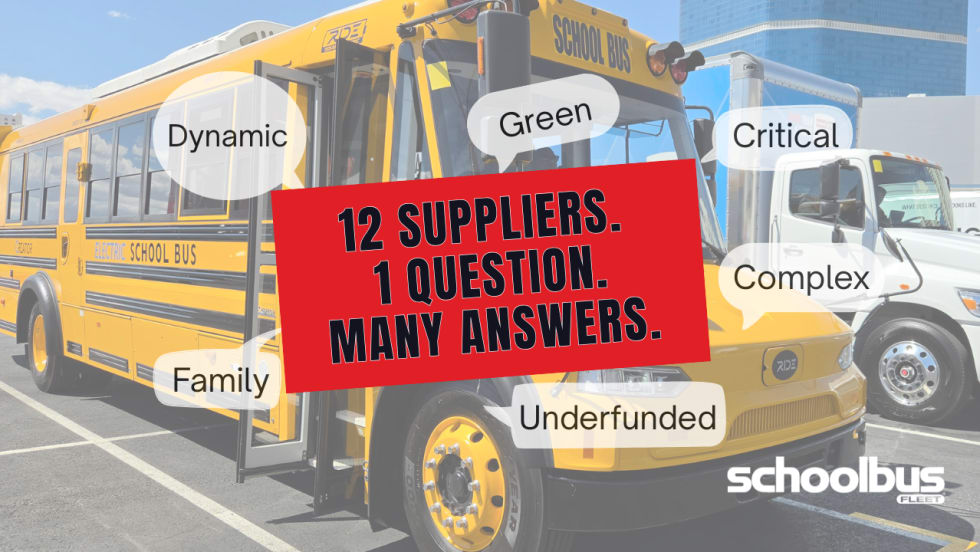
13 Industry Leaders Describe School Transportation in One Word
What word best describes the school bus industry today? We posed that question to over a dozen manufacturers, resulting in a revealing mix of perspectives on the challenges and opportunities ahead.
Read More →
Tyler Technologies Adds New AI, Transactions Leadership Roles
Two company executives are promoted to newly created C-suite positions to accelerate the company's long-term growth in both artificial intelligence and payments.
Read More →
Pro-Vision Acquires Convoy Technologies
The deal aims to broaden customer relationships and adds specialized vehicle video capabilities for commercial fleets.
Read More →


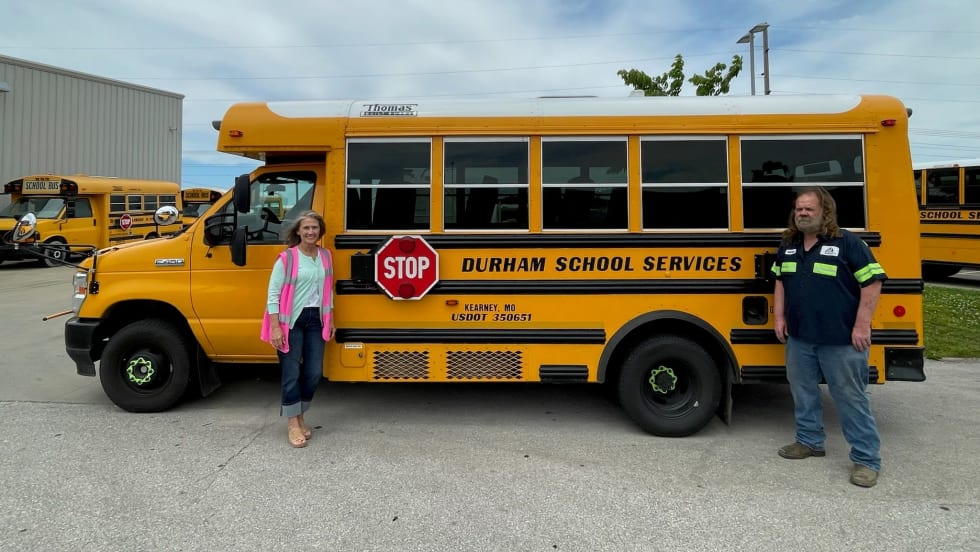
Durham School Services Maintenance Teams Earn Missouri Fleet Excellence Awards
Eight of the contractor’s school bus fleets achieved a distinction few maintenance teams earn during the state’s rigorous annual inspection program.
Read More →
How Incentives, AI, and Energy Markets Are Reshaping School Transportation
Sit down with Joe Annotti of TRC Companies to talk district grant funding, utility challenges, AI, and why school buses are evolving from transportation assets into energy assets.
Read More →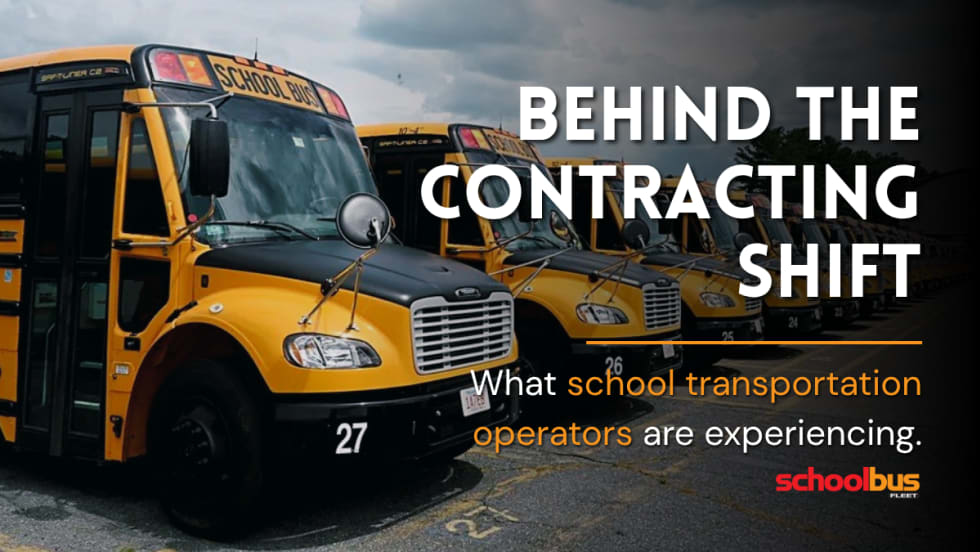
Inside the Contracting Shift: What School Transportation Operators Are Seeing Now
School transportation contractors weigh in on recent trends, costs, driver shortages, and the rise of multimodal student transportation.
Read More →
The No-Idling School Bus AC System
Take a peek at ExoAir Systems’ battery-powered cooling solution designed to run for up to 10 hours without the engine on, reducing fuel use and improving comfort for drivers and students.
Read More →
Geotab on Three Major Trends in School Transportation
School bus fleets are becoming more proactive than ever. From AI driver alerts to vehicle-to-grid opportunities, Geotab outlines the biggest technology trends transforming school bus operations.
Read More →
Gatekeeper Lands Major School Bus Deals as Revenue Surges
The video solutions provider announces contracts with Atlanta Public Schools and other fleet operators as it records quarterly revenue growth and expanding subscription business.
Read More →
Building Leaders Who Last: Creating a Successful Mentorship Program in Student Transportation
Discover five strategies for building an effective mentorship program to strengthen leadership development and support staff retention.
Read More →