





Training for the Unexpected: Michigan’s Defensive Driving Certification
Emergency Braking: Putting a 'Stop' to Common Misconceptions
Emergency braking saves lives. Find out how to train school bus drivers to handle critical situations with confidence and control.
June 1, 2003
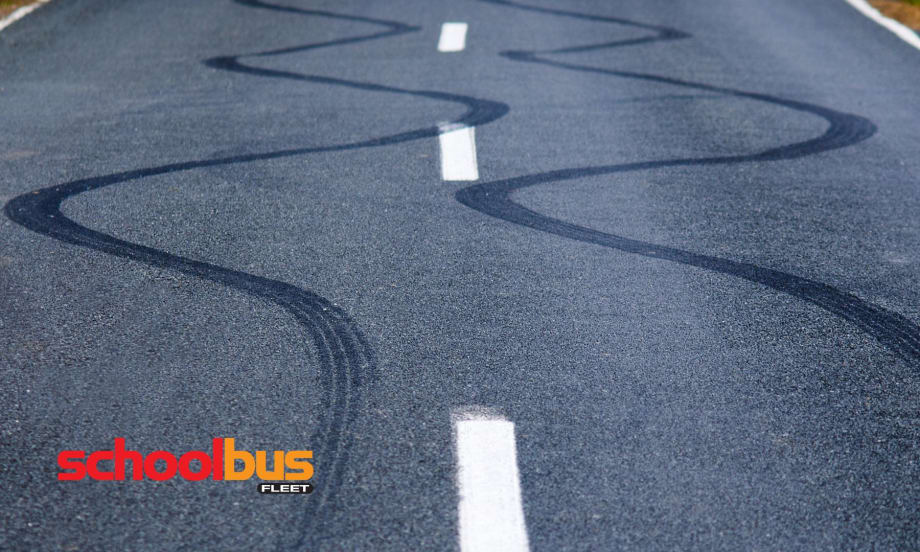
Take a break to make sure your driver's understand the importance of proper braking procedures.
Photo: SBF/Canva
6 min to read
Major corporations spend thousands of dollars trying to define the training needs of their employees. One of the best ways to find out how well your staff is trained or how well they understand lessons taught in your training classes is to simply ask them when you see them around the bus garage.
Take emergency braking for example. If you were to ask five of your drivers to describe emergency braking, you might be surprised to hear five different answers. Emergency braking is probably one of the least known and most misunderstood operations drivers have to perform while behind the wheel of a school bus. Truth be told, emergency braking is a critical factor in accident avoidance, but getting that word to our employees is often overlooked.
Picking up bad habits
Over the past few years as I have lectured at conferences or driver safety meetings, I have often asked attendees the following question: "Who has ever had to make a life-or-death emergency stop in their school bus?" On the average, only two or three drivers out of every thirty raise their hand. Using those figures as a guideline, less than 10 percent of the drivers I have surveyed have ever had to make an emergency stop.
To better understand how a school bus driver may not be prepared, one only needs to study how a driver evolves into a seasoned veteran. New school bus drivers are often tentative and even a bit nervous in their driving styles. It is not uncommon to see new drivers complete an entire route and never exceed 20 mph. As time passes and the driver becomes more familiar with equipment and routes, confidence and speed increase proportionately.
It is around this time when the rookie driver’s attitude changes, and driving the bus becomes easy. Speed can increase to the 40 to 50 mph range and months or even years go by. The driver then has 10 or 15 year’s driving experience under his belt, and he believes there is no situation that his driving skills cannot handle. But he has never had to make a sudden, serious emergency stop. And I am not talking about stopping unexpectedly after passing a student’s stop. I am referring to a life-or-death situation. If school bus drivers had the awesome experience of bringing their massive vehicle to an emergency stop at 50 mph, they would reevaluate their driving practices.
The bottom line is, it has become easy to drive fast in modern commercial vehicles due to increased horsepower ratings, automatic transmissions and driver comforts. However, there have been few changes in road conditions such as water, snow and ice or the predictability of pedestrians or other motorists. These can make for a dangerous road environment.
Improper braking methods
How do you train drivers on emergency braking procedures? First, drivers must be able to identify the correct and incorrect braking procedures. One emergency braking procedure is brake lockup. This occurs when the bus driver panics and holds the brake pedal to the floor in a vehicle not equipped with anti-lock brakes. When lockup occurs, the driver loses all operational and steering control because of a loss of friction between the vehicle’s tires and the road surface.
When brakes lock up, most of the friction is lost, causing the school bus to skid out of control. If the driver attempts to steer while skidding, the bus may continue its forward motion while the brakes remain locked. Also, the friction while sliding is greatly decreased and it takes a much greater distance to stop. Therefore, brake lockup is not a safe braking procedure.
Another braking procedure is stab braking, which occurs when the driver continually activates the brake system with quick brake depressions – also known as pumping the brakes. With stab braking, there are multiple brake applications in a short period of time, thereby depleting the air supply on air brake-equipped vehicles. This can cause the low air warning devices to activate, or in a worse case scenario, the emergency/parking brakes engage. Emergency/parking brake activation will result in brake lockup. Low air warning devices will begin to operate at 60 pounds per square inch. Stab braking is by far better and safer than lockup, but it is still not the most efficient, safe braking procedure.
Two better methods
Threshold braking is the most preferable form of emergency braking. It is accomplished when the driver depresses the brake pedal until just prior to wheel lockup. Then, the driver should ease up on the brake pedal, keeping the tires rotating, while maintaining friction. When the driver believes the wheels are turning again, the procedure is repeated until the vehicle stops. This process can greatly reduce accidents through greater control. But human nature causes drivers who have not practiced this procedure to hold the brake pedal down, resulting in lockup. Basically, threshold braking is the manual equivalent of an anti-lock braking system (ABS).
ABS is now the standard in vehicles around the world. ABS brakes require applying steady even pressure on the pedal. It is critical that the driver identifies ABS-equipped vehicles prior to the movement of the bus. I recently taught a safety meeting at a district that had a number of new buses less than six months old. Very few drivers knew the buses were ABS equipped, and even fewer knew how the system worked.
Training and technology
With advances in technology, school buses have become more complex, while training hours and budgets have fallen behind in some departments. With this in mind, how do we take steps to ensure proper emergency braking training? First, all buses used for braking training should be in top condition. They should also be vehicles used on daily routes and not rarely-driven spares.
Many schools have large open driveways, entrance roads or parking areas that can be used. School bus drivers should be able to drive the bus in these areas at or near route speeds. A driver instructor riding with the driver can indicate when the unexpected stop should occur by loudly demanding, "Stop now!" A traffic cone can also be used to mark a spot where a sudden stop should occur.
This controlled environment will give drivers the opportunity to feel firsthand how the vehicle operates with threshold braking or ABS braking. Drivers should be able to try at least three of each type of stop in a training session and in various seasons to factor in weather conditions such as rain, sleet or snow.
Videotaping for safety
Aside from being a valuable training asset for future safety meetings and future generations of drivers, video tapes of these sessions can be a valuable insurance policy. A clearly documented training program including video can go a long way in a legal defense or insurance matter where driver training is in question.
As another thought, school bus manufacturers might consider putting together a short "driver's manual" for new buses. Most buses are delivered with pages of technical data, which finds its way to the mechanic’s bookshelf. A bullet-pointed "at a glance" booklet highlighting key features and operation points of a bus could raise driver understanding and reduce thousands of dollars in warranty repair costs to bus manufacturers. Any takers?
Subscribe to Our Newsletter
More Management
13 Industry Leaders Describe School Transportation in One Word
What word best describes the school bus industry today? We posed that question to over a dozen manufacturers, resulting in a revealing mix of perspectives on the challenges and opportunities ahead.
Read More →
Tyler Technologies Adds New AI, Transactions Leadership Roles
Two company executives are promoted to newly created C-suite positions to accelerate the company's long-term growth in both artificial intelligence and payments.
Read More →
Pro-Vision Acquires Convoy Technologies
The deal aims to broaden customer relationships and adds specialized vehicle video capabilities for commercial fleets.
Read More →


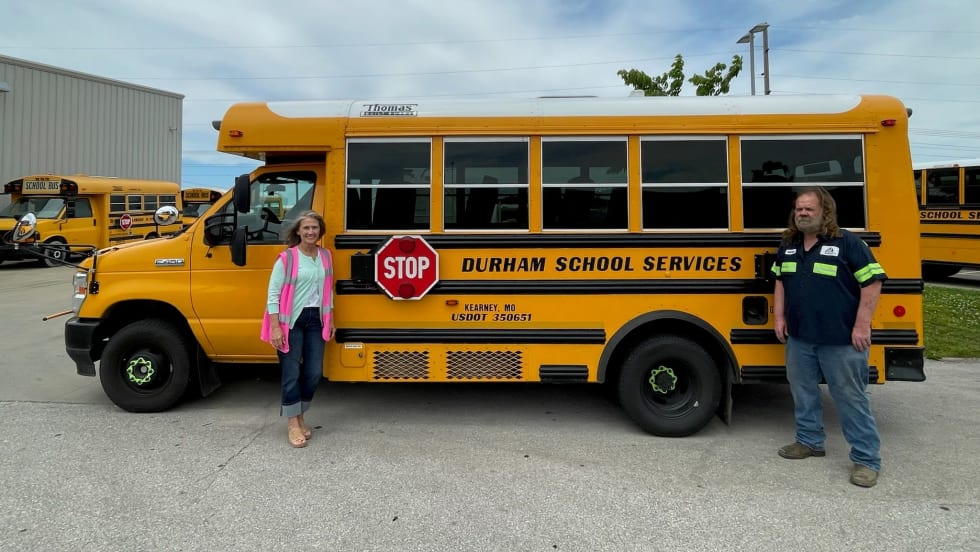
Durham School Services Maintenance Teams Earn Missouri Fleet Excellence Awards
Eight of the contractor’s school bus fleets achieved a distinction few maintenance teams earn during the state’s rigorous annual inspection program.
Read More →
How Incentives, AI, and Energy Markets Are Reshaping School Transportation
Sit down with Joe Annotti of TRC Companies to talk district grant funding, utility challenges, AI, and why school buses are evolving from transportation assets into energy assets.
Read More →
Inside the Contracting Shift: What School Transportation Operators Are Seeing Now
School transportation contractors weigh in on recent trends, costs, driver shortages, and the rise of multimodal student transportation.
Read More →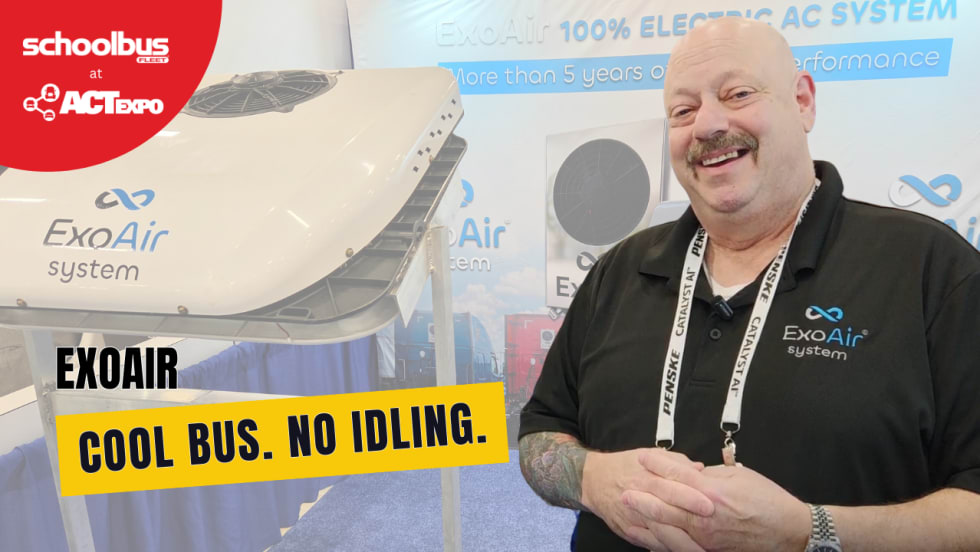
The No-Idling School Bus AC System
Take a peek at ExoAir Systems’ battery-powered cooling solution designed to run for up to 10 hours without the engine on, reducing fuel use and improving comfort for drivers and students.
Read More →
Geotab on Three Major Trends in School Transportation
School bus fleets are becoming more proactive than ever. From AI driver alerts to vehicle-to-grid opportunities, Geotab outlines the biggest technology trends transforming school bus operations.
Read More →
Gatekeeper Lands Major School Bus Deals as Revenue Surges
The video solutions provider announces contracts with Atlanta Public Schools and other fleet operators as it records quarterly revenue growth and expanding subscription business.
Read More →
Building Leaders Who Last: Creating a Successful Mentorship Program in Student Transportation
Discover five strategies for building an effective mentorship program to strengthen leadership development and support staff retention.
Read More →