




Budgeting for Head Start Transportation: A Process and a Plan
Budgeting is a process that is designed to develop a plan, and that plan should reflect the operational goals to be achieved during the fiscal year co...
Budgeting is a process that is designed to develop a plan, and that plan should reflect the operational goals to be achieved during the fiscal year covered by the budget. Budgets may be classified as “general” (usually for operating purposes) or “capital” (usually for facilities, vehicles and other equipment). Occasionally, special budgets will be prepared for specific activities funded by grants or other special funding sources. Budgets should reflect all the costs associated with transportation activities.
Preparing a budget for Head Start transportation operations is really no different in concept from developing a budget for any other transportation operation. Facilities, utilities, salaries and benefits, training, vehicles and other equipment — these are a few examples of the details that must be included in budget documents. In reality, however, the Head Start budget process takes on a different bias in light of regulations embedded in 45 CFR 1310. Here are some examples that serve to illustrate the point.
Effects of NHTSA ruling
In 1999, the National Highway Traffic Safety Administration (NHTSA) issued guidelines for safely transporting pre-school age children on school buses. As guidelines, these recommendations were not binding — except for operations that adopted the guidelines in whole or in part.
Head Start operations adopted the guidelines as requirements. Effective Jan. 20, 2004, vehicles that transport children to and from Head Start programs are required to be equipped with child safety restraints for passengers who weigh 50 pounds or less and belts for passengers who weigh more than 50 pounds. For any Head Start transporter who hasn’t already met these requirements, the hands of the clock are spinning rapidly.
From guidelines to regulations, there is an attendant cost; and with respect to equipping vehicles with belts and child safety restraints, the cost may be greater than simply acquiring car seats or safety vests. Are seats adequately spaced for car seats? Are seats to which car seats or vests must be secured lap-belt ready? Is there adequate capacity to leave seats unoccupied (by unsecured passengers) if required to meet NHTSA’s requirements? Could it be that entire vehicles should be replaced to ensure a viable transition? Is funding available, and does time permit such a major change in plans? Many questions remain.
Addressing the issues
All vehicles must be staffed by monitors (“attendants” or “aides”) on or before Jan. 20, 2004. Monitors must be identified, trained and assigned. These monitors can be volunteers or employees. If they are employees, you must decide if their monitoring duties are an additional assignment or a totally new position for them. Answering these issues will affect your projections of salaries and benefits as budgetary items.
For some time now, NHTSA has recommended discontinuing the use of large vans to transport passengers to and from school and school-related activities. Head Start has incorporated this recommendation into regulation with a compliance deadline of Jan. 18, 2006, for transporting children only in school buses or “allowable alternate vehicles.” Obviously, there is a cost associated with such a conversion, particularly if the process has not already begun, or if buses already in use do not meet the equipment requirements specified in ‘1310.10, ‘1310.11 and ‘1310.12.
As indicated by the deadlines cited earlier, regulations are being phased in gradually, thereby providing some breathing space for Head Start transporters to comply with the regulations. But preparing for future compliance deadlines impacts — or at least, should impact — current budgets. For Head Start agencies that have not already begun including costs of phasing in changes, time is running out.
All-inclusive budgeting
Every budget cycle should begin with information-gathering activities, usually consisting of answering a number of questions. Here are some examples: How did last year’s actual revenues and expenditures compare to projections? Did increases or decreases in either category occur during the fiscal year? What is happening in terms of enrollment — that is, is enrollment increasing, decreasing or remaining constant? Are children’s sizes and needs changing? Will the numbers of seat belts and child safety restraints change? Are numbers and types of vehicles equipped for transporting children with special needs expected to change? Will more or fewer operations house Head Start programs, and will locations of these centers be the same or different from the current year? Will the length of the instructional day and the instructional year change as programs strive to reach a broader population for longer periods of time?
Then, there are compliance requirements that relate to the cost of local Head Start operations (especially in ‘1310.23: “Coordinated Transportation”) and possible alternatives. For example, is outsourcing a viable option? Are local public agencies available for sharing costs (e.g., fuel and parts purchases, maintenance and repairs) if not actual transportation to and from centers? Are changes anticipated in the next fiscal year or the year after?
A checklist can help in developing the Head Start transportation budget. The checklist is intended to provoke thought and discussion as the budget develops. Additional line items should be added as required. For a sample checklist, contact the Pupil Transportation Safety Institute at (800) 836-2210.
Obviously, equipment replacement should be included in the budget process. Whether vehicles, belts, car seats, harnesses, lifts, cutters, radios or other devices, a plan for equipment replacement is a must to ensure the safety of drivers, monitors, passengers and the general public. Replacement plans must be both immediate and long-range in scope.
Step-by-step guideline
Now is the time to “get it done.” The following steps will help ensure that the process is well grounded:
Estimate Head Start and Early Head Start (if applicable) enrollment that requires transportation to specific centers.
Differentiate between number of passengers who require child safety restraints and number who require seat belts by their assignments to specific centers.
Estimate number of passengers who require special-transportation services to specific centers.
Review time schedules for each center.
Develop routes.
Project number and types (including capacities) of vehicles required for each center.
Estimate vehicle and equipment acquisition needs, if any.
Prepare short-range and long-range plans.
Identify personnel resources.
Project costs.
Identify funding sources.
Develop operation and capital budgets.
One of the most important aspects of the budget process is to involve others — especially those who control the purse strings — in your discussions and tentative plans. Remember that many entities are competing for the dollars allotted to each Head Start. Know what you are required to do, have a plan for fulfilling requirements and be persuasive in your discussions with those who must approve the budget. When approved, the plan that the budget reflects is the plan of operation for the fiscal year. One last bit of advice: Have a backup plan in case the budget you submit is not approved.
George Horne is the southeast regional manager for the Pupil Transportation Safety Institute.
More Management
13 Industry Leaders Describe School Transportation in One Word
What word best describes the school bus industry today? We posed that question to over a dozen manufacturers, resulting in a revealing mix of perspectives on the challenges and opportunities ahead.
Read More →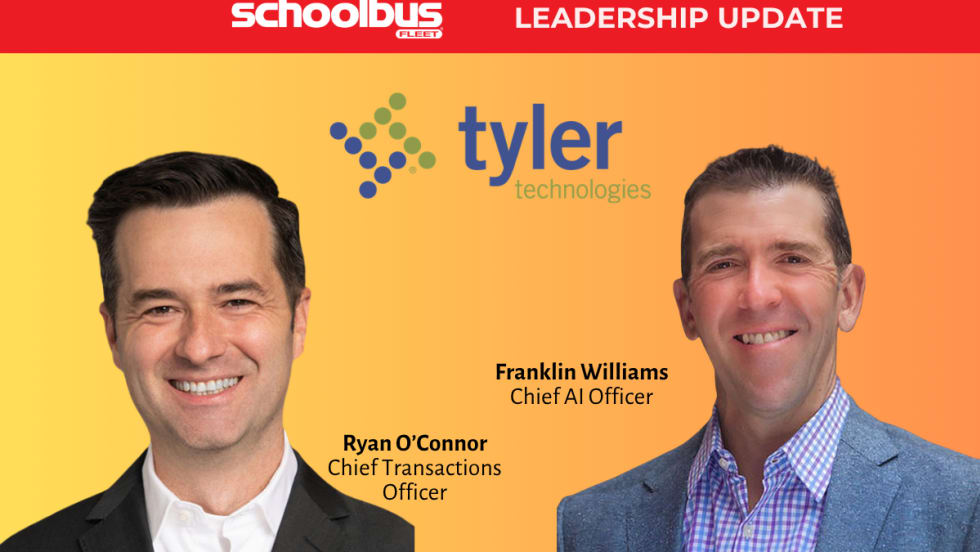
Tyler Technologies Adds New AI, Transactions Leadership Roles
Two company executives are promoted to newly created C-suite positions to accelerate the company's long-term growth in both artificial intelligence and payments.
Read More →
Pro-Vision Acquires Convoy Technologies
The deal aims to broaden customer relationships and adds specialized vehicle video capabilities for commercial fleets.
Read More →


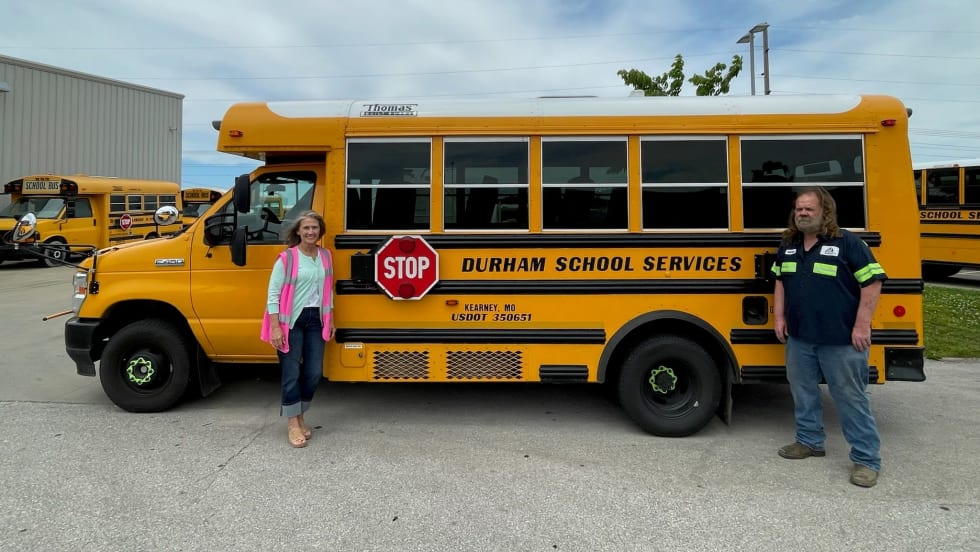
Durham School Services Maintenance Teams Earn Missouri Fleet Excellence Awards
Eight of the contractor’s school bus fleets achieved a distinction few maintenance teams earn during the state’s rigorous annual inspection program.
Read More →
How Incentives, AI, and Energy Markets Are Reshaping School Transportation
Sit down with Joe Annotti of TRC Companies to talk district grant funding, utility challenges, AI, and why school buses are evolving from transportation assets into energy assets.
Read More →
Inside the Contracting Shift: What School Transportation Operators Are Seeing Now
School transportation contractors weigh in on recent trends, costs, driver shortages, and the rise of multimodal student transportation.
Read More →
The No-Idling School Bus AC System
Take a peek at ExoAir Systems’ battery-powered cooling solution designed to run for up to 10 hours without the engine on, reducing fuel use and improving comfort for drivers and students.
Read More →
Geotab on Three Major Trends in School Transportation
School bus fleets are becoming more proactive than ever. From AI driver alerts to vehicle-to-grid opportunities, Geotab outlines the biggest technology trends transforming school bus operations.
Read More →
Gatekeeper Lands Major School Bus Deals as Revenue Surges
The video solutions provider announces contracts with Atlanta Public Schools and other fleet operators as it records quarterly revenue growth and expanding subscription business.
Read More →
Building Leaders Who Last: Creating a Successful Mentorship Program in Student Transportation
Discover five strategies for building an effective mentorship program to strengthen leadership development and support staff retention.
Read More →