



What's New in the Top 100
Buncombe County retrofits engines for cleaner emissions As part of its Voluntary Diesel Retrofit Program, the Environmental Protection Age...
Buncombe County retrofits engines for cleaner emissions
As part of its Voluntary Diesel Retrofit Program, the Environmental Protection Agency (EPA) awarded a $75,000 grant in October 2001 to assist Buncombe County (N.C.) Schools in establishing a program to reduce school bus diesel emissions.
The grant led to the announcement by the Western North Carolina Regional Air Quality Agency, in association with the EPA and Buncombe County Schools’ transportation department, to initiate a pilot project to place state-of-the-art emission controls on the county’s bus fleet. “Approximately 65 buses will be retrofitted with the diesel oxidation catalyst,” says Harold Laflin, transportation director at Buncombe County Schools.
The pilot program will place diesel oxidation catalysts, similar to catalytic converters in cars, on the school buses to reduce the combustion emissions. The equipment will reduce particulate matter by 20 to 50 percent, carbon monoxide by more than 90 percent and unburned hydrocarbons by more than 90 percent.
The catalysts were selected among other options because of their long-term durability, non-specific fuel requirement and low maintenance record.
The regional air quality agency and Buncombe County Schools see the pilot program as an opportunity to introduce to the area technologies for reducing diesel emissions, in hopes of motivating others within the region to take on similar voluntary efforts.
“We are pleased to participate in the retrofit program, as it will provide cleaner air for all the citizens of Buncombe County,” Laflin says.
Cobb County drivers learn new tongues
With nearly 100,000 students and more than 1,000 employees serving them, training and re-training have become big issues for the transportation department at Cobb County (Ga.) School District, which runs 800 school buses.
“With the diversity of the students we service, we are constantly researching ways to help the drivers communicate with the students they transport, as well as parents,” says James Waggoner, associate director of transportation. Therefore, drivers and special education bus monitors are offered in-depth training in such areas as languages and behavior and discipline management.
The ability of drivers to speak Spanish, for example, has proven to be important because the district transports students to an ESL center.
Moreover, the training in behavior and discipline management has helped drivers work proactively, teaching them to recognize potential problems before they arise.
“This behavioral/discipline training has given our drivers the support and confidence they need in providing bus service for students in the TLC (Transitional Learning Center) Program without feeling intimidated or threatened,” says Waggoner.
Also, according to Waggoner, the benefits of the program are worth every penny of the cost. “[The cost] has been minimal, with phenomenal benefits,” he says.
Computer simulation works out routing kinks at Prince George’s County
Faced with having to transport students to nine new schools, and having students’attendance boundaries change at approximately 25 old schools, employees at Prince George’s County (Md.) School District found themselves forced to revise hundreds of routes covered by their 1,477 buses this fall.
The solution, says Dale Krueger, analyst for the school district, came in the form of a computer-simulated routing system, in which new routes were allowed to run alongside the old routes in a virtual reality, months before they were implemented.
“Last winter we built a computer simulation within Trapeze in a parallel data set as though the new boundaries were already in place,” Krueger says. “We routed the buses in the new environment while maintaining our regular production routing system.”
Problems were taken care of before they happened through a proactive solution. “When the student rollover was completed officially in July [of last year], we already had the basic structure of the new routes finished and only minor fine-tuning was needed to be ready for the opening of school,” Krueger says.
In addition, Prince George’s County School District established a phone bank with eight workstations, manned by substitute bus attendants, for better communication during the hectic start of the school year.
Block scheduling reduces overtime at Omaha Public Schools
Omaha (Neb.) Public School District recently switched its drivers and aides to a block scheduling system to stabilize the relationships among drivers, parents and school administrators.
Prior to the new scheduling, the routes in the district, which runs 332 buses, were distributed at the beginning of each school year based on bids and driver seniority. Then, as new routes became available throughout the year, drivers would switch in the middle of a school year if the new routes were considered more lucrative than the ones they were in.
“All new routes and runs were posted throughout the year for bid, which created a domino effect of drivers changing on routes, trying to obtain more working hours,” says David Wolfe, director of transportation for Omaha Public Schools.
Of the district’s approximately 365 drivers and aides, two-thirds are full-time employees and one-third are part timers. With the new system in place, as new routes become available during the year, management assigns them based on the most efficient use of drivers and equipment and not just based on seniority.
Therefore, part-time drivers have an easier time obtaining full-time status because many new full-time routes are offered to the part timers with highest seniority and not necessarily given to full-timers who wish to switch routes.
Furthermore, with the new system, full-time routes earn a driver 7.5 hours, and part-time routes pay 5.5 hours, making the routes almost equal.
According to Wolfe, even though both part- and full-time employees work increased hours, the total cost of salaries was unchanged since overtime pay was reduced due to more efficient scheduling. “The big benefits,” Wolfe says, “came from the efficient use of the fleet and the stabilizing effect it had on drivers working with parents and building [personnel].”
Loudoun County gives parents 24/7 customer service
Loudoun County Public School District in Leesburg, Va., has set up a dispatch center that is open 24 hours a day, 365 days per year, to assist parents and educators with any concerns they might have. The center has become the primary contact for all school emergencies, and delays in school bus service are referred there.
New bid process saves Fairfax County dollars in long run
Fairfax County (Va.) Public School District, which runs 1,317 school buses, recently changed its school bus purchasing process by shifting its focus away from lowest initial cost toward lowest cost of ownership. According to Linda Farbry, director of the Office of Transportation Services, the school district went from an Invitation for Bid (IFB) process to a Request for Proposal (RFP) process.
Before the decision to switch systems was made, the school district wrote specifications for how the new buying process should work and let school bus drivers and maintenance personnel review those conditions.
According to Farbry, during the review process the district asked vendors to prepare proposals that showed base price bids as well as lists of changes recommended to reduce the total cost and enhance the longevity of ownership. The district also requested that vendors include a list outlining the cost of other options being considered by the district, in addition to an estimated cost of ownership based on documented manufacturers’ maintenance recommendations.
Finally, the vendors were asked to provide a sample bus for the mechanics and drivers to judge before all the review results were considered by an advisory committee.
After a “winning vendor” was selected by that committee, “A three-year contract with the potential for two one-year extensions was awarded [that vendor],” Farbry says.
Throughout the contract term, the bid prices from the vendor must remain constant as long as an inflation rate was agreed upon at the time of the initial contract.
Farbry recognizes that the new purchasing process is more complex than the old one, but, she says, “The end product is a bus that will last us two to three years longer than earlier ones, and [it is a bus] that will cost us less in the long run.”
More Management
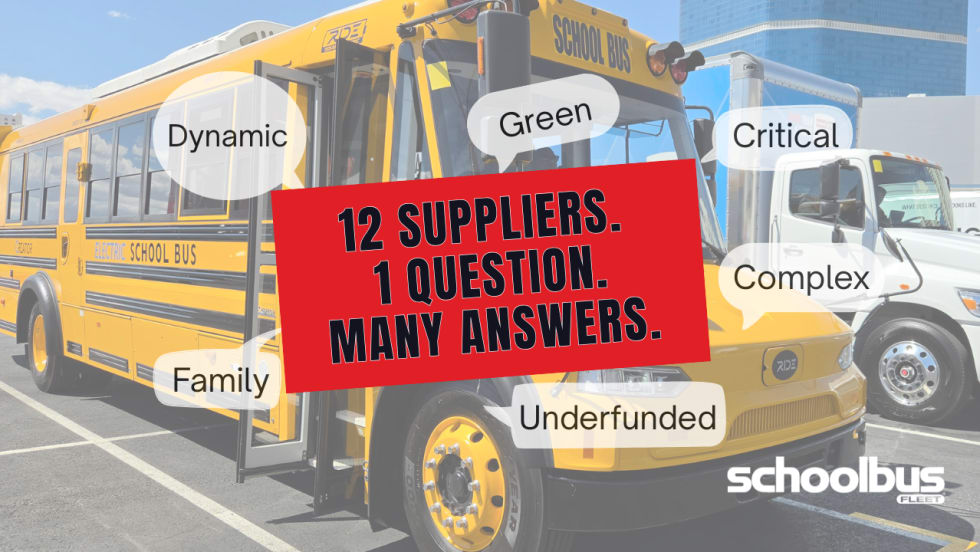
13 Industry Leaders Describe School Transportation in One Word
What word best describes the school bus industry today? We posed that question to over a dozen manufacturers, resulting in a revealing mix of perspectives on the challenges and opportunities ahead.
Read More →
Tyler Technologies Adds New AI, Transactions Leadership Roles
Two company executives are promoted to newly created C-suite positions to accelerate the company's long-term growth in both artificial intelligence and payments.
Read More →
Pro-Vision Acquires Convoy Technologies
The deal aims to broaden customer relationships and adds specialized vehicle video capabilities for commercial fleets.
Read More →


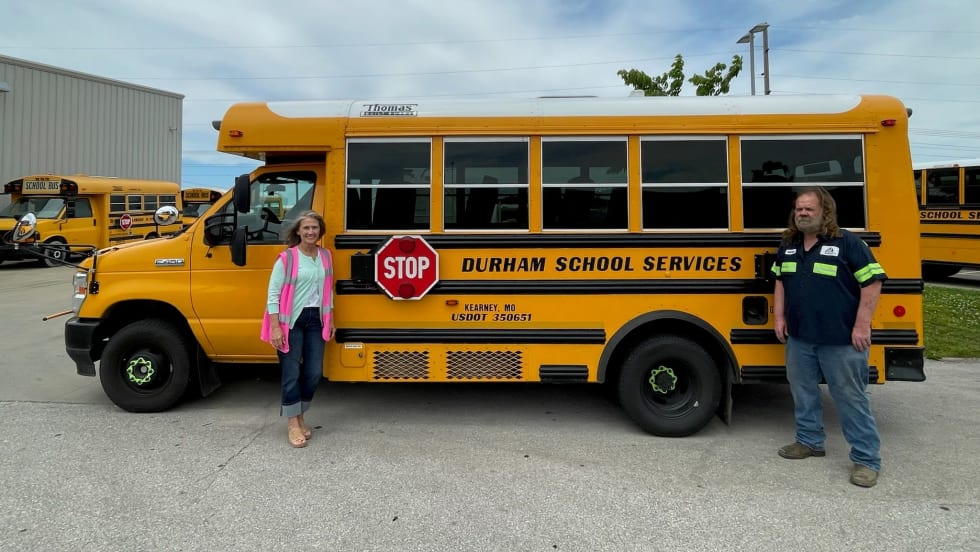
Durham School Services Maintenance Teams Earn Missouri Fleet Excellence Awards
Eight of the contractor’s school bus fleets achieved a distinction few maintenance teams earn during the state’s rigorous annual inspection program.
Read More →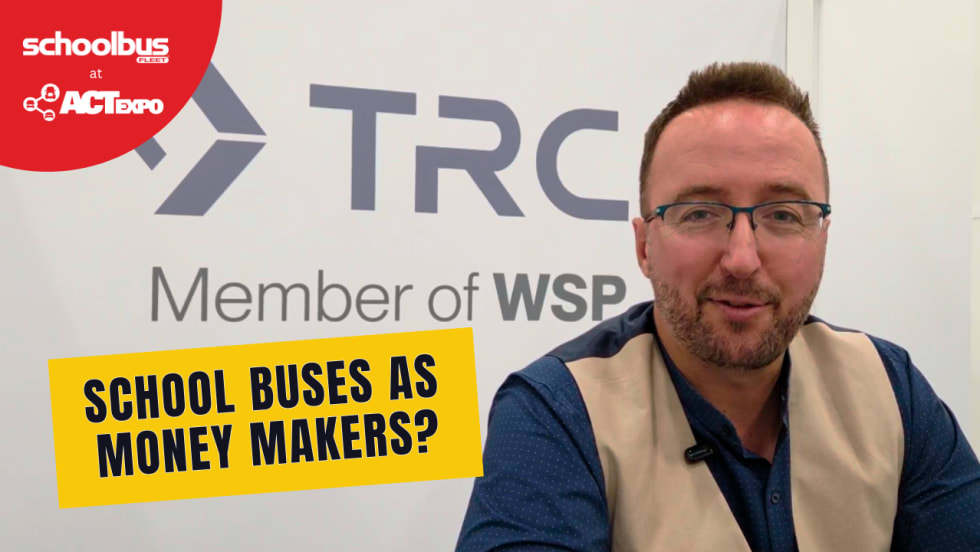
How Incentives, AI, and Energy Markets Are Reshaping School Transportation
Sit down with Joe Annotti of TRC Companies to talk district grant funding, utility challenges, AI, and why school buses are evolving from transportation assets into energy assets.
Read More →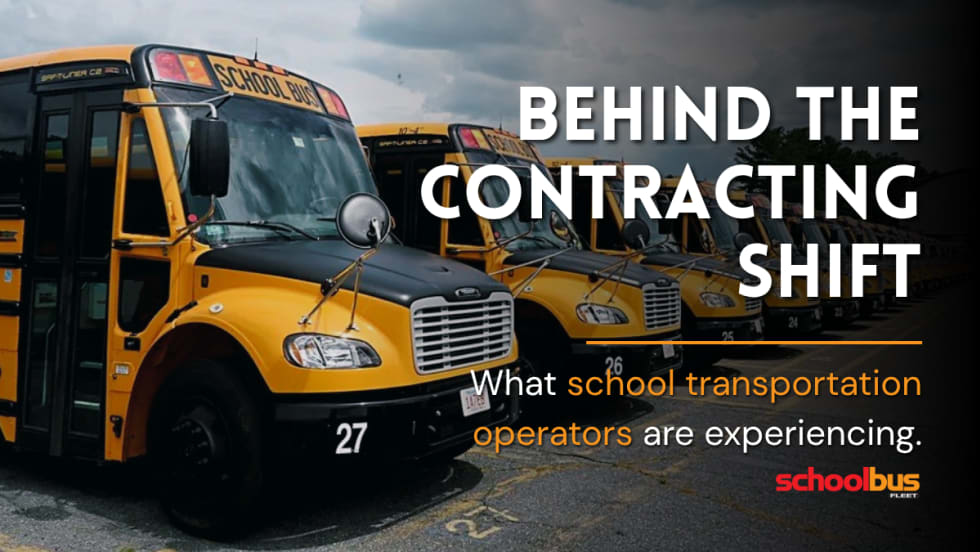
Inside the Contracting Shift: What School Transportation Operators Are Seeing Now
School transportation contractors weigh in on recent trends, costs, driver shortages, and the rise of multimodal student transportation.
Read More →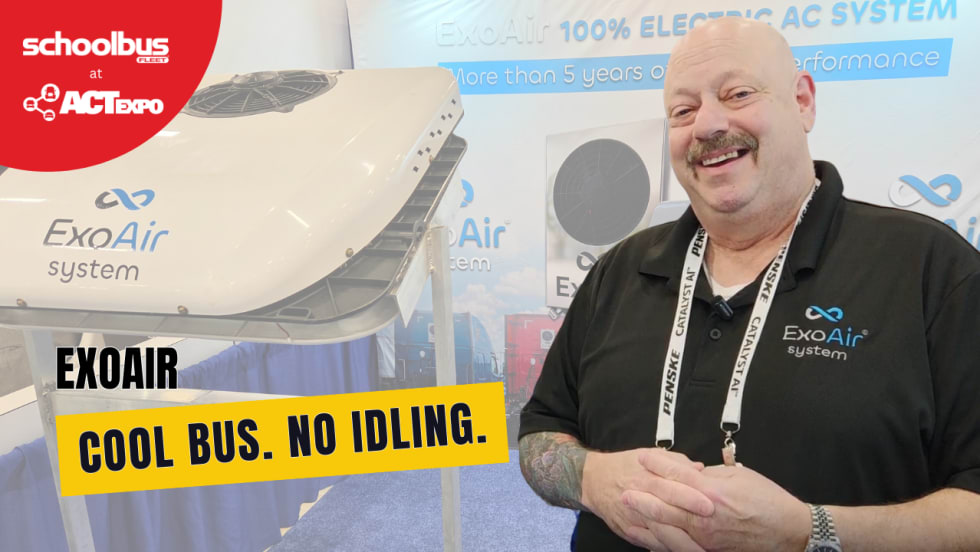
The No-Idling School Bus AC System
Take a peek at ExoAir Systems’ battery-powered cooling solution designed to run for up to 10 hours without the engine on, reducing fuel use and improving comfort for drivers and students.
Read More →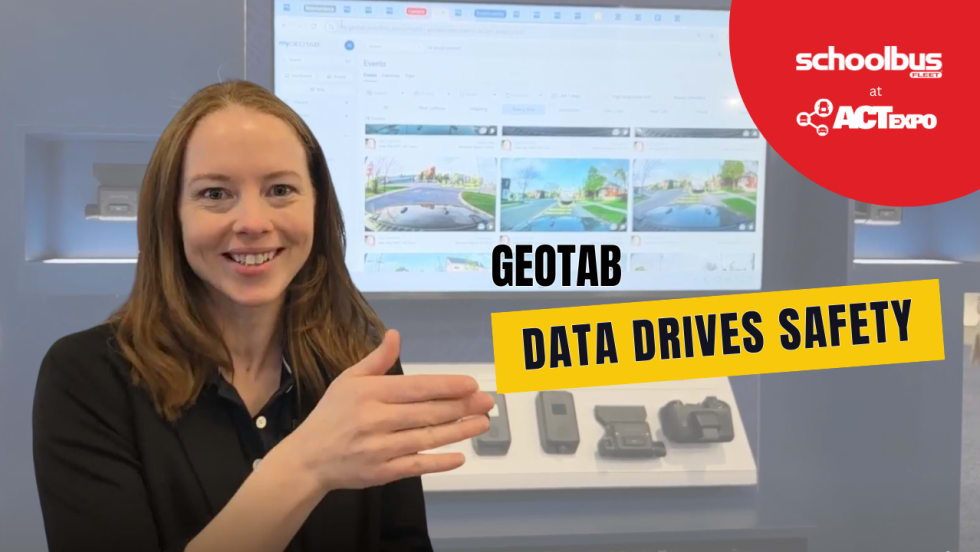
Geotab on Three Major Trends in School Transportation
School bus fleets are becoming more proactive than ever. From AI driver alerts to vehicle-to-grid opportunities, Geotab outlines the biggest technology trends transforming school bus operations.
Read More →
Gatekeeper Lands Major School Bus Deals as Revenue Surges
The video solutions provider announces contracts with Atlanta Public Schools and other fleet operators as it records quarterly revenue growth and expanding subscription business.
Read More →
Building Leaders Who Last: Creating a Successful Mentorship Program in Student Transportation
Discover five strategies for building an effective mentorship program to strengthen leadership development and support staff retention.
Read More →