



Tips on Spec’ing Pre-K School Buses
Because the population of pre-kindergarten children being transported to and from schools, childcare centers and Head Start agencies in school buses h...

Because the population of pre-kindergarten children being transported to and from schools, childcare centers and Head Start agencies in school buses has increased significantly over the past decade, it’s important that transportation providers know how to properly spec their buses for pre-school passengers. To help transportation managers select a bus that fits their needs, the National Highway Traffic Safety Administration (NHTSA) recently released a 16-page booklet called “Choosing the Correct School Bus for Transporting Pre-School Age Children.” The booklet suggests that the transportation provider work closely with a knowledgeable school bus dealer who understands both federal and state requirements for these types of vehicles. Here are some keys to spec’ing a bus to meet your needs: Know your passengers — Determine how the bus is going to be used in the next few years as well as how it might be used 10 years from now. If it’s likely that it will be used at some point to transport pre-school children, it needs to be properly equipped for those children. Choose the proper size bus — Small school buses, with a gross vehicle weight rating of 10,000 pounds or less, often are a good choice if you’re mainly going to be transporting pre-school children. Pick the right seating — Seat size and spacing are critical to the proper use of child safety restraint systems (child safety seats, integrated child safety seats and safety vests). You may also want to consider ordering school bus seats with built-in child safety seats. Anchorage systems — If you’re going to buy a large school bus to transport pre-school children, you’ll want to order lap belt-ready seats in each seating position that will hold a child safety restraint system. New universal attachment system — Beginning Sept. 1, 2002, all small school buses will be required to come equipped with a universal child safety seat attachment system in two seating positions. This will greatly simplify child safety seat installation and use. The system will consist of two lower anchorages. Each will be a rigid, round rod or bar located at the seat bight. Entry — Positioning the lowest step in the entry at the lowest practical height will help young children as they enter and exit the school bus. Reducing the height of each step may also help young passengers. The full text of the booklet can be downloaded from NHTSA’s Website. Go to www.nhtsa.dot.gov and click on “school buses” in the navigation bar.
More Management
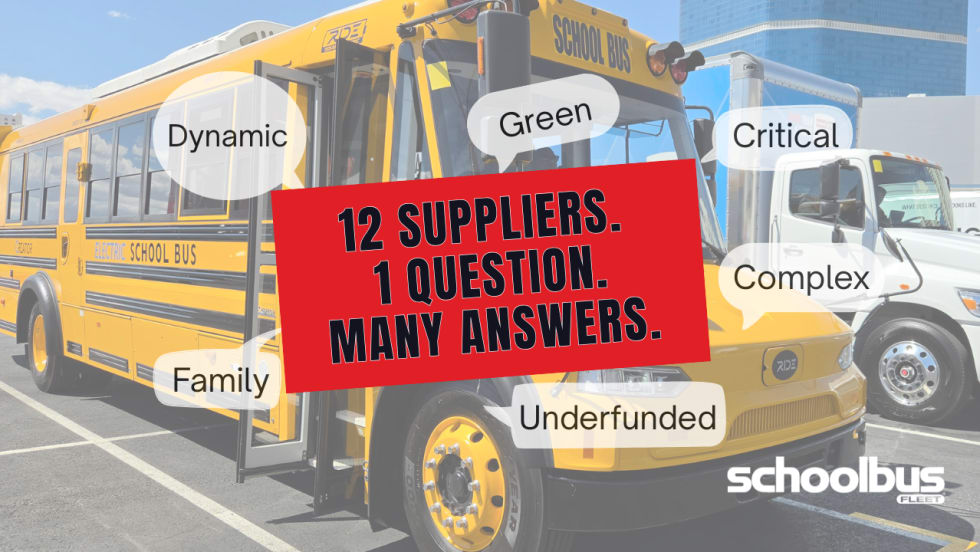
13 Industry Leaders Describe School Transportation in One Word
What word best describes the school bus industry today? We posed that question to over a dozen manufacturers, resulting in a revealing mix of perspectives on the challenges and opportunities ahead.
Read More →
Tyler Technologies Adds New AI, Transactions Leadership Roles
Two company executives are promoted to newly created C-suite positions to accelerate the company's long-term growth in both artificial intelligence and payments.
Read More →
Pro-Vision Acquires Convoy Technologies
The deal aims to broaden customer relationships and adds specialized vehicle video capabilities for commercial fleets.
Read More →


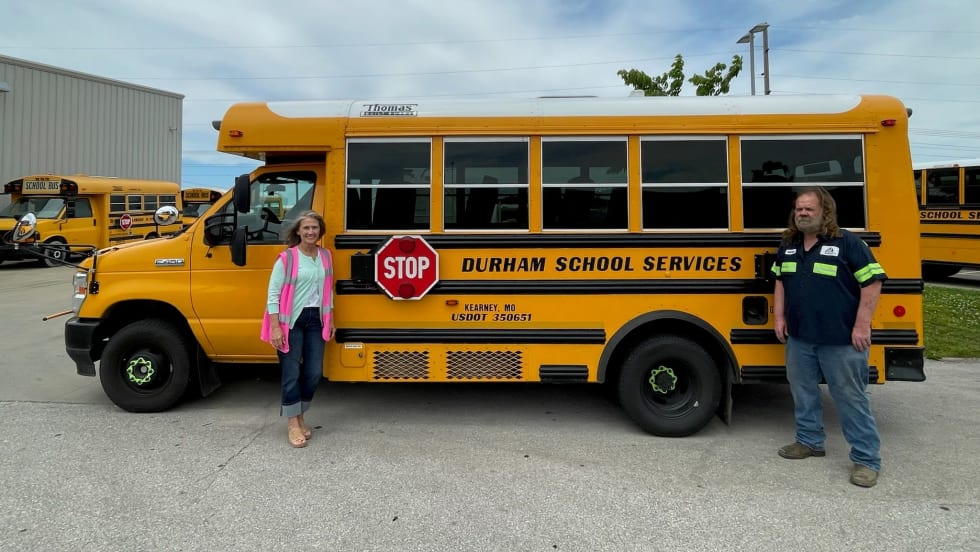
Durham School Services Maintenance Teams Earn Missouri Fleet Excellence Awards
Eight of the contractor’s school bus fleets achieved a distinction few maintenance teams earn during the state’s rigorous annual inspection program.
Read More →
How Incentives, AI, and Energy Markets Are Reshaping School Transportation
Sit down with Joe Annotti of TRC Companies to talk district grant funding, utility challenges, AI, and why school buses are evolving from transportation assets into energy assets.
Read More →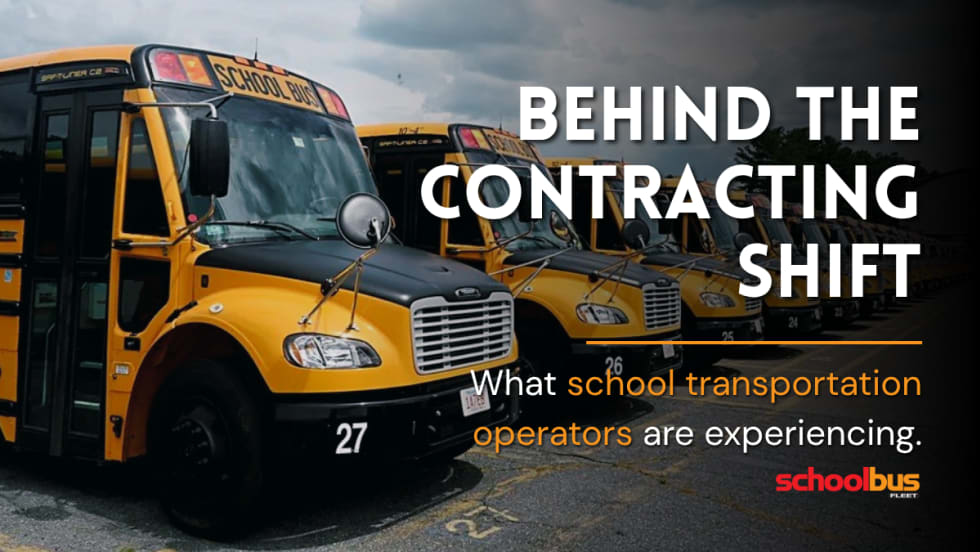
Inside the Contracting Shift: What School Transportation Operators Are Seeing Now
School transportation contractors weigh in on recent trends, costs, driver shortages, and the rise of multimodal student transportation.
Read More →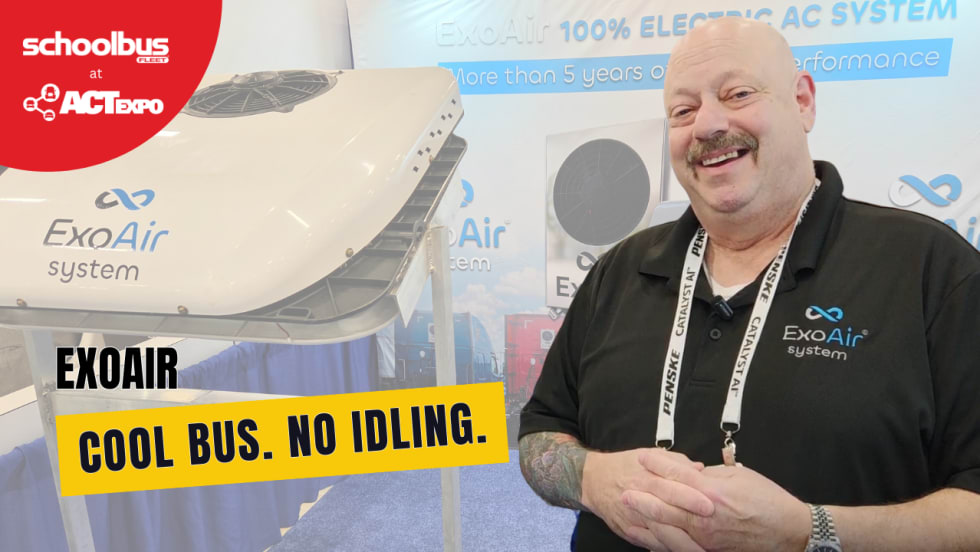
The No-Idling School Bus AC System
Take a peek at ExoAir Systems’ battery-powered cooling solution designed to run for up to 10 hours without the engine on, reducing fuel use and improving comfort for drivers and students.
Read More →
Geotab on Three Major Trends in School Transportation
School bus fleets are becoming more proactive than ever. From AI driver alerts to vehicle-to-grid opportunities, Geotab outlines the biggest technology trends transforming school bus operations.
Read More →
Gatekeeper Lands Major School Bus Deals as Revenue Surges
The video solutions provider announces contracts with Atlanta Public Schools and other fleet operators as it records quarterly revenue growth and expanding subscription business.
Read More →
Building Leaders Who Last: Creating a Successful Mentorship Program in Student Transportation
Discover five strategies for building an effective mentorship program to strengthen leadership development and support staff retention.
Read More →