




Surmounting the Obstacles of Transporting Homeless Children
When families become homeless, education becomes secondary to the primary needs of shelter, food and clothing. Homeless children can disappear from sc...
When families become homeless, education becomes secondary to the primary needs of shelter, food and clothing. Homeless children can disappear from schools and communities without notice. They are forced to move frequently in search of emergency housing that may be far from the schools the children are attending. Nonetheless, school districts must make education accessible to these children, as mandated by the Stuart B. McKinney Act of 1987 (see “A right to education” below). Finding and transporting homeless children is never easy.
Increasingly, educators realize the importance of maintaining educational and emotional stability in these young people’s lives by keeping them enrolled in their schools of origin. Research has shown that it takes children four to six months to recover academically from a school transfer. Add to this the homeless child’s challenge to get a good night’s sleep and to find a quiet place to do homework. Getting kids to school is just one more challenge homeless families have to contend with.
Fostering sensitivity
“You can have all the educational programs in the world, but if you can’t get the kids there, it doesn’t do you a bit of good,” remarks Diana Bowman, director of the National Center for Homeless Education (NCHE) in Greensboro, N.C. To provide homeless students with responsive, effective transportation, operators must become educated about the unique issues these kids face.
“The first thing we do is try to educate everybody and sensitize everyone to the plight of the homeless children,” says Moses Greene, coordinator of census and attendance for Brentwood School District in Long Island, N.Y. Greene collaborates with Nadine Loffreto, homeless coordinator for Brentwood, and the Department of Social Services (DSS) to create a localized program that pools all available resources to transport kids from emergency housing to their schools of origin, sometimes 40 miles away.
“We forge partnerships, create collaborations. All of the staff of this district take on a small piece of the job and then we work together,” explains Loffreto about the technique that the Brentwood District uses to service 198 identified homeless children, about 100 of whom are traveling from beyond the district. Loffreto and Greene acknowledge that there are more homeless kids than that, for many homeless families are not being helped by a government agency.
In Suffolk County, where Brentwood School District is located, DSS provides transportation services for children who are placed in emergency housing outside the district of the school of origin. If the children remain within the Brentwood district, the kids are integrated into the district’s regular transportation program.
Providing quality service
Greene and Loffreto work with the community, the bus drivers and school officials to try to give homeless students the best service, in spite of routing challenges. “Trying to get kids picked up quickly has been one of the major issues,” remarks Loffreto. To improve the system’s efficiency, official’s at Brentwood School District have developed a form for school officials to fill out if children arrive late to school, or aren’t being picked up on time. The form tracks how the program is performing and adjustments are made accordingly.
“We know there is a homeless problem and we know that these kids need a fair opportunity like everybody else. We try to make sure as a community that they get it,” says Greene, whose efforts serving the homeless community date back to before the Stuart McKinney Act was passed. Greene has facilitated the participation of the teacher’s union in holiday gift giving to homeless students. Community merchants have leant a hand through donations. The bus drivers who transport the kids have also played a vital role, going above and beyond their job description to accommodate homeless children.
“Transportation cannot be seen as an add-on, a luxury, particularly for the poorest students,” says Shaun Griffin, the state coordinator for the Nevada Homeless Youth Education Program. In Nevada, which is largely rural, homelessness is often not as visible as it is in a big city. People can slip through the cracks in sparsely populated areas. In those cases, it is particularly important to educate the public on the pervasiveness of the homeless problem, says Griffin. “When it comes to transporting poor students, this is really a form of advocacy — doing what is best to overcome the cycle of poverty and illiteracy in our immediate locale.”
A right to education
The Stuart B. McKinney Act is the first and only legislative measure that provides the nation’s homeless population with rights. Passed in 1987, the bill created programs that service the homeless, such as medical assistance, emergency food and shelter, transitional and permanent housing and childhood education.
Title VII of the McKinney Act establishes the Education of Homeless Children and Youth Program (EHCY) to give homeless children access to free and appropriate education by providing funding to state educational agencies. In 1987, reports showed that 50 percent of homeless children were not attending school regularly, with lack of transportation singled out as one of the greatest barriers to education.
An evaluation of the program in 1995 reported that 3 percent of local education agencies receive McKinney funds. However, the same evaluation found that state coordinators and local school districts were working to provide education to homeless children, despite a lack of funding.
Advocates for homeless children and youth are working on a reauthorization of the Education for Homeless Children and Youth Program (EHCY), which was initiated by the McKinney Act in 1987. This could result in an increase in transportation funding, as well as several other key changes. Reauthorization comes at a time when homelessness is on the rise, especially among families. “The largest numbers of homeless families are people who are working. But with the economy and with minimum wages and issues like that, they can’t afford housing,” says Diana Bowman, director of the National Center for Homeless Education in Greensboro, N.C.
Resources for transporting homeless students
National Center for Homeless Education (NCHE)
(800) 755-3277
http://www.serve.org/nche/
National Coalition for the Homeless
(202) 737-6444
www.nationalhomeless.org
Author Andrea Stover is assistant editor at Automotive Fleet magazine.
More Management
13 Industry Leaders Describe School Transportation in One Word
What word best describes the school bus industry today? We posed that question to over a dozen manufacturers, resulting in a revealing mix of perspectives on the challenges and opportunities ahead.
Read More →
Tyler Technologies Adds New AI, Transactions Leadership Roles
Two company executives are promoted to newly created C-suite positions to accelerate the company's long-term growth in both artificial intelligence and payments.
Read More →
Pro-Vision Acquires Convoy Technologies
The deal aims to broaden customer relationships and adds specialized vehicle video capabilities for commercial fleets.
Read More →


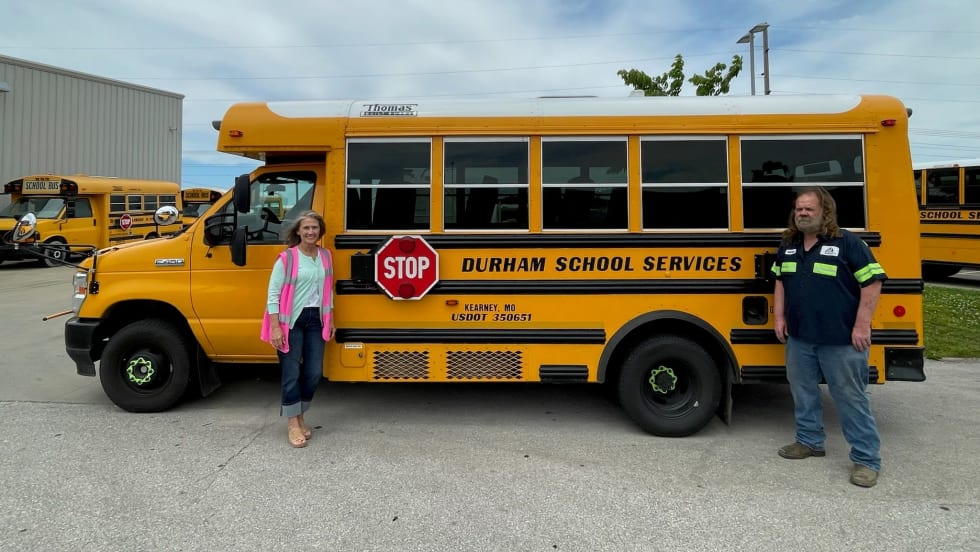
Durham School Services Maintenance Teams Earn Missouri Fleet Excellence Awards
Eight of the contractor’s school bus fleets achieved a distinction few maintenance teams earn during the state’s rigorous annual inspection program.
Read More →
How Incentives, AI, and Energy Markets Are Reshaping School Transportation
Sit down with Joe Annotti of TRC Companies to talk district grant funding, utility challenges, AI, and why school buses are evolving from transportation assets into energy assets.
Read More →
Inside the Contracting Shift: What School Transportation Operators Are Seeing Now
School transportation contractors weigh in on recent trends, costs, driver shortages, and the rise of multimodal student transportation.
Read More →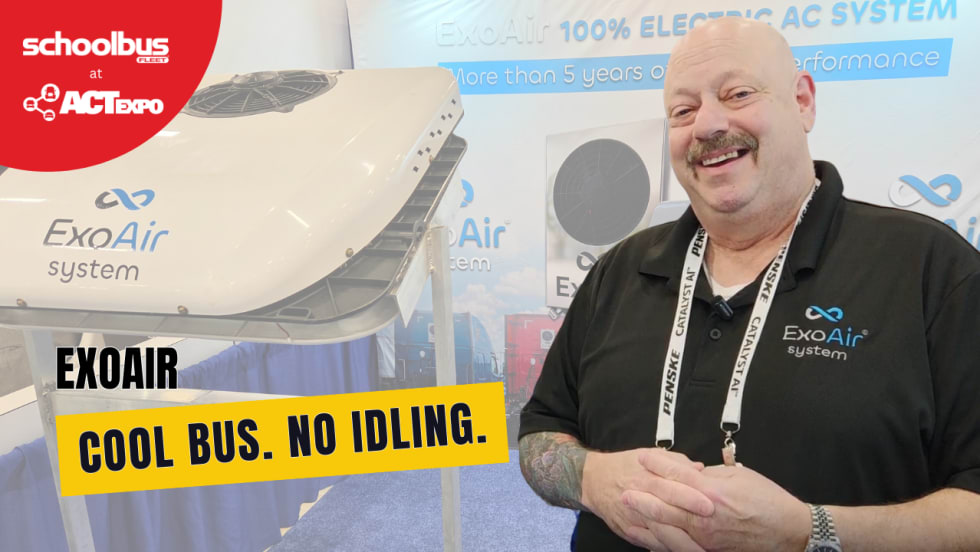
The No-Idling School Bus AC System
Take a peek at ExoAir Systems’ battery-powered cooling solution designed to run for up to 10 hours without the engine on, reducing fuel use and improving comfort for drivers and students.
Read More →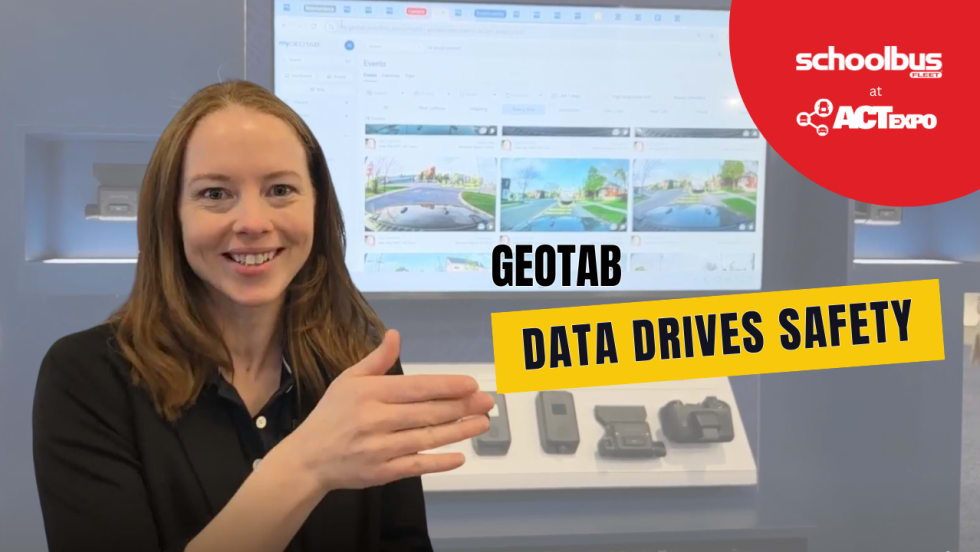
Geotab on Three Major Trends in School Transportation
School bus fleets are becoming more proactive than ever. From AI driver alerts to vehicle-to-grid opportunities, Geotab outlines the biggest technology trends transforming school bus operations.
Read More →
Gatekeeper Lands Major School Bus Deals as Revenue Surges
The video solutions provider announces contracts with Atlanta Public Schools and other fleet operators as it records quarterly revenue growth and expanding subscription business.
Read More →
Building Leaders Who Last: Creating a Successful Mentorship Program in Student Transportation
Discover five strategies for building an effective mentorship program to strengthen leadership development and support staff retention.
Read More →