




It's easy to underestimate the importance of drivers
The driver shortage continues to be a major problem nationwide, with no end in sight.
The driver shortage continues to be a major problem nationwide, with no end in sight. The robust economy has created near full employment in many communities. What have we done as an industry to enhance our ability to ensure that we have enough drivers to meet our ever-growing needs? The educational community is under constant pressure to provide more services to our children while simultaneously keeping the cost and taxpayer burdens to a minimum. As our school systems go through their annual budget processes and the need arises to pare back our initial requests, the first budget cuts by administrators are transportation services and facilities. The reasoning is that we must have enough money for the classroom. Tough to argue against that reasoning. However, as advocates for children’s services and safety, we must lobby for the dollars needed to ensure that our children are transported safely to and from school daily.
A comparision of requirements
Have you ever compared the requirements needed to be a teacher to those of a school bus driver? Let me offer some food for thought. A teacher must have a four-year college education, be state certified and in most states obtain a master’s degree within five years of graduation. In many states there is no requirement that they undergo drug or alcohol screenings or criminal background checks. The teacher’s position is considered a safety-sensitive one and has, on average, between 51¼2 and 6 hours per day of student contact. An elementary school teacher has an average class of fewer than 25 students. A middle school or high school teacher has an average of fewer than 25 students per period. The American Federation of Teachers reports that in 1999, the salary of more than 3 million teachers averaged $40,574 for the 10-month school year. All professional school bus drivers are required to obtain a Commercial Drivers License (CDL). They are also required to have on- and off-the-road training specific to transporting schoolchildren. In some states they must be certified to provide First Aid and CPR. Professional school bus drivers are also required to be drug and alcohol tested as well as background-checked for criminal convictions and driving infractions. Additionally, the professional school bus driver is subject to random drug and alcohol testing. The average driver has 51¼2 to 6 hours of student contact per day. Typically, drivers have 45 to 50 students on their buses (seated behind them, not in front) two to three times each morning and afternoon. The professional driver earns an average of $11,652 for the 10-month school year. (“Contractors Struggle with Driver Shortage, Low Rate Increases,” SCHOOL BUS FLEET, June/July 1999). Clearly, drivers are more closely regulated than their more highly paid counterparts in the classroom.
Fight the good fight
As transportation directors, we must do a better job of communicating the importance of proper funding for transportation operations. It is imperative that we raise driver wages so we can secure men and women of outstanding quality to transport our children. Twenty-four million children ride school buses twice daily. Professional school bus drivers must ensure these children safely board and exit the bus 48 million times a day. I know of no other job that carries as much responsibility for the safety of our children.
Robert Pape is president of the National Association for Pupil Transportation and transportion director at Lawrence Public Schools in New York.
More Management
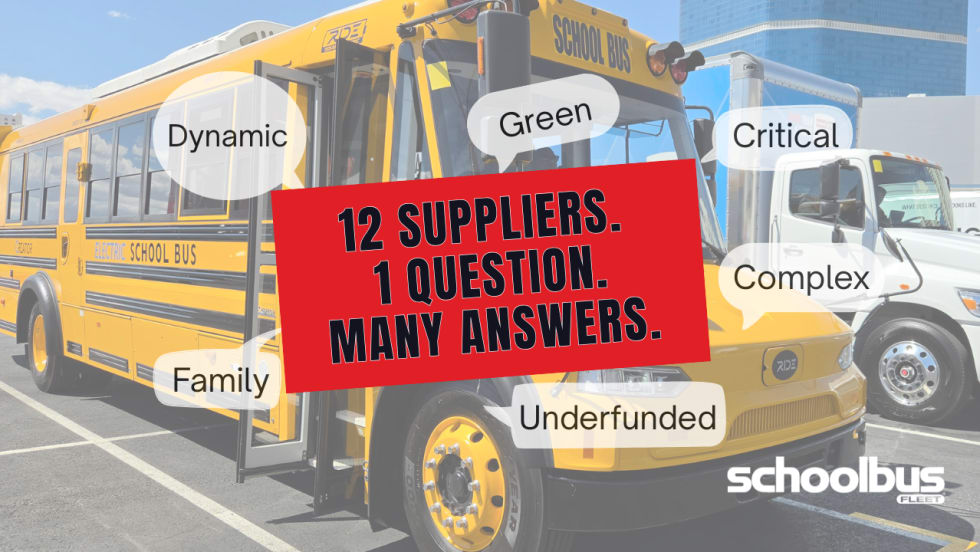
13 Industry Leaders Describe School Transportation in One Word
What word best describes the school bus industry today? We posed that question to over a dozen manufacturers, resulting in a revealing mix of perspectives on the challenges and opportunities ahead.
Read More →
Tyler Technologies Adds New AI, Transactions Leadership Roles
Two company executives are promoted to newly created C-suite positions to accelerate the company's long-term growth in both artificial intelligence and payments.
Read More →
Pro-Vision Acquires Convoy Technologies
The deal aims to broaden customer relationships and adds specialized vehicle video capabilities for commercial fleets.
Read More →


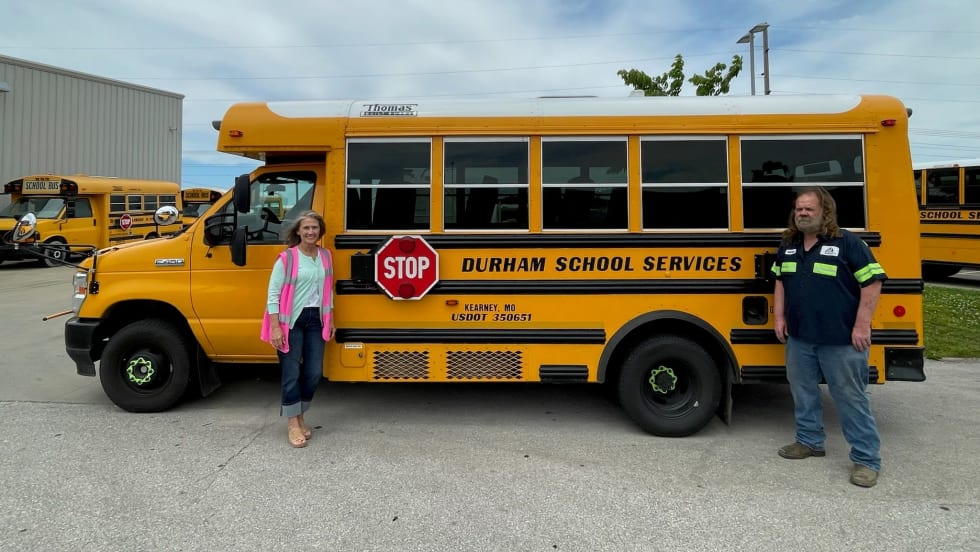
Durham School Services Maintenance Teams Earn Missouri Fleet Excellence Awards
Eight of the contractor’s school bus fleets achieved a distinction few maintenance teams earn during the state’s rigorous annual inspection program.
Read More →
How Incentives, AI, and Energy Markets Are Reshaping School Transportation
Sit down with Joe Annotti of TRC Companies to talk district grant funding, utility challenges, AI, and why school buses are evolving from transportation assets into energy assets.
Read More →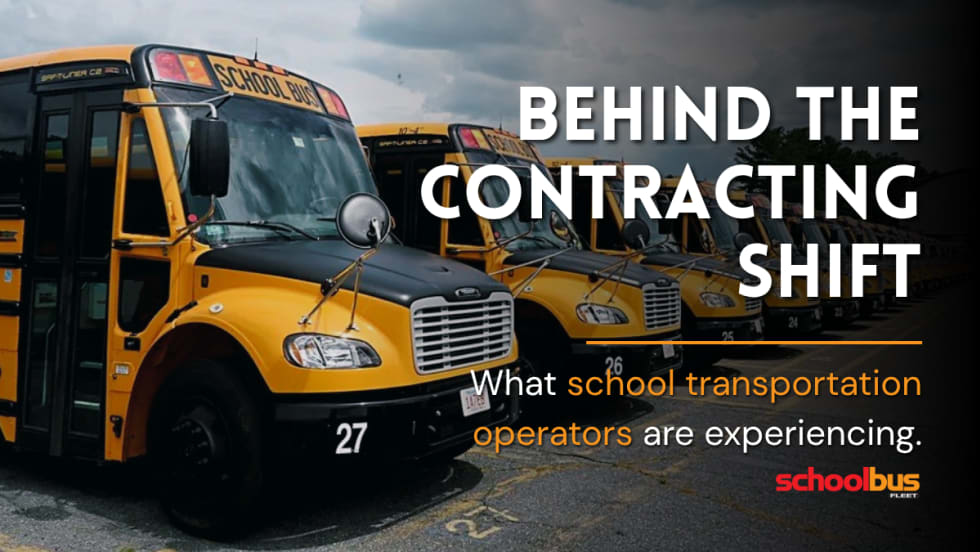
Inside the Contracting Shift: What School Transportation Operators Are Seeing Now
School transportation contractors weigh in on recent trends, costs, driver shortages, and the rise of multimodal student transportation.
Read More →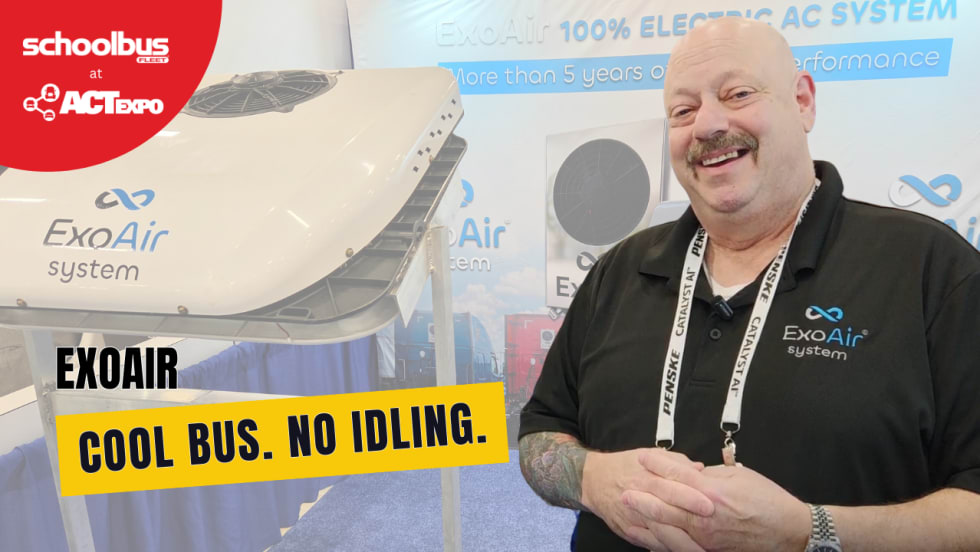
The No-Idling School Bus AC System
Take a peek at ExoAir Systems’ battery-powered cooling solution designed to run for up to 10 hours without the engine on, reducing fuel use and improving comfort for drivers and students.
Read More →
Geotab on Three Major Trends in School Transportation
School bus fleets are becoming more proactive than ever. From AI driver alerts to vehicle-to-grid opportunities, Geotab outlines the biggest technology trends transforming school bus operations.
Read More →
Gatekeeper Lands Major School Bus Deals as Revenue Surges
The video solutions provider announces contracts with Atlanta Public Schools and other fleet operators as it records quarterly revenue growth and expanding subscription business.
Read More →
Building Leaders Who Last: Creating a Successful Mentorship Program in Student Transportation
Discover five strategies for building an effective mentorship program to strengthen leadership development and support staff retention.
Read More →