




How to Tune Up Your Driver-Mechanic Relations
Effective communication between drivers and mechanics can be fostered by teaching drivers the basics of bus maintenance and educating mechanics on the stresses of driving a bus.
In many school bus operations, driver-mechanic communication is characterized by daily or weekly written reports and occasional verbal interaction. At its best, drivers and mechanics exchange paperwork, discuss particularly difficult problems and maintain a distant, but professional, relationship. At its worst, drivers abuse their buses and fail to share important information with mechanics, while shop workers sit on repair work and play favorites with drivers and their vehicles. Neither scenario is a particularly good one. How can drivers and mechanics learn to communicate more effectively so that work is not only more productive, but also more enjoyable? Here’s what mechanics, drivers, supervisors and managers nationwide recommend.
Teach drivers mechanics
A key step in improving a driver’s ability to communicate with mechanics is to provide basic instruction in the mechanics of the bus. “Once a driver gets an introduction to vehicle components, when they have a malfunction, they can convey it to mechanics through their writings,” explains Solomon Winn, a driver trainer for the Los Angeles Unified School District. This helps to avoid the vague, confusing descriptions drivers often provide mechanics. “Having to guess what a driver means by ‘that thing-a-ma-jig by my left knee broke’ slows down repairs and overloads the system,” explains Mike Byrne, transportation manager at Parkway School District in Chesterfield, Mo. When drivers know the basics, they can better pinpoint a problem and more accurately describe it to mechanics, either orally or in writing. Winn recommends conducting sessions on various components, such as the steering system and the braking system, throughout the year. At Grand Rapids (Mich.) Public Schools, mechanics step into the classroom at least twice a year to teach drivers about fuel-efficient driving, pre-trip inspections and more. “Just before winter sets in, the mechanics might talk about winter driving dos and don’ts. It’s always good to be reminded of stuff like that,” says Transportation Director Mike Dykhouse. Similarly, drivers at Kings Canyon Unified School District in Reedley, Calif., have taken part in maintenance-oriented meetings. At one of last year’s in-services, drivers were presented with an assortment of about 50 bus parts and fluids and played a guessing game to identify the various components. They worked in pairs and competed for prizes. “It was like a ‘name the part’ game, which made for a real positive two-hour in-service,” says John Clements, transportation director.
Improve shop efficiency
Most drivers dislike having to use a spare bus while their vehicle is in the shop and are impatient to get their bus back in working order. At Parkway, two route buses are held in the shop each day for routine maintenance. Though drivers have been advised that the fleet supervisor mandates this, they still blame the mechanics, says Byrne. Other common complaints at Parkway and other operations are that repairs take too long and that buses return from the shop dirtier than they went in. What can be done to increase driver satisfaction and prevent animosity toward mechanics as they do their jobs? The ideal scenario is to have an organized, efficient shop in which repairs are made in the shortest time possible. These kinds of results require a certain investment. Clements says that his eight full-time mechanics at Kings Canyon are each budgeted $400 to $500 a year for tools for their individual toolboxes. “They can buy the tools to do the job they need to do,” he explains. Larger items that would be used by the whole shop are purchased from a different account. Dykhouse suggests requiring mechanics to attend bus driver training and obtain their CDLs, which helps them understand the drivers’ jobs and the pressures they are under. “Of course we don’t want them [mechanics] driving school buses when they should be fixing buses, but their knowledge of the bus driver’s responsibilities sure helps the relationship,” he explains. Also helpful, says Dykhouse, is a second shift of mechanics to work on buses after hours. His second shift of mechanics at Grand Rapids works from 3 to 11 p.m., getting the buses ready for the morning. Morning mechanics are then freed up to turn around smaller items more quickly when they arise. Despite these efficiencies, Dykhouse’s drivers do occasionally need to use a spare bus while their bus is in the shop. To make this a less painful experience, he ensures that spare buses are in top shape. “Our spare buses are not our worst buses. They’re probably some of our newer buses,” he says. And he tries to have one spare of each bus type in the fleet so that a driver can get a bus similar to the one he usually drives.
Insist on job pride
For both drivers and mechanics, pride in a job well done is often an overriding force in a successful operation. Bud Marsh, a mechanic for North Central Area Schools in Powers, Mich., complains that drivers get settled in their jobs and get to be in the cattle hauling business. “They just want to get from point A to point B as fast as they can, and start to disregard all the good things we teach them in the beginning,” he laments. He says that the importance of good maintenance should be impressed upon drivers. “Without that, everything else is a waste of time,” he explains. John Swanson, head mechanic for Munster (Ind.) School District, also complains that drivers become lax in their duties, arriving at the last minute and failing to pre-trip or warm up their buses. “I’ve had buses leave with flat tires, burned out headlights and the ‘empty’ sign hanging in the rear window. Not only is this practice unsafe, but it is very hard on the bus, especially in cold weather,” he says. Mechanics can likewise throw a roadblock into the system by lacking professionalism and job pride. Bobbie Itsen, transportation supervisor at Sutton (Neb.) Public Schools, remembers a past mechanic whose motto was, “Don’t mess with it unless it’s really broken.” He would punish drivers with repair needs by holding their buses in the shop for extended periods of time. “If you’d complain about brakes or something like that, invariably, your bus would sit in the shop for weeks,” she says. A mechanic who punishes drivers for communicating problems is asking for bigger problems in the long run. Ideally, drivers should communicate even the smallest problems to mechanics on a daily basis. In turn, mechanics should respond in a timely manner with repairs or recommendations. Clements recalls one of his mechanics calling a driver on the radio recently to say, “How’s that bus working?” He had specifically asked the office to put the driver back in the bus he fixed and wanted to be sure it was working properly. His interest in “getting the fix” shows he takes pride in his job. In communicating with the driver, he strengthened their working relationship.
Encourage talking
When written communication between driver and mechanic fails, have the mechanic take a ride with the driver to determine the source of the problem. It’s also beneficial to have a mechanic on hand to make small repairs, such as light bulb changes, in the morning, rather than writing them up and waiting to repair them later. Over the years, Clements’ drivers and mechanics have weathered the challenges presented by 19 alternative-fuel buses. “The guys in the shop had to learn new tricks and ideas to diagnose particular problems. It required them to communicate more with the drivers,” explains Clements. Although driver knowledge of mechanical terms is helpful, it is not the most important thing, Byrnes says. “We hire bus drivers for their ability to drive, not to diagnose maintenance problems,” he says. What’s most important is that they can effectively communicate their problem to the shop staff. “We encourage them [drivers] to talk to mechanics in the shop and encourage the mechanics to spend a little time in the drivers’ lounge,” he explains. Paul Linder, M.O.T. supervisor for Taft (Calif.) High School, says that his drivers are told to put concerns on the daily report and to give oral reports to mechanics. “Mechanics check reports daily, but the communication is a good public relations thing,” he explains. He instructs his mechanics to have an open-door policy when it comes to driver questions or concerns. “Communication is key for both driver and mechanic,” he says.
Foster team spirit
Communication is most challenging in work environments in which drivers and mechanics are isolated from each other — working toward the same goal, but doing so separately. Even if you have highly trained, responsible employees who take pride in their work, they will not be fully effective if they do not work together as a team. Ideally, they will interact socially and enjoy working together. Minimally, their rapport will be unstrained and their interaction friendly. Clements has several programs in the works for improving driver-mechanic relations. For starters, shop staff is included on the department’s transportation advisory committee, which is used to resolve non-personnel issues such as decisions on parking, uniforms and more. Mechanics are also included in an annual “transportation celebration,” which is a replacement of “school bus drivers’ day.” Mechanics and drivers participate together in school and community events, such as decorating and driving the district’s “spirit truck” and providing transportation services for band members to the Tournament of Roses Parade in Pasadena, Calif., on New Year’s Day. During a particularly low point in department morale, the whole team went away on a retreat to revive spirit and foster team bonding. You can further improve intra-department relations by praising drivers and mechanics who face daunting circumstances or who go above and beyond the call of duty. Mechanics should be made out to be heroes when they go on a service call to rescue a stranded bus full of students or when they come in early on a cold morning to start the buses. Positive reinforcement such as this seems to be working for Dykhouse, who says his drivers often treat mechanics to homemade baked goods in the garage and even host a picnic for them once a year, out of their own pockets. “Our drivers understand the hard work which our mechanics do and respect them for it. Likewise, our mechanics respect the bus driver’s role immensely and would not trade places,” Dykhouse says.
More Management
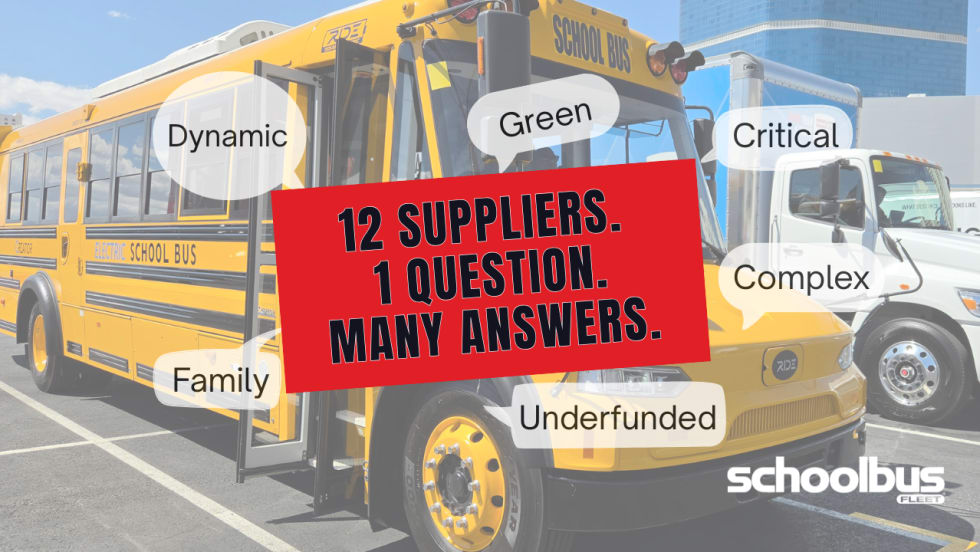
13 Industry Leaders Describe School Transportation in One Word
What word best describes the school bus industry today? We posed that question to over a dozen manufacturers, resulting in a revealing mix of perspectives on the challenges and opportunities ahead.
Read More →
Tyler Technologies Adds New AI, Transactions Leadership Roles
Two company executives are promoted to newly created C-suite positions to accelerate the company's long-term growth in both artificial intelligence and payments.
Read More →
Pro-Vision Acquires Convoy Technologies
The deal aims to broaden customer relationships and adds specialized vehicle video capabilities for commercial fleets.
Read More →


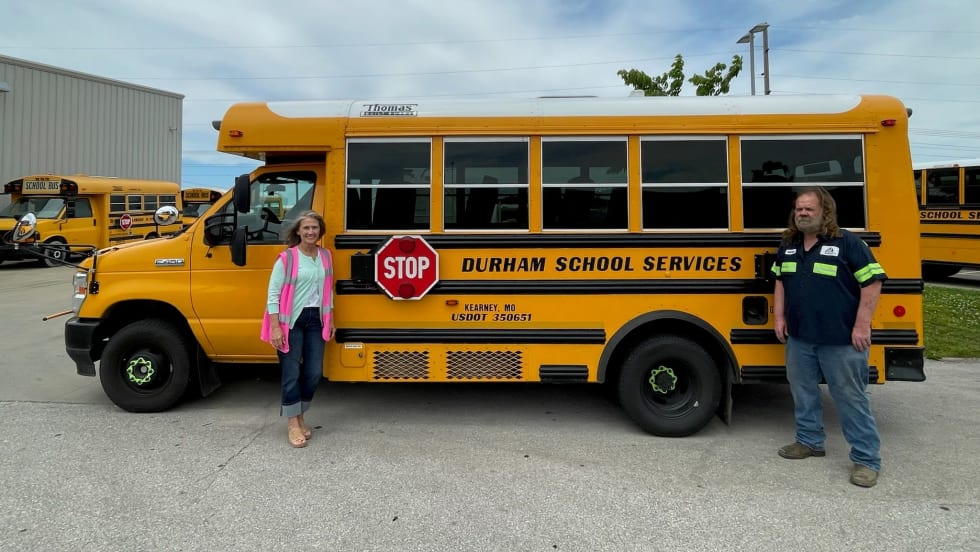
Durham School Services Maintenance Teams Earn Missouri Fleet Excellence Awards
Eight of the contractor’s school bus fleets achieved a distinction few maintenance teams earn during the state’s rigorous annual inspection program.
Read More →
How Incentives, AI, and Energy Markets Are Reshaping School Transportation
Sit down with Joe Annotti of TRC Companies to talk district grant funding, utility challenges, AI, and why school buses are evolving from transportation assets into energy assets.
Read More →
Inside the Contracting Shift: What School Transportation Operators Are Seeing Now
School transportation contractors weigh in on recent trends, costs, driver shortages, and the rise of multimodal student transportation.
Read More →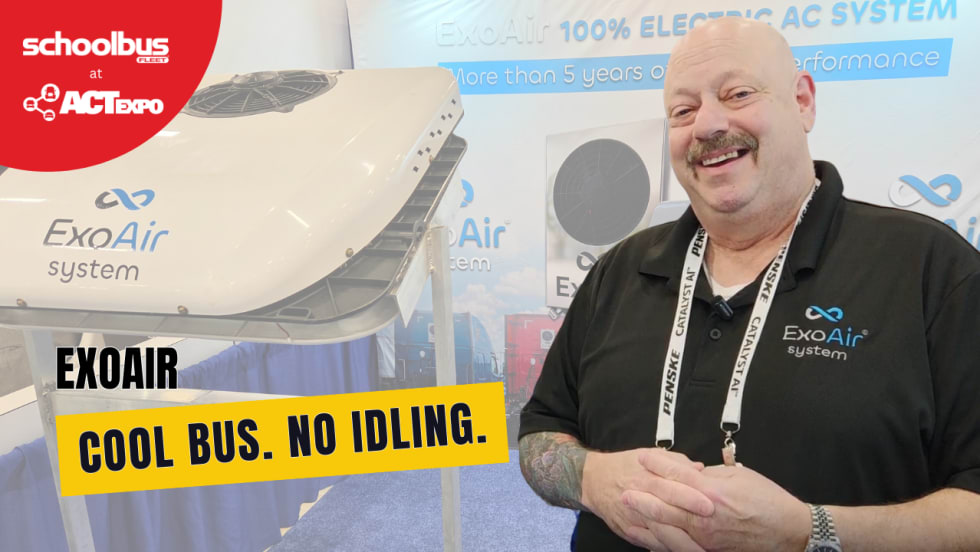
The No-Idling School Bus AC System
Take a peek at ExoAir Systems’ battery-powered cooling solution designed to run for up to 10 hours without the engine on, reducing fuel use and improving comfort for drivers and students.
Read More →
Geotab on Three Major Trends in School Transportation
School bus fleets are becoming more proactive than ever. From AI driver alerts to vehicle-to-grid opportunities, Geotab outlines the biggest technology trends transforming school bus operations.
Read More →
Gatekeeper Lands Major School Bus Deals as Revenue Surges
The video solutions provider announces contracts with Atlanta Public Schools and other fleet operators as it records quarterly revenue growth and expanding subscription business.
Read More →
Building Leaders Who Last: Creating a Successful Mentorship Program in Student Transportation
Discover five strategies for building an effective mentorship program to strengthen leadership development and support staff retention.
Read More →