



Sound Strategies to Reduce Fuel Costs
Cutting fuel costs is one of the most painless ways of satisfying the harsh budget demands facing many school districts these days. No cutbacks in sta...
Cutting fuel costs is one of the most painless ways of satisfying the harsh budget demands facing many school districts these days. No cutbacks in staff or service are necessary. Rarely does it require significant capital investment. However, harvesting these savings requires planning and legwork. For example, Oceanside (Calif.) Unified School District is constantly on the lookout for lower fuel prices. Transportation Director John Farr says he's trying to secure a deal with the local transit agency, the North County Transit District, for fueling privileges. "They buy in tremendous quantities and receive much better pricing than most," Farr says. "Because of their lower prices, even with a surcharge, it is only a matter of time before we start using their facility." The downside to this accord, however, is that all Oceanside school buses that use the transit filling station would require retrofitting with high-speed filler devices, Farr says. In addition, the transit agency does not yet have a cardlock system, which creates extra paperwork for the school district during the billing process. Oceanside school district fuels most of its vehicles from the 4,000-gallon tank (half diesel and half gasoline) at its bus terminal, but also uses a commercial cardlock fueling station near the local airport. Farr says 14 diesel buses are fueled there, but he plans to increase that number. "For two reasons -slightly lower prices and less congestion in the bus yard," he says. Stay close to vendors
The Village Bus Co., a Lafayette, N.J.-based contractor that operates 250 school buses, uses a different strategy to keep fuel costs down. President Dennis Hammell says he relies on close relationships with local fuel vendors to minimize his costs. "Sometimes they call me and say, 'Hey, Denny, there's going to be a three-cent fuel increase starting noon tomorrow. If you want, I'll bring you a truckload today,'" Hammell says. "Well, I just saved three cents per gallon on 8,000 gallons." To take best advantage of these opportunities, Hammell says school bus operators need to have adequate storage capacity. Village's main terminal has three 10,000-gallon underground tanks, which provide multiple options for fuel purchasing. "Far and away, that's the best answer, as far as price goes," Hammell says. The company's other three terminals aren't as versatile because they don't have storage tanks. Hammell says the cost of adding a storage tank, even an above-ground unit, would be about $50,000. "It takes a long time to make that up in fuel savings," he says. Another fuel-saving strategy stresses greater utilization. At Kyrene Elementary School District in Tempe, Ariz., ridership increased 54 percent between the 1995-96 and 1996-97 school years (from 6,146 to 9,454), yet the transportation department didn't add a single vehicle to its 78-bus fleet. "It's been a huge cost savings," says Transportation Director Hank Grates. The district helped make it possible by switching to a three-tiered bell system, but transportation did its part by increasing the load factors of its buses. "We're maximizing our fleet to control our fuel costs," Grates says. "Our buses are bursting at the seams." Form a consortium
One of the most effective methods of lowering the cost of fuel is to buy bulk quantities through a consortium. Four years ago, School District #62 on Vancouver Island in British Columbia, joined with two other school districts, municipalities and a water district to form a joint purchasing commission for fuel, motor oil, antifreeze and other automotive supplies. "We're all looking at how to save a nickel these days," says Transportation Supervisor John Walker. The bulk purchasing arrangement has trimmed fuel costs by approximately 12 cents per gallon of diesel, he says. The overall savings aren't huge because only half of the 28-bus fleet runs on diesel (the other half are propane conversions). Walker says the estimated savings were $7,000 for the 1996-97 school year, but he expects that sum to increase as he continues to add only diesel buses to his growing fleet. "They're doing better than propane on a cost-per-mile and performance basis," he says. In addition to bulk-rate discounts, joint purchasing agreements also provide each member with greater clout. Orchard Park (N.Y.) Central School District buys its fuel through a cooperative bid with the Board of Cooperative Educational Services (BOCES), a regional consortium of school agencies. Transportation Supervisor Gerry Dominski says the joint agreement gives her school district more clout with the fuel vendors over such things as delivery times. "They don't mind making one person unhappy," she says, "but they don't want to make a lot of people unhappy." Reduce the deadhead
At Polk County (Fla.) Public Schools, which uses 444 buses to cover 1,859 square miles, the transportation department significantly reduces its daily mileage by assigning drivers to routes in their own neighborhoods and allowing them to take their buses home. "We don't assign drivers on the north end of the county to routes on the south end of the county," says Arby Creach, supervisor of operations. "That reduces the deadhead mileage and really helps us keep our fuel costs down." It's not a perfect solution, however. Creach says the route assignments can create "ticklish situations" with the drivers union because of seniority issues. In addition, supervisors have less control over their charges. "The drivers really don't have somebody looking over their shoulder every day," Creach says. "It's a tough way to supervise them." Another tactic used to reduce fuel usage is strategic driving. Creach says introductory driver training includes techniques to conserve fuel, such as allowing the bus to glide as much as possible, slowing down in anticipation of red lights and avoiding jackrabbit starts. Minimizing idling time is also a consideration. Hammell of Village Bus Co. says his mechanics start all the buses in the morning and give each vehicle "the bare minimum amount of warmup" before shutting them down. When the drivers arrive to begin their routes, "the buses are still warmed up, but they're not sitting out in the yard running," Hammell says. Alternative-fuel costs can be minimized, too
The key decisions on how to minimize the operating costs of alternative-fuel school buses should be made before the vehicles are purchased. "More than anything else, this focuses on matching the alternative fuel vehicles to the specific route requirements," says Steve Goguen, a spokesman for the U.S. Department of Energy (DOE). This approach is especially true for compressed natural gas (CNG) buses, which can cost from $10,000 to $25,000 more than their diesel-powered counterparts. Goguen says it's important to use these vehicles on longer routes because the fuel costs are lower (about 10 to 40 cents per gallon cheaper than petroleum-based fuels). The more mileage accumulated, the faster the payback in fuel cost savings. Of course, this push for high daily mileage should be weighed against the useful range of the vehicle. The refueling process for CNG buses can be lengthy, depending on whether fast-fill fueling stations are available. Thus, Goguen says routes should be scheduled to avoid refueling during the school day, which reduces the vehicle's availability and increases labor costs. School bus operators who use propane-powered buses need to be tuned in to the seasonal variation in the fuel's price and availability. "Most school systems could probably reduce their fuel costs somewhat by negotiating fuel supply contracts early in their programs," Goguen says. The length of the contract, he adds, would depend on whether the price is high (suggesting a shorter-term contract) or low (longer term). Training drivers to understand the alternative-fuel vehicle's operating characteristics is also important to reducing costs. Goguen says drivers who are attuned to whether the bus is operating normally can help to avoid costly repair work and downtime by identifying small problems before they become large ones. Finally, all operators of alternative-fuel school buses should investigate the availability of state and federal incentives. According to Goguen, the federal government awards grants to construct refueling stations through the DOE's Clean Cities program. State energy offices also provide grant money, often to help school districts acquire alternative-fuel school buses, he adds.
More Management
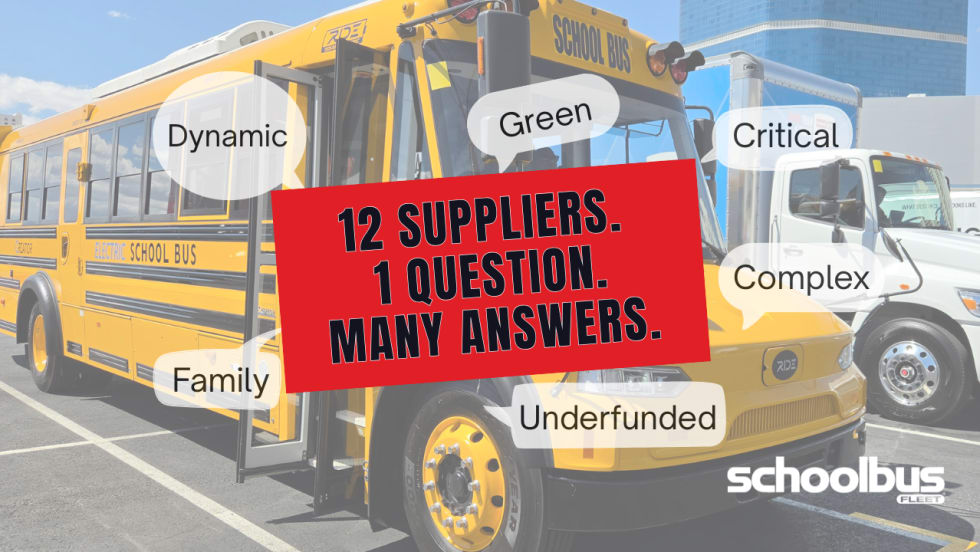
13 Industry Leaders Describe School Transportation in One Word
What word best describes the school bus industry today? We posed that question to over a dozen manufacturers, resulting in a revealing mix of perspectives on the challenges and opportunities ahead.
Read More →
Tyler Technologies Adds New AI, Transactions Leadership Roles
Two company executives are promoted to newly created C-suite positions to accelerate the company's long-term growth in both artificial intelligence and payments.
Read More →
Pro-Vision Acquires Convoy Technologies
The deal aims to broaden customer relationships and adds specialized vehicle video capabilities for commercial fleets.
Read More →


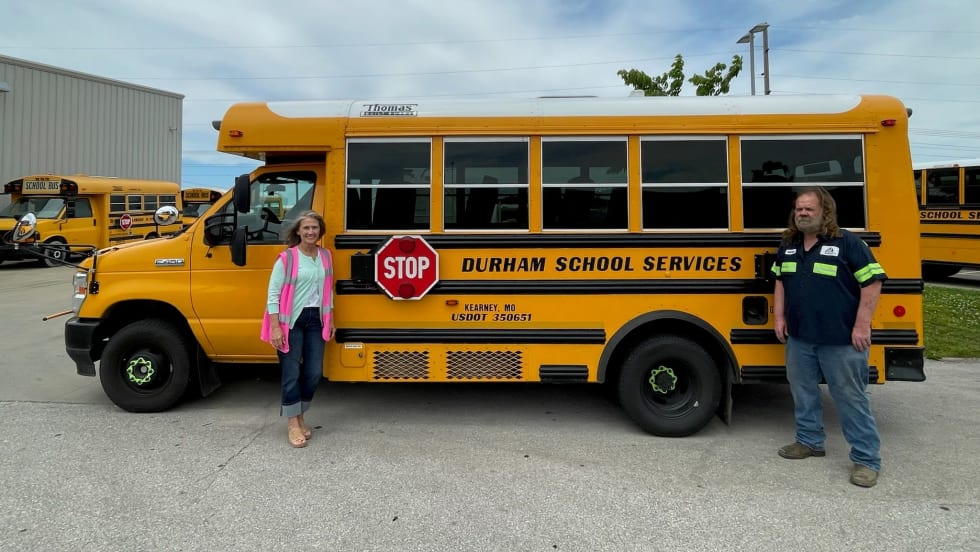
Durham School Services Maintenance Teams Earn Missouri Fleet Excellence Awards
Eight of the contractor’s school bus fleets achieved a distinction few maintenance teams earn during the state’s rigorous annual inspection program.
Read More →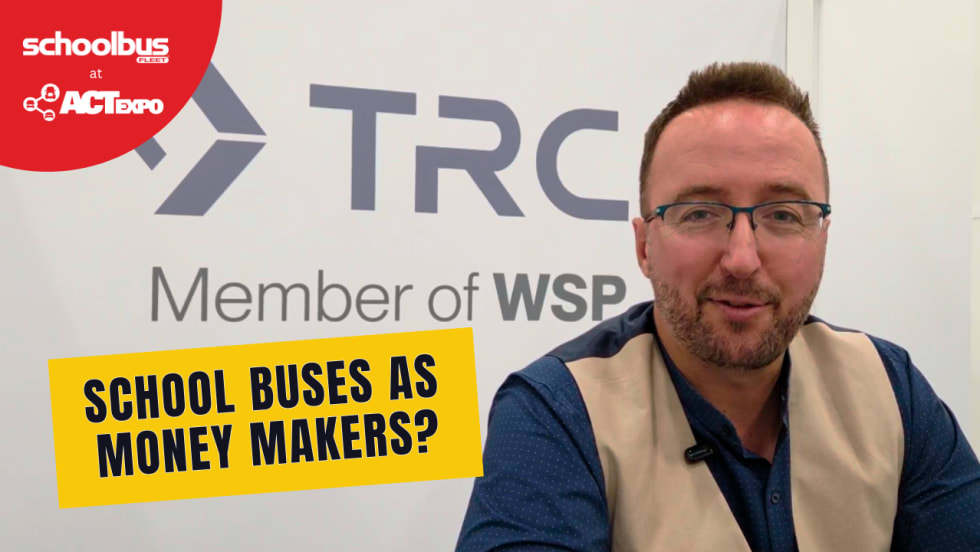
How Incentives, AI, and Energy Markets Are Reshaping School Transportation
Sit down with Joe Annotti of TRC Companies to talk district grant funding, utility challenges, AI, and why school buses are evolving from transportation assets into energy assets.
Read More →
Inside the Contracting Shift: What School Transportation Operators Are Seeing Now
School transportation contractors weigh in on recent trends, costs, driver shortages, and the rise of multimodal student transportation.
Read More →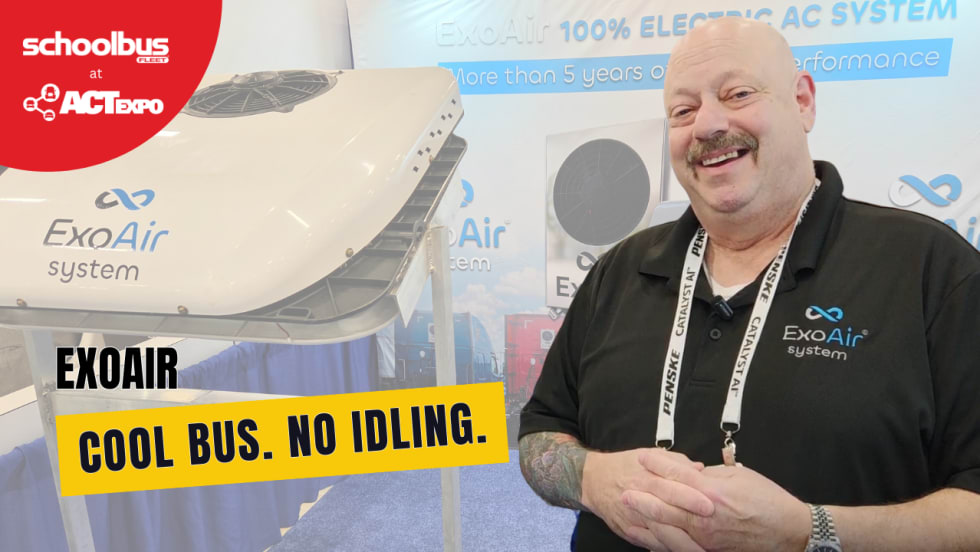
The No-Idling School Bus AC System
Take a peek at ExoAir Systems’ battery-powered cooling solution designed to run for up to 10 hours without the engine on, reducing fuel use and improving comfort for drivers and students.
Read More →
Geotab on Three Major Trends in School Transportation
School bus fleets are becoming more proactive than ever. From AI driver alerts to vehicle-to-grid opportunities, Geotab outlines the biggest technology trends transforming school bus operations.
Read More →
Gatekeeper Lands Major School Bus Deals as Revenue Surges
The video solutions provider announces contracts with Atlanta Public Schools and other fleet operators as it records quarterly revenue growth and expanding subscription business.
Read More →
Building Leaders Who Last: Creating a Successful Mentorship Program in Student Transportation
Discover five strategies for building an effective mentorship program to strengthen leadership development and support staff retention.
Read More →