



Execs discuss cost, safety benefits of new propane bus
SBF sits down with officials from Blue Bird, Ford and ROUSH after they unveil the Next Generation Propane-Powered Vision, which they say offers fuel savings of 30 to 40 percent on average compared to diesel counterparts.

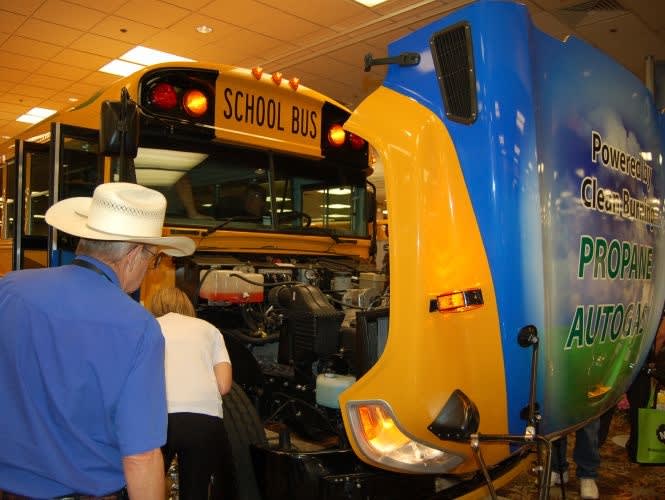
Trade show attendees look over the Next Generation Propane-Powered Vision, which was unveiled in Reno on Tuesday.
RENO, Nev. — Citing advantages in fuel costs, emissions and safety, Blue Bird and its partners undraped the Next Generation Propane-Powered Vision here on Tuesday.
As previously reported, Blue Bird collaborated with Ford and ROUSH CleanTeach on the school bus, which they say provides fuel savings of 30 to 40 percent on average compared to diesel counterparts.
The Type C bus is built on a Blue Bird chassis and powered by a Ford 6.8-liter V-10 engine with the ROUSH CleanTech liquid propane autogas fuel system. It offers 362 horsepower and 457 pounds of torque.
After the unveiling, which drew a throng of attendees at the STN Expo, SBF Executive Editor Thomas McMahon sat down with executives from the three companies to discuss the features of the Next Generation Propane-Powered Vision.
Phil Horlock, president and CEO of Blue Bird, said that one of the main objectives in developing the bus was “to make sure we have a reliable product. School buses last for 12 years or more — in some cases 20 years. So it has to have longevity. It has to have been tried and tested out there in the market.”
To that end, George Weber, president and CEO of Ford Component Sales, noted that the Ford 6.8-liter engine that the bus uses has already been in service in numerous trucks.
[IMAGE]418[/IMAGE]
“It’s a fantastic engine,” Weber said. “It is tried and true. It has millions of miles behind it.
Todd Mouw, vice president of sales and marketing for ROUSH CleanTech, said that while his company has been known for “making things go fast” in the auto racing world, the focus here is on fuel efficiency — while still providing top performance.
Mouw also pointed to safety benefits: The bus has quarter-inch thick steel fuel tanks for puncture resistance, and propane itself has a narrow range of flammability compared to diesel or gas, he said.
Horlock said that for operations that have been running the first generation of the Propane-Powered Vision, a key benefit is its affordability.
“Another thing we hear is the drivers love this bus — it’s quiet,” he added. “And the tailpipe is clean, so it’s great for the environment.”
Horlock said that Blue Bird would begin taking orders for the new Propane-Powered Vision after the trade show, and production is slated to begin in March. The model that was unveiled at the show will travel around the country to Blue Bird dealers, which will hold ride-and-drive events.
More Alternative Fuels
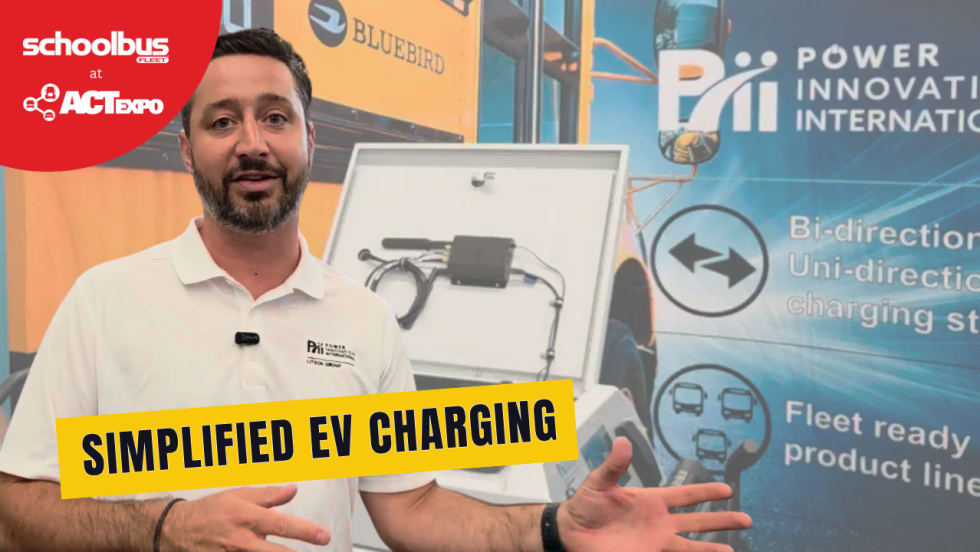
A Solution Helping School Buses Charge Without Major Infrastructure Upgrades
Power Innovations International dishes on its EV charging technology designed to reduce infrastructure barriers, improve reliability, and support V2G applications for school bus fleets.
Read More →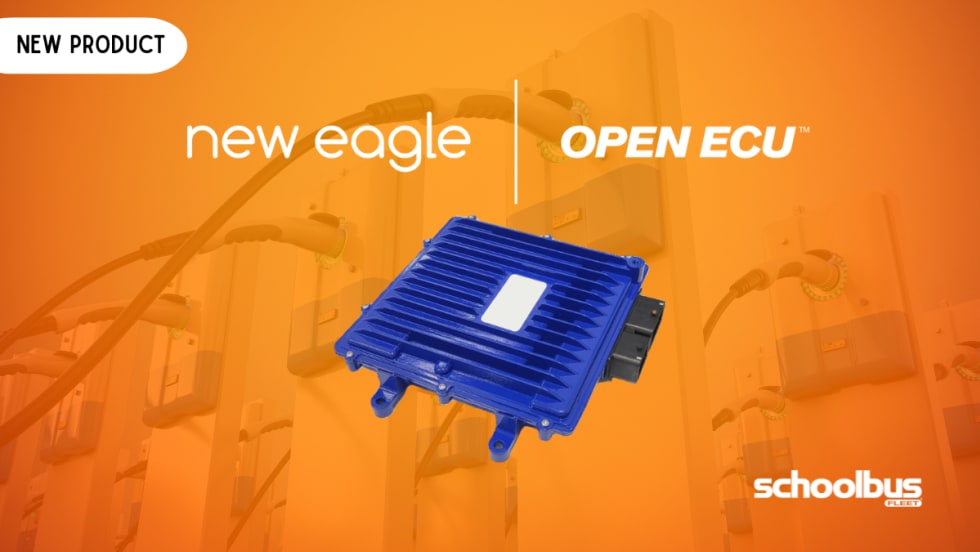
New Eagle Launches All-in-One EV Control Platform
The new OpenECU NX3 platform integrates charging and vehicle controls into a single platform, with support for megawatt charging and vehicle-to-grid technologies.
Read More →
GreenPower Unveils New Heating Solution for Type A Bus
The all-electric bus manufacturer's new product aims to eliminate cold-cabin issues on its Nano BEAST zero-emission school buses operating in cold climates.
Read More →
Alt-Fuel Moves: Fleets Plug In for the Long Haul
School districts across the U.S. are moving electric school bus plans into operation, with new fleet deployments, charging infrastructure, and long-term electrification partnerships taking shape.
Read More →
The Achilles Heel of School Bus Electrification: BetterFleet’s Take
BetterFleet’s managing partner discusses AI-powered EV fleet management, vehicle-to-grid challenges, and the real challenges in bus electrification today, from ACT Expo.
Read More →
You're On Your Own to Pick a Drivetrain [Op-Ed]
After years of federal pressure toward electric school buses, districts are suddenly being told to choose their own path. Let’s explore the risks, realities, and politics behind school bus drivetrain decisions.
Read More →
Wattson: Thomas Built’s Largest EV School Bus Yet
Check in with Mark Childers on the new Wattson Type D electric school bus, featuring faster charging, expanded passenger capacity, and advanced safety technology.
Read More →
The New Era of Electric School Buses: V2G, Bidirectional Chargers & More
The Mobility House discusses AI-powered charging, vehicle-to-grid technology, smart energy management, and the next phase of school bus electrification.
Read More →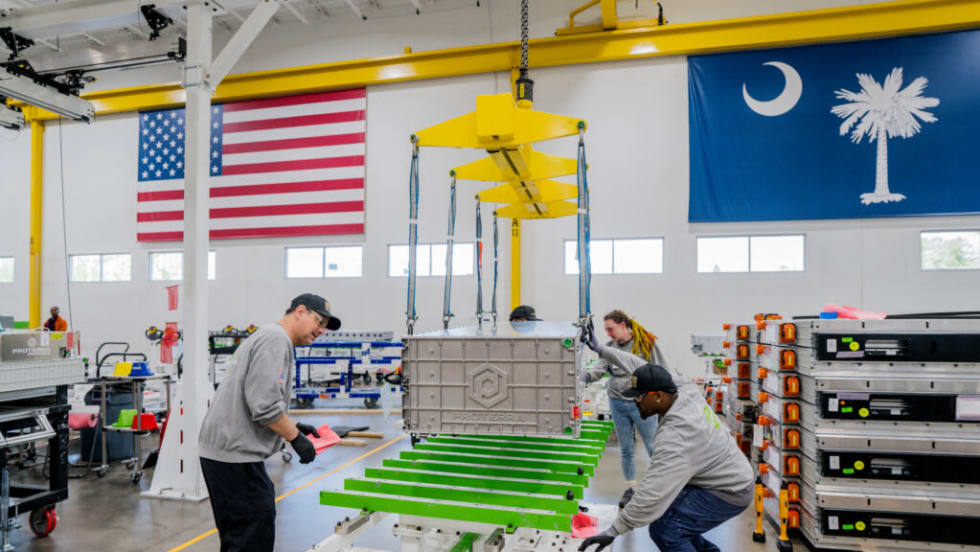
Now Made in America: Proterra Turns to U.S.-Built EV Batteries
Proterra announced a new U.S.-sourced battery cell option for its Onyx platform, boosting domestic content by more than 600% and strengthening EV supply chain resilience for commercial vehicle OEMs.
Read More →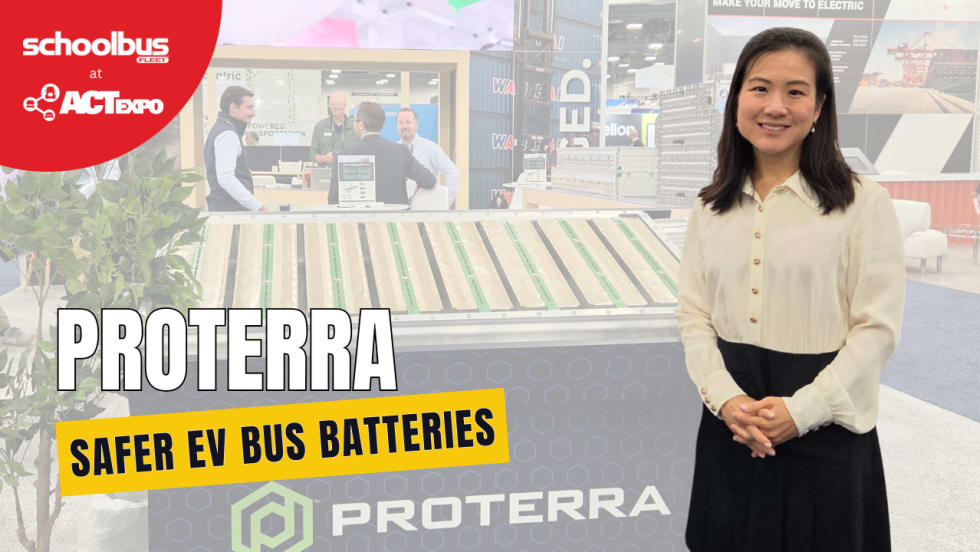
A Look at the Battery Technology Powering Electric School Buses
Check in with Proterra on next-generation EV battery technology for school buses, including safety innovations, predictive diagnostics, EPA 2027 readiness, and the future of transportation from ACT Expo.
Read More →