




Propane injection system ‘greens’ buses, saves money
The Powershot 2000 injects propane in increasing amounts into a bus engine’s air intake system as the boost pressure level of the engine increases. Operations in Arizona and Wisconsin test the system on older school buses and report getting better fuel mileage and seeing substantial reductions in exhaust emissions.

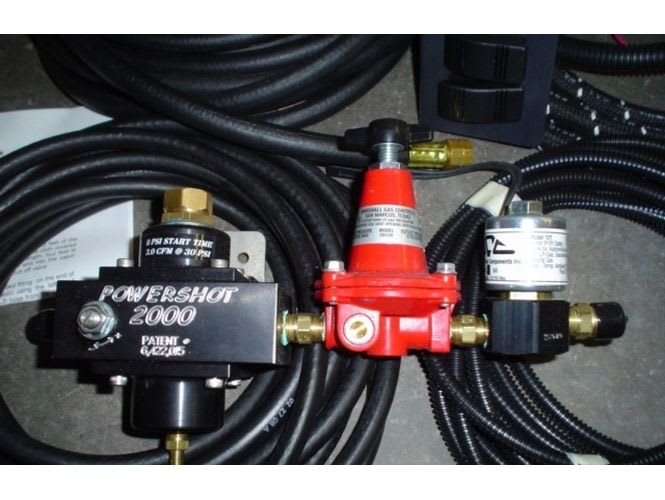
The Powershot 2000 Diesel Propane Injection System can be retrofitted onto a bus’ engine without any modifications to the engine. When installed on a School District of Westfield bus, it helped to decrease exhaust emissions by 60 percent, according to Transportation Director Scott Peterson.
A system by Diesel Performance Products that has been tested by pupil transportation operations in Arizona and Wisconsin can reportedly help increase school buses’ torque and horsepower while decreasing fuel consumption and emissions output.
The Powershot 2000 Diesel Propane Injection System can be retrofitted onto a bus’ engine without any modifications to the engine. It injects propane in increasing amounts into the engine’s air intake system as the boost pressure level of the engine increases.
The system, which is available for all vehicles with a turbo diesel-powered engine, is controlled by an illuminated on/off switch located inside the bus’ cab. A propane tank that will accommodate at least 25 percent of the vehicle’s fuel capacity is required. (Tanks are sold separately.)
Keith Long of Diesel Performance Products told SBF that in addition to improving a bus’ power, performance and drivability, the Powershot 2000 is a convenient alternative to running a bus solely on propane because if the bus runs out of propane, it can continue to operate on diesel.
“Many districts cannot afford to purchase new or alternative-fueled buses without bond money or government incentives, so they are unable to ‘green’ their fleets and save on fuel costs. The Powershot can offer a return on investment usually in one school year depending on the cost of both fuels and the mileage increases achieved,” Long added, noting that the Powershot 2000 retails for between $1,500 and $2,000.
[IMAGE]271[/IMAGE]
For John Bedway, transportation director at Concho (Ariz.) Elementary School District #6, the Powershot 2000 gave one of his 1997 Amtran school buses 10 to 15 percent more power.
“The bus was really underpowered and almost unusable, but now it’s working great for routes and field trips,” Bedway told SBF in mid-October. In addition to the increase in power, Bedway said the bus is getting about 21 percent better fuel mileage. Prior to installing the Powershot 2000, the bus was getting 6.32 miles per gallon (mpg), and it is now getting 8.04 mpg. Moreover, he noted that using the system has yielded a cost-savings of $.042 per mile (diesel and propane included), so he is saving $840 every 20,000 miles.
“It really cleaned the bus up — you don’t see any black smoke coming out of the bus,” Bedway added.
After seeing the benefits of the Powershot 2000 on the older bus, the district purchased another system, which Bedway would like to install on one of his 2006 or 2007 model year buses.
“I’m hoping that the propane will help me run the bus a little cleaner and give me more life out of it,” he said.
The School District of Westfield in Wisconsin also tested the Powershot 2000 on one of its older buses. Transportation Director Scott Peterson told SBF that the system provided the bus with 25 to 30 percent more horsepower and helped to decrease exhaust emissions by 60 percent.
He used the Powershot 2000 on the bus when it was fueled with a 50-50 blend of biodiesel and diesel, and when it was fueled by 100 percent biodiesel.
“When we ran the Powershot with 100 percent biodiesel, the bus had just as much power, if not more than when it was fueled by regular diesel without the Powershot,” Peterson said.
He also said that the bus’ mpg increased. “When we used the system while running the bus on diesel, it went from 7.36 to 9.83 mpg, which is very good for an older school bus,” Peterson said.
He added that if he did not have buses powered by biodiesel, he would invest in a Powershot 2000 system for all of his buses because the cost-savings is so significant: He estimated that the system would have reduced fuel costs by $30,000 per school year.
“With our biodiesel manufacturing nearly the same price as liquid propane, I am unable to use the system in our entire fleet,” Peterson explained. “If anything were to happen to our biodiesel program, I would not hesitate to install the Powershot 2000 on all of our diesel buses and vehicles.”
For more information about the Powershot 2000, visit www.dieselperformanceproducts.com or e-mail Long at dieselperfproducts@earthlink.net.
More Alternative Fuels
A Solution Helping School Buses Charge Without Major Infrastructure Upgrades
Power Innovations International dishes on its EV charging technology designed to reduce infrastructure barriers, improve reliability, and support V2G applications for school bus fleets.
Read More →
New Eagle Launches All-in-One EV Control Platform
The new OpenECU NX3 platform integrates charging and vehicle controls into a single platform, with support for megawatt charging and vehicle-to-grid technologies.
Read More →
GreenPower Unveils New Heating Solution for Type A Bus
The all-electric bus manufacturer's new product aims to eliminate cold-cabin issues on its Nano BEAST zero-emission school buses operating in cold climates.
Read More →
Alt-Fuel Moves: Fleets Plug In for the Long Haul
School districts across the U.S. are moving electric school bus plans into operation, with new fleet deployments, charging infrastructure, and long-term electrification partnerships taking shape.
Read More →
The Achilles Heel of School Bus Electrification: BetterFleet’s Take
BetterFleet’s managing partner discusses AI-powered EV fleet management, vehicle-to-grid challenges, and the real challenges in bus electrification today, from ACT Expo.
Read More →
You're On Your Own to Pick a Drivetrain [Op-Ed]
After years of federal pressure toward electric school buses, districts are suddenly being told to choose their own path. Let’s explore the risks, realities, and politics behind school bus drivetrain decisions.
Read More →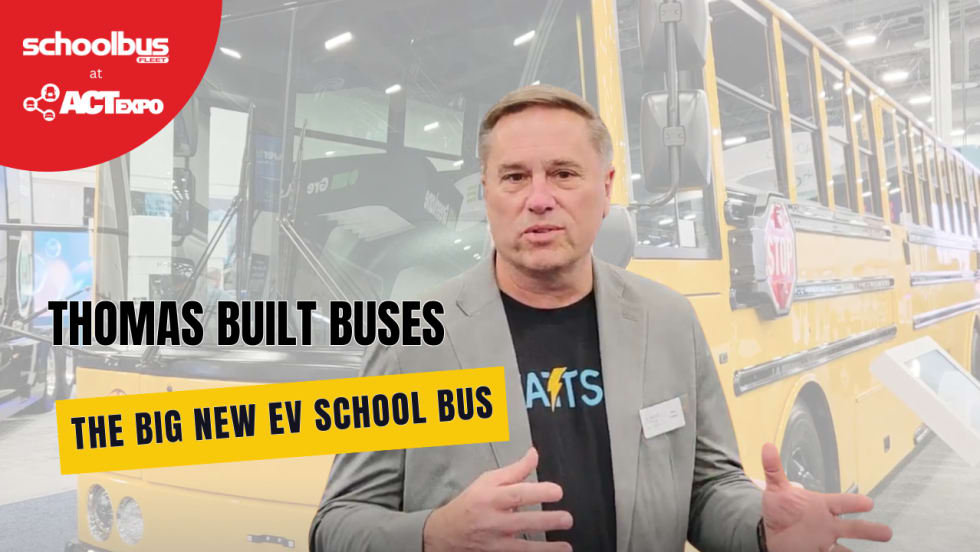
Wattson: Thomas Built’s Largest EV School Bus Yet
Check in with Mark Childers on the new Wattson Type D electric school bus, featuring faster charging, expanded passenger capacity, and advanced safety technology.
Read More →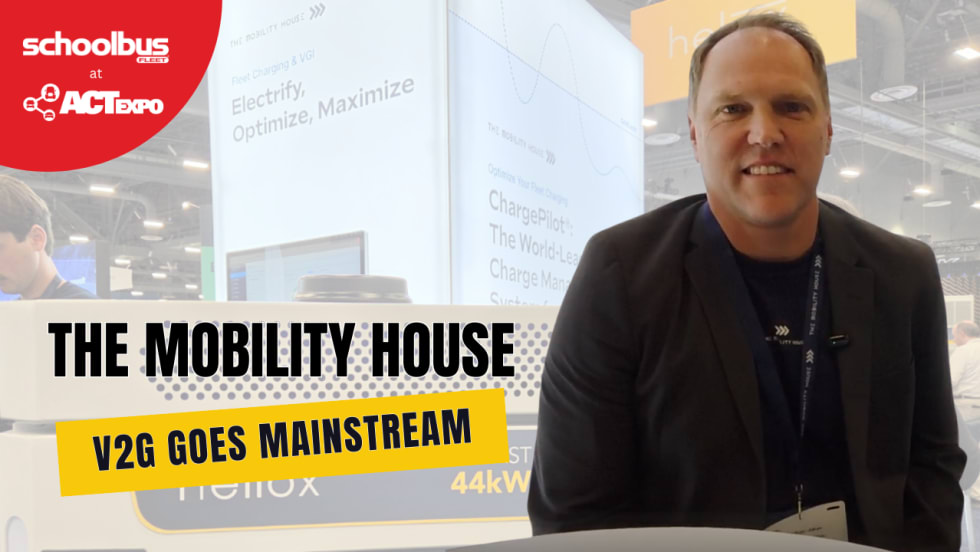
The New Era of Electric School Buses: V2G, Bidirectional Chargers & More
The Mobility House discusses AI-powered charging, vehicle-to-grid technology, smart energy management, and the next phase of school bus electrification.
Read More →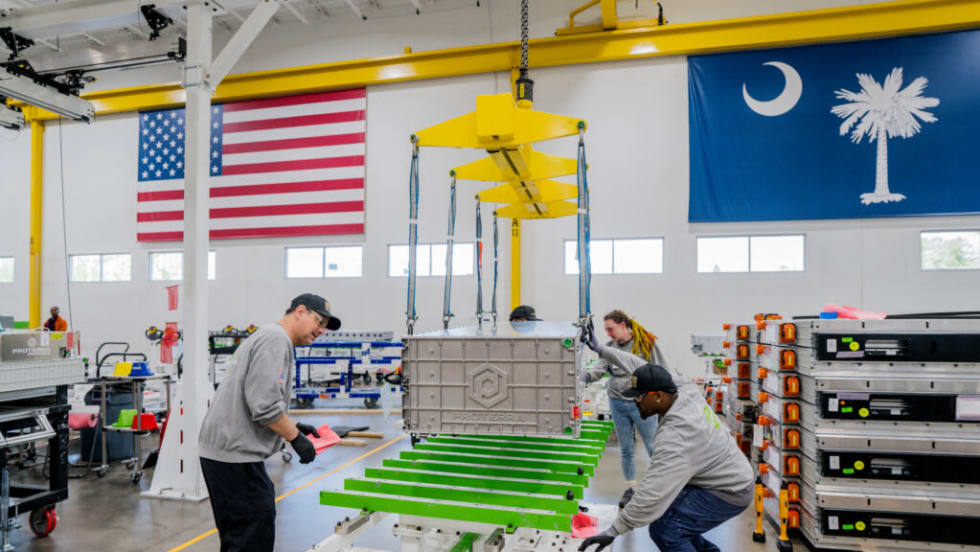
Now Made in America: Proterra Turns to U.S.-Built EV Batteries
Proterra announced a new U.S.-sourced battery cell option for its Onyx platform, boosting domestic content by more than 600% and strengthening EV supply chain resilience for commercial vehicle OEMs.
Read More →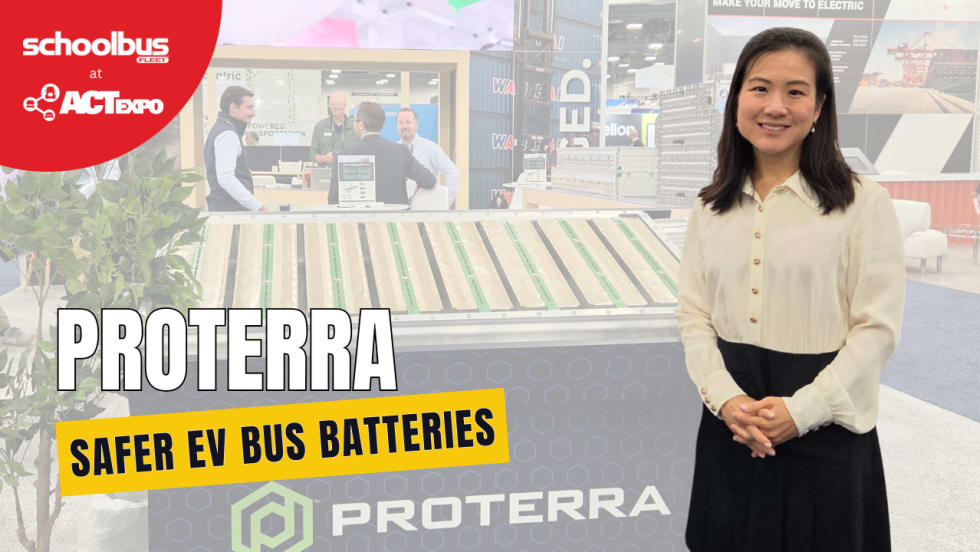
A Look at the Battery Technology Powering Electric School Buses
Check in with Proterra on next-generation EV battery technology for school buses, including safety innovations, predictive diagnostics, EPA 2027 readiness, and the future of transportation from ACT Expo.
Read More →