




How to maximize staff safety around alt-fuel buses
From fueling training to regular tank inspection to a properly equipped maintenance facility, there are many factors to consider when operating school buses on propane autogas and compressed natural gas to ensure employees’ well-being. Industry officials discuss these and other components, along with the built-in safety features of some of today’s buses.

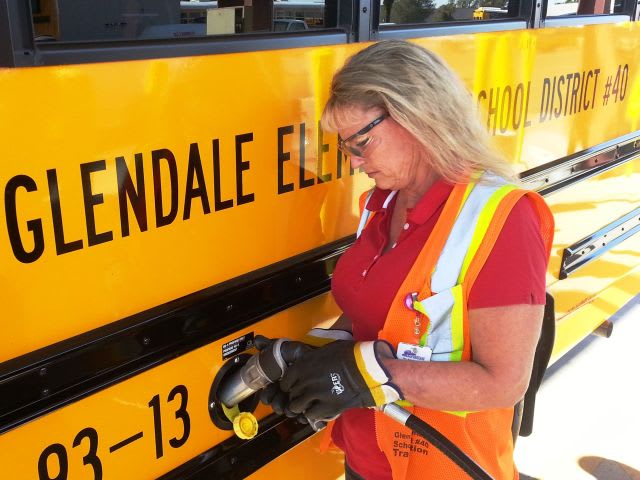
Bus drivers at Glendale (Ariz.) Elementary School District #40 are provided with protective goggles and gloves when they need to fuel the district’s propane buses.
Last year, school bus contractor Student Transportation Inc. (STI) and its subsidiary Student Transportation of America Inc. secured the largest transportation agreement in its history. As part of that contract with a Nebraska transportation association, the company will provide more than 400 new propane autogas buses.
STI represents just one of a growing number of pupil transportation operations running school buses on alternative fuels like propane autogas and compressed natural gas (CNG).
This suggests that officials are not only aware of the cost savings these fuels can yield, but that they believe they are safe.
“It’s a very safe fuel,” says Jerry Rineer, transportation supervisor at Lower Merion School District in Ardmore, Pa., of CNG. Lower Merion School District operates 58 buses fueled by CNG.
Buses have built-in safety features
Officials at school bus manufacturing companies that offer propane autogas and/or CNG buses also say that the fuel tanks in their buses are very durable. Collins Bus Corp. says, for example, that propane tanks are 20 times more puncture resistant than their gas and diesel counterparts.
John Roselli, director of alternative fuel sales at Blue Bird Corp., adds that with his company’s buses powered by propane autogas or CNG, “the fuels are in steel tanks and the tanks are mounted between the frame rails in our buses, which make it [the tank] extremely difficult to damage.”
Thomas Built Buses offers propane, CNG and hybrid-electric buses. Michael Stark, senior technical sales manager for Freightliner Custom Chassis Corp., which provides the chassis for Thomas Built’s units, also speaks to the safety features of the manufacturer’s buses.
“All Thomas Built CNG buses are equipped with several different mitigation devices to ensure safe practices,” Stark says. “The first of these features is an engine disconnect device, which is an electronic device over the fuel cap. When the fuel cap is removed, the engine is disengaged. Once the fuel cap is placed back on, the engine is initialized so the bus can be driven. This safety mechanism ensures that buses remain disengaged while fueling.” [PAGEBREAK]
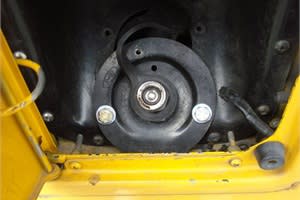
Pictured is the fitting to hook the fuel pump on a Napa Valley (Calif.) Unified School District CNG bus. Director of Transportation Ralph Knight says that if the black O ring is missing, fuel will leak if the pump is turned on. “Our drivers have been trained in how to deal with this problem, and spare O rings are in the bus for the driver to use,” Knight says.
Provide training, equipment to fuel buses
While manufacturers’ buses have built-in safety features, there are precautions that pupil transporters should take when fueling them since there are differences between propane autogas and CNG compared to conventional fuels like diesel and gasoline.
Ralph Knight, director of transportation at Napa Valley (Calif.) Unified School District (USD), has buses in his fleet that are powered by biodiesel and CNG, and he also has hybrid and electric buses.
He says that when fueling CNG buses, it’s essential to make sure that the attachment for the fuel nozzle is on the bus securely before turning the pump on — otherwise, the attachment could come off and propel into the air due to the pressure from the CNG. He also notes that the O ring must be in place. If it’s not, fuel will leak if the pump is turned on.
“With propane nozzles, it’s the same as with natural gas,” Knight adds. “You want to make sure that the nozzle is connected and locked into place before you turn the pressure on to start filling the bus.”
Eric Kissel, director of transportation at Glendale (Ariz.) Elementary School District #40, agrees, and he says he and his staff learned from training provided by Ferrellgas, the district’s propane provider, that it’s important not to stand directly in front of the fuel receiving area on the bus because if there’s any blow-by, there’s a potential to get burned.
“We provide gloves and safety goggles to the staff for fueling if they would like to use them,” he adds.
Perform regular fuel tank inspections
Along with fueling the buses properly, their tanks must be inspected regularly. Rineer says four of his six technicians are also tank inspectors. The vehicles’ fuel tanks are required to be inspected every three years or 36,000 miles, or if the bus is involved in a major accident.
“They’re looking for rust or wear around the tanks, and they check all of the fittings and the way the tanks are mounted underneath the bus to make sure the cages are protected from road hazards,” he explains.
Stark says Thomas Built Buses encourages its customers to be familiar with National Fire Protection Association Code 52, which mandates that customers inspect their vehicles’ fuel cylinders at least once every two years for nicks and cuts, although annual inspection is recommended.
[PAGEBREAK]
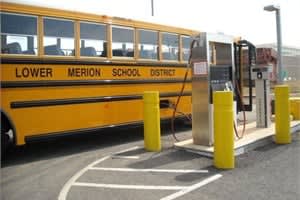
Lower Merion School District in Ardmore, Pa., operates 58 buses on CNG. Transportation Supervisor Jerry Rineer says that four of his technicians are also tank inspectors. The vehicles’ fuel tanks are required to be inspected every three years or 36,000 miles, or if the bus is involved in a major accident
Shop safety
Beyond maintaining the buses, having a facility that can properly accommodate alternative-fuel vehicles is another component to a safe environment for maintenance and transportation staff.
In the facility at Knight’s operation, he says there’s a tube that technicians hook up to the natural gas buses so that when they’re working on the buses or the buses are going to stay in the shop all night, the gas is dispersed out of the fuel system, and it then dissipates into the air, so it won’t leak into the shop.
“In our shop and in the office areas adjacent to the shop, we included CO, natural gas and carbon monoxide sensors, so if there’s a leak, they detect it, and there’s an audible alarm that goes off,” Rineer says. “The sensors also activate our HVAC system, turning on the blowers, which evacuates the air in the garage, dispersing the gas out and into the air. The garage doors open as well.”
For those operations with propane autogas buses that may not have a shop with a ventilation system, Kissel recommends rolling the vehicle out of the bay and working on it in an open space so that if the work involves exposing the fuel to the air, it has room to disperse.
“Don’t do any work in the shop — like welding — that would cause a spark around the propane tank itself or around the fuel lines,” Kissel adds.
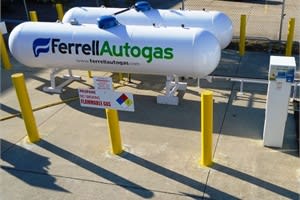
Nathan Ediger, autogas sales manager for propane provider Ferrellgas, says that one of the most important factors in installing a fueling station is establishing the proper size and location of the equipment
What to consider with fueling stations
If a school district or bus company operates alternative-fuel buses and the operation has a refueling station on site, officials say there will typically be barricades around the station to help prevent vehicles from hitting it.
Aside from this, Nathan Ediger, autogas sales manager for Ferrellgas, says that one of the most important factors in installing a propane fueling station is establishing the proper size and location of the equipment. He says that Ferrellgas performs site visits prior to every job to ensure that the company fully understands each school district’s needs, and to view the space provided to accomplish their requests.
“We ask questions about future expansion and traffic patterns throughout the day,” Ediger adds.
Clean Energy Fuels designs, builds, operates and maintains natural gas fueling stations. Corporate Safety Manager James Wright says that basic practices such as ensuring there’s no smoking or sources of ignition around fueling tanks should be followed at all times.
“If an employee suspects a potential leak, an emergency shutdown device should be activated; these are located throughout each Clean Energy fueling station,” he adds.
Training resources
Blue Bird’s Roselli and Erin Lake, marketing communications manager, say that training is the “cornerstone of a successful transition to operating buses on propane autogas or CNG.”
In addition to training available from its dealers, Blue Bird has a variety of informative videos and tutorials related to propane, including one from fueling system partner ROUSH CleanTech that shows how to properly fuel a propane autogas bus, another that shows the strength and safety of a propane tank, and a third with tips on how to effectively drive a propane bus.
To view these and other videos, visit Blue Bird's website here.
Factors to consider with electric buses
Napa Valley USD’s Ralph Knight says that the battery boxes for electric buses have 300 volts of power when they’re charged, but when the buses are turned off, the power is shut off down to the battery pack, so there’s no charge sitting in a line that could create a safety hazard.
“You always want to check it with a meter before you touch anything and take something apart,” he notes.
In addition, he advises making sure that the power is off before you plug in the bus, and the bus should also be unplugged when it’s off.
“That way both connectors are dead, so you have no power in your hands while you’re plugging it in or unplugging it,” Knight explains.
Training from the manufacturer is also important to help technicians understand how to handle the battery boxes when performing maintenance.
More Alternative Fuels
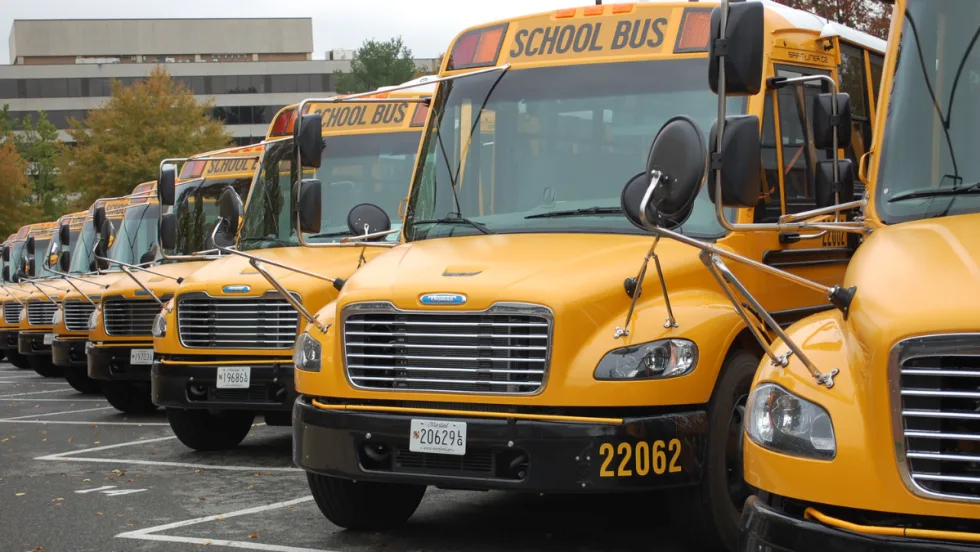
Fewer Electric School Bus Models Reshape the U.S. Market
WRI’s latest buyer’s guide points to a consolidating electric school bus market, but fewer options may reflect a maturing industry rather than fewer meaningful choices for school bus operators.
Read More →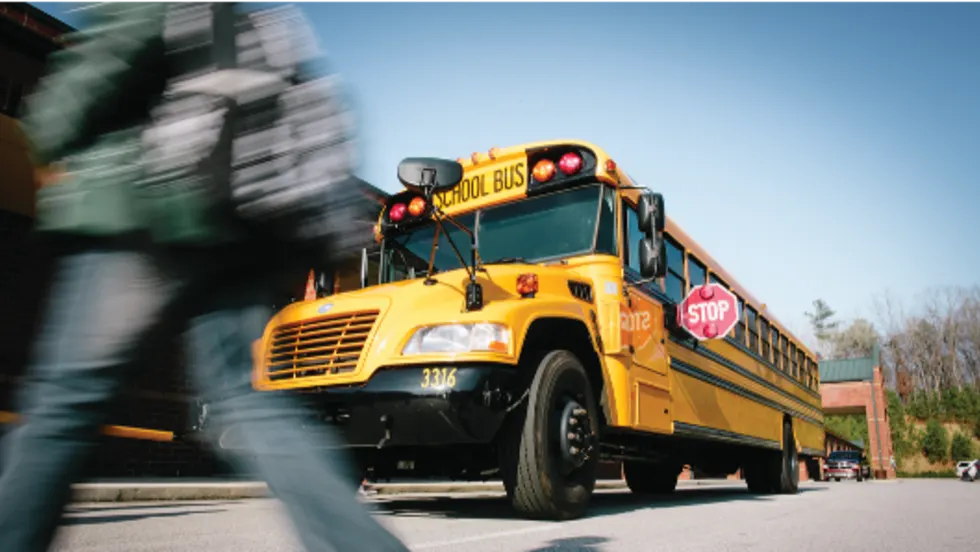
The Fuel Budget You Can Actually Predict: How Propane Autogas Keeps Money in the Classroom
Learn how propane autogas helps school districts manage fuel costs with predictable pricing, lower maintenance, and reduced emissions from former transportation director Joel Stutheit.
Read More →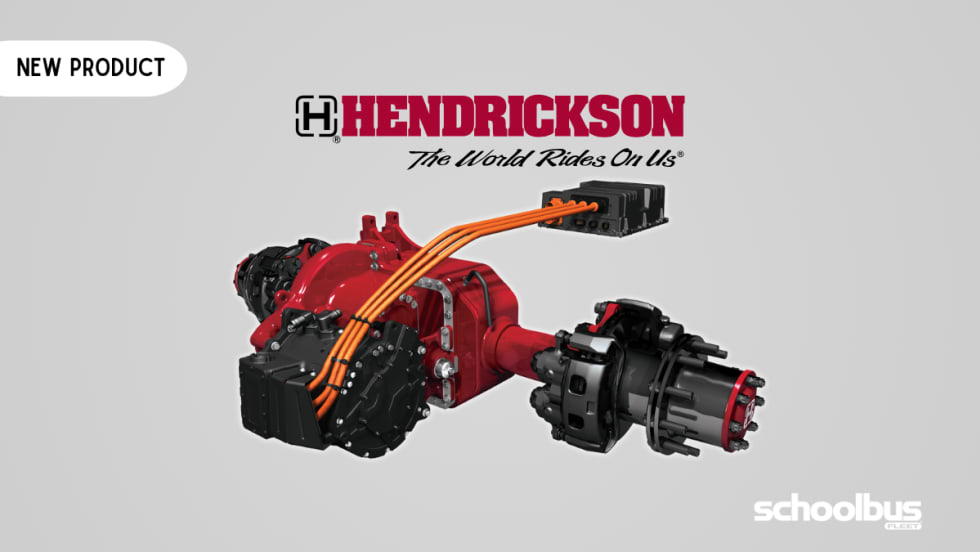
Hendrickson, Driventic Introduce New Electric Powertrain for School Buses
ELECTRAAX, the electrified, lightweight drive axle offers integrated ePowertrain efficiency and modular flexibility for Class 6–7 school bus use.
Read More →
The Mobility House Joins PowerFlex in Fleet Electrification Deal
The acquisition combines intelligent charging software, bidirectional charging expertise, and fleet electrification services to support the growing adoption of electric school buses across North America.
Read More →
Alt-Fuel Moves: Electric School Bus Investments Hit the Road
See which districts across the U.S. are putting electric school buses into service, expanding charging infrastructure, and planning the next phase of fleet electrification.
Read More →
With Fuel Volatility Ahead, School Districts Turn to Propane
While diesel prices peaked above $5 this spring, districts with propane autogas-powered fleets paid under $2 per gallon, according to PERC.
Read More →
EPA Unveils Proposed Changes to 2027 Heavy-Duty Engine Rules
The federal agency has proposed changes to next year’s targets that would eliminate DEF derates, ease warranty requirements, and retain current NOx emissions standards.
Read More →
Alt-Fuel Moves: EV Charging & Infrastructure Projects Gain Momentum
The latest developments include new funding, charging infrastructure, utility investments, and fleet technologies designed to support the transition to electric school buses nationwide.
Read More →
Alt-Fuel Moves: Fleets Power Up Beyond the Bus
See how districts are pairing electric buses with charging, solar, and V2G technology to cut costs, boost resilience, and unlock new fleet value.
Read More →
What the EPA’s Updated Clean School Bus Program Means for Fleet Electrification in 2026 and Beyond
A guide to the EPA’s evolving school bus grants, including how the Trump administration changed funding priorities and how school districts can prepare for future bus purchases.
Read More →