



Green ambitions pay off for Kansas district
George Taylor of Kansas City (Kan.) Public Schools was determined to find funding for alt-fuel buses. Now, with 47 CNG buses and four hybrids, the district is contributing to cleaner air and saving $350,000 in one school year.

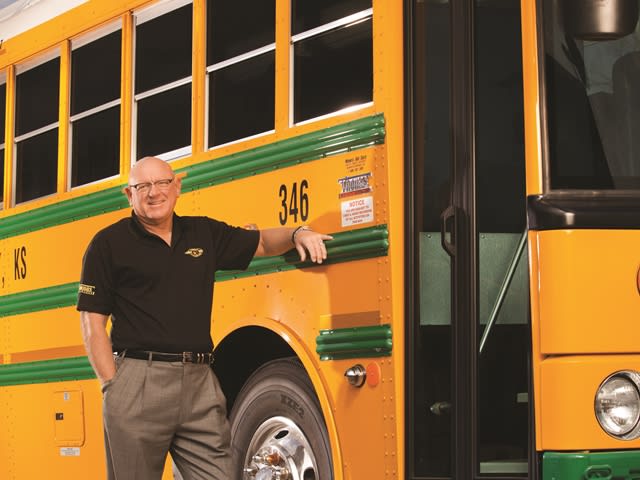
In his quest to acquire the first alternative-fuel school buses for his district, George Taylor didn't give up after his first grant application was denied. Or his second. Or his third.
Taylor, the director of transportation at Kansas City (Kan.) Public Schools, recalls that it wasn't until his fourth or fifth grant submission that he finally landed funds to buy compressed natural gas (CNG) school buses. The payoff was worth the wait: The district was awarded $4 million, which it was required to match, allowing for the purchase of 47 CNG buses and CNG fueling infrastructure.
Kansas City Public Schools now operates four hybrid school buses in addition to its CNG buses. Taylor says that the alternative-fuel buses, all manufactured by Thomas Built Buses, have produced fuel cost savings for the district and have had a significant impact in improving air quality for the community.
Green goals
Taylor's drive to incorporate alternative fuels into his fleet stemmed from concerns about increasing oil prices and about the health of Kansas City's students.
"It was driven by the cost of [traditional] fuel and the desire to be a good steward of our environment," he says, noting that he especially wanted to contribute to cleaner air for the district's students who have asthma and other medical conditions.
It was when Taylor began working with the Kansas City Regional Clean Cities Coalition that the grant funding came through. The $4 million was a stimulus grant from the Department of Energy.
Kansas City Public Schools purchased the buses through Thomas Built dealer Midwest Bus Sales, which delivered one pilot model of the CNG-powered Saf-T-Liner HDX bus in September 2010.
The district started with one unit so it could have time to try it out and see "if we had anything to tweak for the order," Taylor says.
He adds that Thomas Built and Midwest Bus Sales provided key support during the process.
"It was new territory for us," Taylor says. "They were always very receptive to what my suggestions were."
By late November 2010, the district had five of the CNG buses for training, and the rest of the units were delivered soon after.
About a year and a half later, Kansas City Public Schools acquired its first hybrid-electric buses. As with the CNG buses, the purchase of the Saf-T-Liner C2 hybrids was made possible by grant funding.
[PAGEBREAK]

Fueling system
The CNG buses were put into service when the district's new fueling infrastructure was completed in early 2011.
The infrastructure, which cost $1.75 million, includes 35 time-fill dispensers with dual hoses, allowing each station to fuel two buses at a time. With a total of 70 fueling positions and the district having 47 CNG buses, the infrastructure could support another 23 buses.
With the slow-fill application, "the vehicles come in in the evenings, and the drivers hook them up," Taylor says. "In the morning, they disconnect and have fuel for the day — the magic has happened overnight."
Taylor notes that a crucial element of the CNG fueling system is that there are back-ups in place. Each CNG bus has a fuel capacity equivalent to 65 gallons of diesel, and the fueling infrastructure includes two compressors.
"If I have a single compressor failure, I can still fuel — just not at capacity," he says. "If everything failed, I could run for a week without having to fuel.
"In the school bus industry, that's critical. I don't want to have to make a call to the superintendent: 'This wonderful project I have that's saving us money and cleaning the environment — by the way, we're down and can't run for two weeks.'"
Multiple benefits
Kansas City Public Schools acquired its hybrid buses for the task of transporting students with disabilities.
"Our most fragile population is the special-ed students," Taylor says. "We're seeing a small fuel savings [with the hybrids], but the biggest benefit is the cleaner air for our special population."
Regarding air quality, Taylor says that the CNG buses have had a "huge impact on the community."
While the district's transportation depot had rural surroundings when it was built, growth in the area led to housing popping up around the facility. During the winter, cold starting the diesel buses generated "a cloud that hangs over our location," Taylor says, which the neighbors were not happy about.
Acquiring the cleaner-burning CNG buses "was a huge step in alleviating that problem," Taylor says.
With the lower cost of CNG compared to diesel, Kansas City Public Schools has seen significant savings with its green fleet. In the 2011-12 school year, the district's fuel costs were $350,000 lower than they would have been if the buses were all diesel.
"The savings are dynamic — it depends on the price of diesel," Taylor says. "As the price of diesel reduces, the savings reduce. But my opinion is that the price of diesel will continue to escalate."
An unexpected advantage of the CNG buses has been in student behavior. With the CNG engines, which are in the rear and run quieter, "It's a lot quieter in the bus," Taylor says. "We've seen improved discipline — the kids seem to be more serene."
Loftier ambitions
Kansas City Public Schools' 47 CNG buses and four hybrid buses make up nearly a third of its total fleet of 160 school buses, the rest of which are diesels. The 2012-13 school year was the last for Taylor, who is now retiring. But he still has hopes for the district increasing its alternative-fuel use.
"It would be my goal and dream to have our fleet at least 95% natural gas," Taylor says, adding that he emphasizes the word "dream." "Given the current economic conditions for our district, there just isn't enough money to do this. ... But as soon as the economic environment improves, that's exactly where I would want to take the fleet."
Other school districts in the region have taken note of Kansas City Public Schools' alternative-fuel project, and they often call with questions about the district's experience.
Taylor says he encourages other operations to "do the math" on what they could save with alternative-fuel buses, even if the level of grant money that his district received a few years ago isn't currently available.
"It looks costly on the front end," Taylor says of the initial capital involved. "But if you believe that diesel is going to go through the roof like I do, you can justify it without the grant funding."
Fleet Facts
School buses: 160
Alternative fuels used: CNG, hybrid-electric
Students transported daily: 10,000
Schools served: 47
Transportation staff: 225
Area of service: 50 sq. miles
More Alternative Fuels

Alt-Fuel Moves: Fleets Power Up Beyond the Bus
See how districts are pairing electric buses with charging, solar, and V2G technology to cut costs, boost resilience, and unlock new fleet value.
Read More →
What the EPA’s Updated Clean School Bus Program Means for Fleet Electrification in 2026 and Beyond
A guide to the EPA’s evolving school bus grants, including how the Trump administration changed funding priorities and how school districts can prepare for future bus purchases.
Read More →
A Solution Helping School Buses Charge Without Major Infrastructure Upgrades
Power Innovations International dishes on its EV charging technology designed to reduce infrastructure barriers, improve reliability, and support V2G applications for school bus fleets.
Read More →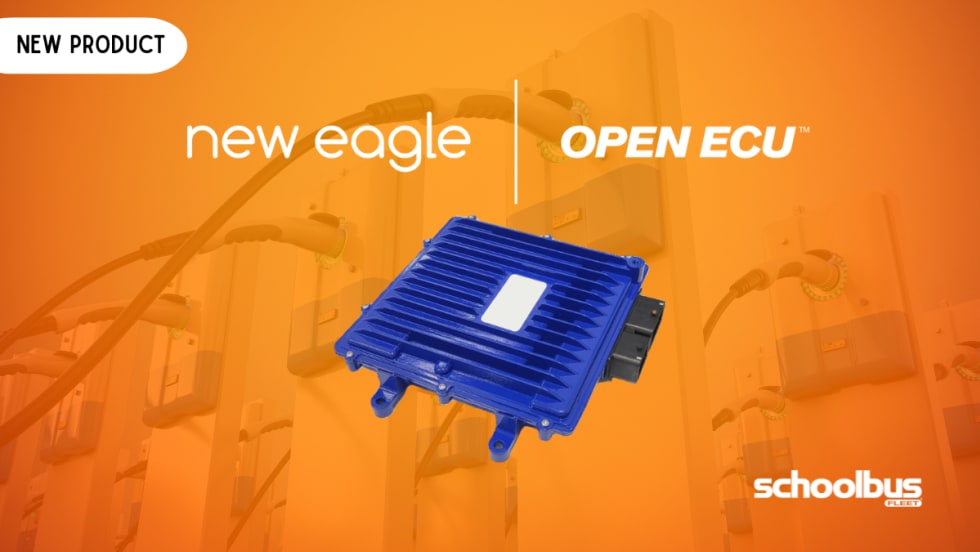
New Eagle Launches All-in-One EV Control Platform
The new OpenECU NX3 platform integrates charging and vehicle controls into a single platform, with support for megawatt charging and vehicle-to-grid technologies.
Read More →
GreenPower Unveils New Heating Solution for Type A Bus
The all-electric bus manufacturer's new product aims to eliminate cold-cabin issues on its Nano BEAST zero-emission school buses operating in cold climates.
Read More →
Alt-Fuel Moves: Fleets Plug In for the Long Haul
School districts across the U.S. are moving electric school bus plans into operation, with new fleet deployments, charging infrastructure, and long-term electrification partnerships taking shape.
Read More →
The Achilles Heel of School Bus Electrification: BetterFleet’s Take
BetterFleet’s managing partner discusses AI-powered EV fleet management, vehicle-to-grid challenges, and the real challenges in bus electrification today, from ACT Expo.
Read More →
You're On Your Own to Pick a Drivetrain [Op-Ed]
After years of federal pressure toward electric school buses, districts are suddenly being told to choose their own path. Let’s explore the risks, realities, and politics behind school bus drivetrain decisions.
Read More →
Wattson: Thomas Built’s Largest EV School Bus Yet
Check in with Mark Childers on the new Wattson Type D electric school bus, featuring faster charging, expanded passenger capacity, and advanced safety technology.
Read More →
The New Era of Electric School Buses: V2G, Bidirectional Chargers & More
The Mobility House discusses AI-powered charging, vehicle-to-grid technology, smart energy management, and the next phase of school bus electrification.
Read More →