




Trans Tech goes green with electric school bus
The Type A school bus manufacturer’s 42-passenger eTrans unit will feature a zero-emissions chassis, a regenerative braking system and the ability to travel 100 to 130 miles per charge. The bus is scheduled to debut at this year’s National Association for Pupil Transportation conference and to go into production next year.

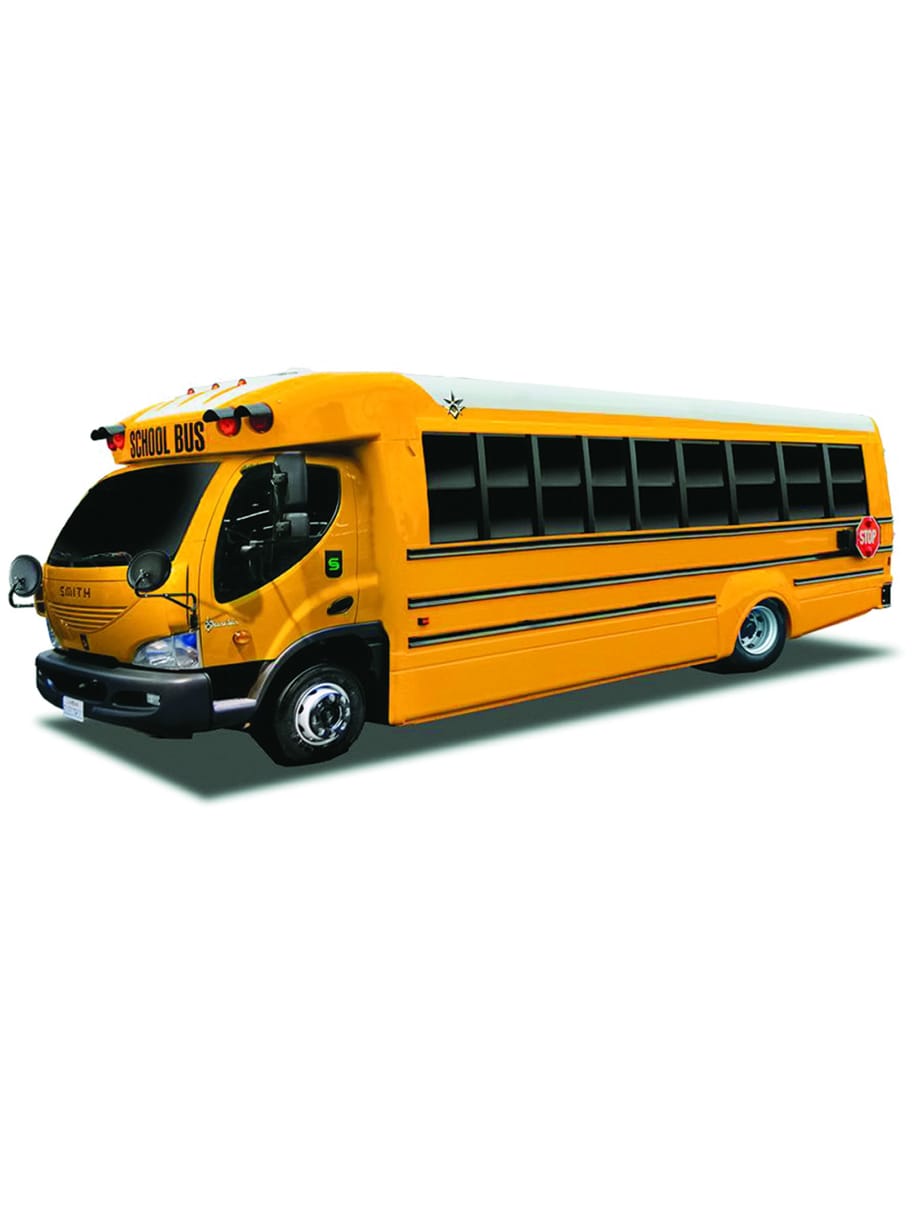
Dan Daniels, president of Trans Tech Bus, says the company's new eTrans Type A all-electric school bus will be ideal for short, defined, repetitive routes.
Type A school bus manufacturer Trans Tech Bus is offering its customers a "green" solution for transporting students with its eTrans all-electric school bus. The company will build its first eTrans prototype at its manufacturing facility in Warwick, N.Y., on a Smith Electric Vehicles zero-emissions Newton chassis.
"This is an exciting time for Trans Tech Bus as we officially enter the electric Type A school bus market with our eTrans product," says President Dan Daniels, adding that the company decided to include an all-electric school bus in its product line in direct response to customer interest and market demand.
Daniels also notes that "environmental concerns, fuel costs and the growing trend to reduce — or completely eliminate — vehicle emissions makes this the perfect time for Trans Tech to move forward on the eTrans bus with Smith Electric Vehicles."
Features and trip range
The 42-passenger school bus will feature a 120-kW electric induction motor that is powered by two 278-volt lithium-ion batteries. A regenerative braking system will help to recharge the vehicle's batteries when it is in operation.
Moreover, the eTrans will be equipped with a small auxiliary power unit fueled by compressed natural gas or propane that will power the bus' heating and air conditioning systems. The auxiliary power unit will be provided by a third-party distributor.
Users will be able to travel approximately 100 to 130 miles on a charge, depending on the load and driving conditions. The bus will be able to reach speeds of up to 60 mph.
"The eTrans will be ideal for short, defined, repetitive routes," Daniels says. "In addition, given that most school buses operate during the day, school districts and bus contractors will be able to take advantage of lower, off-peak electricity rates by recharging their fleets at night, when demand is at its lowest."
(The bus will take six to 10 hours to fully recharge; it can be charged through a standard three-phase socket.)
Trans Tech Bus says Smith Electric Vehicles' Newton chassis is very energy efficient, with electricity costs that are approximately 80-percent lower than the fuel costs for a comparable diesel-powered vehicle. This, coupled with the fact that school district transportation departments and school bus companies can recharge the bus during off-peak hours, is one of the reasons that Trans Tech believes that all-electric Type A school buses will be an essential and affordable part of metropolitan school bus fleets.
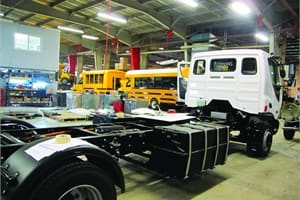
Smith Electric Vehicles' Newton chassis will undergo modifications as Trans Tech Bus engineers prepare it to receive Trans Tech's aerodynamic body.
Debut, production and availability
The eTrans is scheduled to be unveiled on Oct. 23 during the National Association for Pupil Transportation's annual conference in Cincinnati.
Trans Tech will then launch a pilot program in early 2012, allowing a select group of customers to experience the bus before the company begins full-scale production in mid-to-late 2012.
The bus will be sold through the company's nationwide dealer network, but officials say that because Trans Tech is located next to a large operation that uses Type A school buses, the company will focus its sales efforts on the New York metropolitan area. It will also focus on the West Coast market based on initial customer interest.
In terms of the price of the bus, Daniels says that Trans Tech Bus is working with industry stakeholders to ensure that the eTrans is priced competitively with conventional school buses so that customers will be able to realize significant reductions in long-term operational and maintenance costs.
"As the market for alternative fuel Type A school buses continues to take shape, there will be an endless array of innovative solutions that will continue to make electric school buses an exciting alternative to gas- and diesel-powered buses," he adds. "Our goal at Trans Tech Bus is to work with Smith Electric Vehicles to meet customer demand by building safe, environmentally friendly school buses that are affordable, easy to use and do the job required of them."
More Alternative Fuels
Bipartisan Bill Seeks to Extend Clean School Bus Program Through 2031
The proposed legislation would renew federal support for cleaner school buses as districts navigate funding uncertainty, rising fuel and infrastructure costs, and fleet replacement needs.
Read More →
Alt-Fuel Moves: Electric Bus Rollouts, Bidirectional Charging & Propane Growth
See which fleets are adding electric and propane school buses as districts and operators invest in charging infrastructure, bidirectional technology, and alternative-fuel expansion.
Read More →
Nobody Told Diesel Prices They Were Supposed to Come Down
With diesel prices surging, school bus fleets have new reason to stress-test fuel costs, consider diversification, and calculate what each route really costs to operate.
Read More →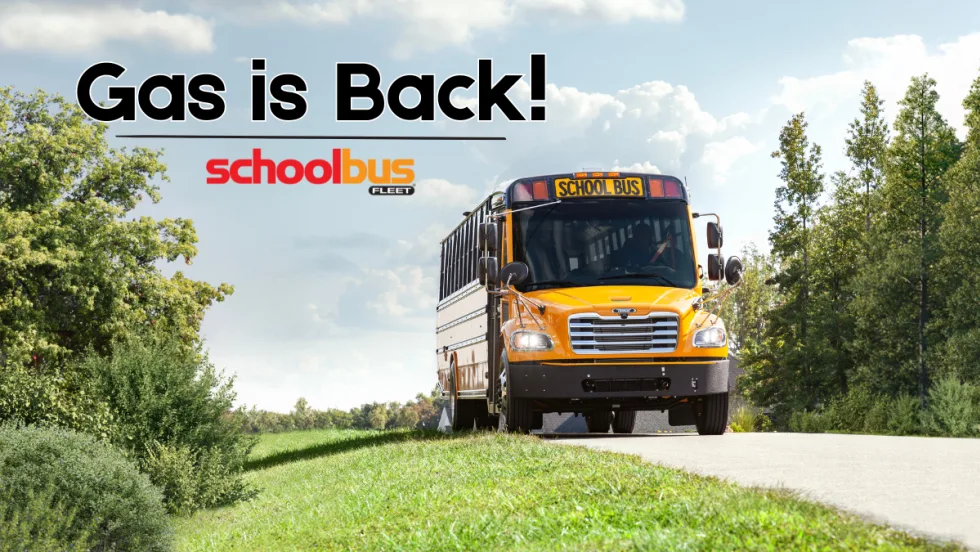
Why Gasoline School Buses Are Making a Comeback
Gasoline is gaining ground in full-size school buses. See how today’s options stack up against diesel on cost, maintenance, emissions, performance, and more.
Read More →
EPA Opens $180M DERA Funding Round for Diesel Upgrades
The 2026 Diesel Emissions Reduction Act program seeks applications from eligible organizations to accelerate the retirement of legacy diesel vehicles.
Read More →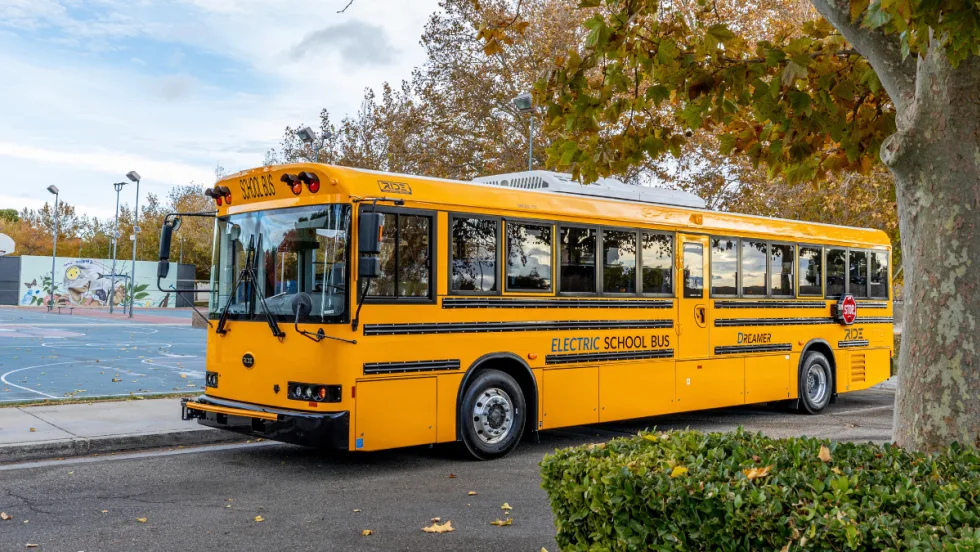
The Secret Life of an Electric School Bus Battery
Batteries change throughout years of daily routes, but degradation doesn’t necessarily mean the end. Here’s what operators should know about performance, safety, and second life.
Read More →
CALSTART and Forth Combine to Form Catalyst Mobility
The new name represents a renewed vision for the nonprofit focused on advancing clean, equitable, and affordable transportation solutions that move people and goods.
Read More →
Alt-Fuel Moves: New Buses, Charging Hubs & Real-World EV Testing
Propane and electric school bus deployments continue to grow as districts add new vehicles, expand charging infrastructure, and gather more real-world operating data.
Read More →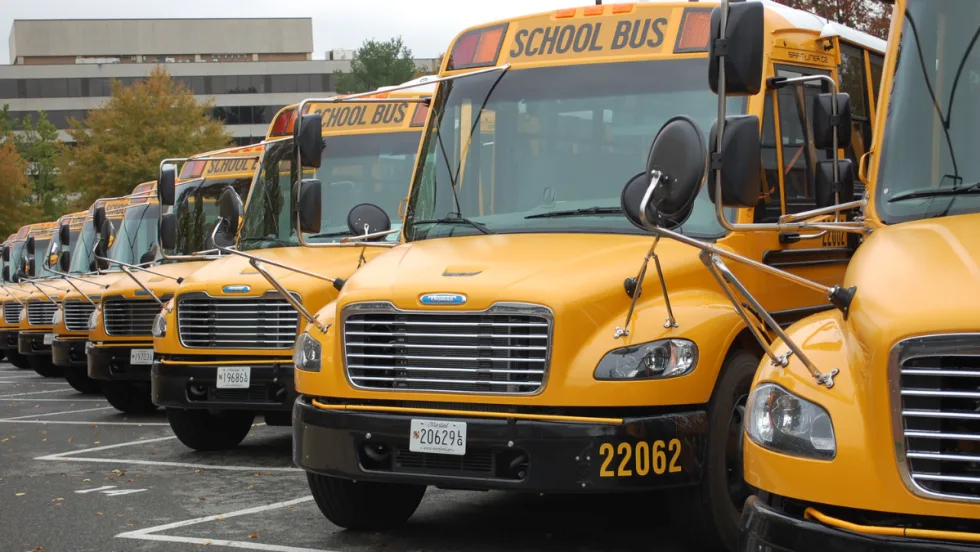
Fewer Electric School Bus Models Reshape the U.S. Market
WRI’s latest buyer’s guide points to a consolidating electric school bus market, but fewer options may reflect a maturing industry rather than fewer meaningful choices for school bus operators.
Read More →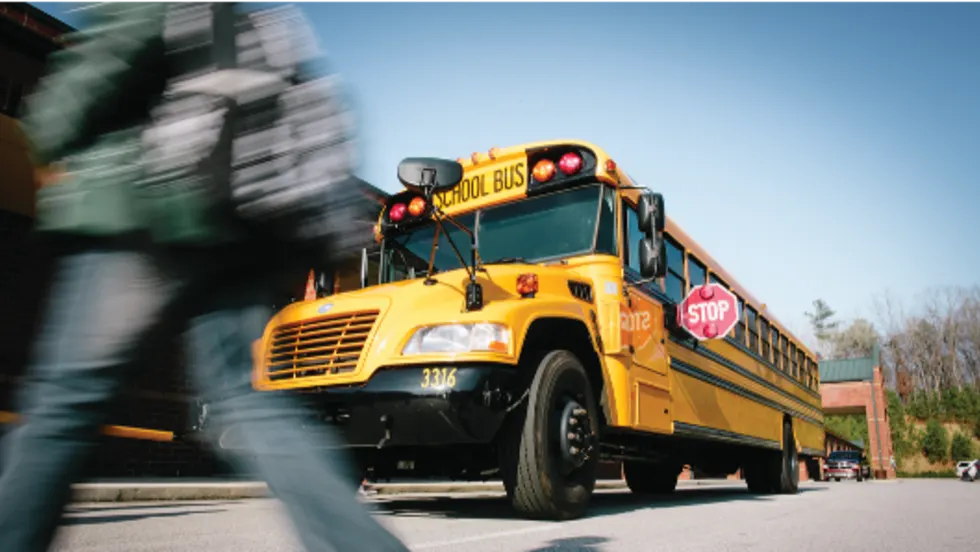
The Fuel Budget You Can Actually Predict: How Propane Autogas Keeps Money in the Classroom
Learn how propane autogas helps school districts manage fuel costs with predictable pricing, lower maintenance, and reduced emissions from former transportation director Joel Stutheit.
Read More →