




Los Angeles District Evolves Fleet and Transportation Practices
At Los Angeles Unified School District, the transportation staff has established a motto: “L.A.’s Future Rides With Us.” It is clear from the d...
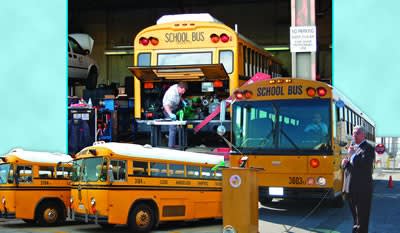
At Los Angeles Unified School District, the transportation staff has established a motto: “L.A.’s Future Rides With Us.”
It is clear from the department’s initiatives to improve its fleet, as well as its recent measures to increase communication with parents and the community, that these 1,600-plus employees are adhering to their motto by providing a safe and healthy ride for the students they serve.
Transportation Director Enrique Boull’t (pronounced “boo-LAY”) says the district’s 1,100 school bus drivers transport nearly 60,000 students daily on 2,000 routes that cover a substantial territory in the greater Los Angeles area. LAUSD is 800 square miles, running from the harbor area in the south to the San Fernando Valley in the north. The drivers also transport students on 97,000 extracurricular trips annually and on approximately 1,400 routes during the summer.
The transportation department’s contracts with First Student Inc., Durham School Services and Atlantic Express Transportation Group Inc. provide about 1,100 drivers to assist with service. Student Transportation of America Ltd. was recently awarded a contract with LAUSD that will begin in the 2009-10 school year.
Because the district serves a large area, some students are congregated at certain bus stops for pickup, and ride time is limited to 75 minutes. Despite this, the department reports 95-percent on-time performance rates.
Boull’t attributes this to the nature of his employees. “I believe we have the most outstanding drivers in the state of California,” he says. “This year, we were able to recognize over 900 district drivers for preventable accident-free driving. Our employees’ overall commitment to ensure that students get to and from school safely every day is our greatest achievement.”
A prosperous career in pupil
transportation
Boull’t has worked at LAUSD for
over 30 years. Like many transportation
directors, he started as a part-time
bus driver while attending college.
“I came in at an opportune time. The district was just starting to initiate mandatory school busing in the late ’70s,” Boull’t explains. “A rapid expansion, the need to respond to growing magnet programs and mandatory busing really gave me a few opportunities to get an outstanding job, and it’s been good to me over the years.”
Boull’t has held several positions within the district’s transportation department. After serving as a bus driver, he says he was promoted to a supervisory position and then went into the field of route planning. He also worked as a regional manager and supervised over 500 drivers before working his way up to deputy director and then, ultimately, transportation director. “It’s been a great ride,” Boull’t says.
Extensive green efforts overhaul
aging fleet
While LAUSD has the second largest
school bus fleet in the nation, it has also
struggled to overcome its reputation as
the oldest fleet in the country.
According to the Council of the Great City Schools’ spring 2008 report, the median average school bus age in member district fleets was 6.7 years. In that report, LAUSD reported an average age of 19.4 years.
In an effort to improve its low fleet age ranking, and to reduce the fleet’s impact on the environment, LAUSD has implemented a long-term replacement strategy that focuses on alternative fuels.
The district has an extensive history with compressed natural gas (CNG) and currently operates the largest fleet of CNG-powered school buses in the state, with 172 CNG buses.
LAUSD first began testing CNG’s viability as a school bus fuel in 1994 through a partnership with the Southern California Gas Co., a natural gas distribution utility.
Following the adoption of the Healthy Breathing Initiative by the district’s Board of Education in 2003, requirements for bidding contract buses were modified to reflect a preference for CNG buses or 2005 model year or newer clean-diesel buses. Boull’t reports that the district’s contractors currently run 152 alternative fuel school buses at the district. “We’re happy they’re not just providing quality service for us, but green service,” he says.
An additional 260 CNG buses will be added to LAUSD’s fleet pending the award of a grant from state agencies. Also this year, LAUSD hopes to take delivery of 100 gasoline-powered light school buses and 136 propane-powered buses. These additional vehicles would bring the district’s fleet total to 1,347 school buses, of which just 44 percent would be powered by conventional diesel.
{+PAGEBREAK+} The district has two CNG fueling stations, the second of which opened in March in Sun Valley, Calif. The Sun Valley fueling station supports 40 CNG-powered school buses, with a planned expansion of up to 100.
Moreover, LAUSD’s transportation department has made several upgrades to its five maintenance facilities in order to provide natural gas vehicle service, reports Andy Maclean, garage supervisor at the district’s Gardena, Calif., branch. Among the improvements is the installation of new ventilation and alarm systems that work in tandem to vent the garage in the event of a catastrophic failure.
The CNG fueling station is also equipped with safety features and is automated, requiring little to no maintenance.
“We’ve had to learn some new technology to maintain and operate this fleet,” Maclean explains. “One of the major tools now is a laptop, where it used to be wrenches. Plus, you can send mechanics to college now to learn how to work on CNG.”
In 2008, LAUSD started a pilot program to put 93 buses and 25 heavy-duty trucks into service using a B20 blend of biodiesel fuel. Although the fuel is about 40 cents more expensive per gallon than regular diesel, Boull’t says that the Board of Education feels that the emissions reductions achieved are well worth the additional cost. He hopes to expand the use of biodiesel in the fleet after analysis of the cost and infrastructure needs is complete.
Boull’t emphasizes that the transportation department is making these bus replacements without impacting the district’s general fund by actively pursuing grants from the South Coast Air Quality Management District and other state and federal agencies. Additionally, the department has been able to use funds that were made available after voters passed Measure Q in November 2007, which provided $7 billion in bonds for school improvements.
“Our strategy is to maximize those funding sources and fully replace what has been the oldest school bus fleet in the nation,” he says.
Due to the district’s large service area, school buses often travel on freeways, across municipalities and from one end of the county to the other. To lighten the district’s carbon footprint, Boull’t reports that the transportation department is in the process of testing three different GPS applications to streamline operations. LAUSD’s contracted service providers are also participating, making GPS data from their buses available. Boull’t emphasizes the importance of vehicle tracking, as well as monitoring speeds and idling to reduce fuel consumption.
“It’s very exciting that we’re able to get new buses and that new technologies are being implemented, but it’s more exciting that the district is going to achieve economies and efficiencies as a result of it,” he says.
Outreach efforts
The transportation department staff
has also increased its communication
with the parents and community it
serves in recent months.
Boull’t says the department is planning to participate in the district’s Parent Summit, scheduled to take place at the Los Angeles Convention Center on April 25.
The department has launched an updated Website at http://transportation.lausd.net as well. Visitors have access to a wealth of information, including school bus safety regulations, the district’s transportation programs and initiatives, videos, press releases, field trip protocol and driver training courses.
Moreover, the district as a whole is using Connect-ED, a mass-messaging phone service to communicate internally with staff and for contacting parents with an automated phone call in the event of an emergency or a change in bus scheduling. The system also alerts parents to look for important information arriving by mail.
Training classes for drivers abound
To help its school bus drivers best serve its students, LAUSD’s transportation
department offers a wide range of classes outside of the traditional
training that they are required to fulfill.
For instance, during the Effective School Bus Driver training course, attendees are provided with tools and tips on how to communicate with special-needs students.
Because multiple languages (91, to be exact) are spoken by the students and parents that the district serves, the transportation department also provides a cultural awareness course and sensitivity training to help the drivers interact with students.
Additional training topics include defensive driving, driver fatigue, student management, public relations, improving communication skills, how to navigate through traffic hazards and driving in inclement weather.
Classes are scheduled on a regular basis, and the options available for the current month are posted on a calendar within the district’s Website.
More Alternative Fuels

A Solution Helping School Buses Charge Without Major Infrastructure Upgrades
Power Innovations International dishes on its EV charging technology designed to reduce infrastructure barriers, improve reliability, and support V2G applications for school bus fleets.
Read More →
New Eagle Launches All-in-One EV Control Platform
The new OpenECU NX3 platform integrates charging and vehicle controls into a single platform, with support for megawatt charging and vehicle-to-grid technologies.
Read More →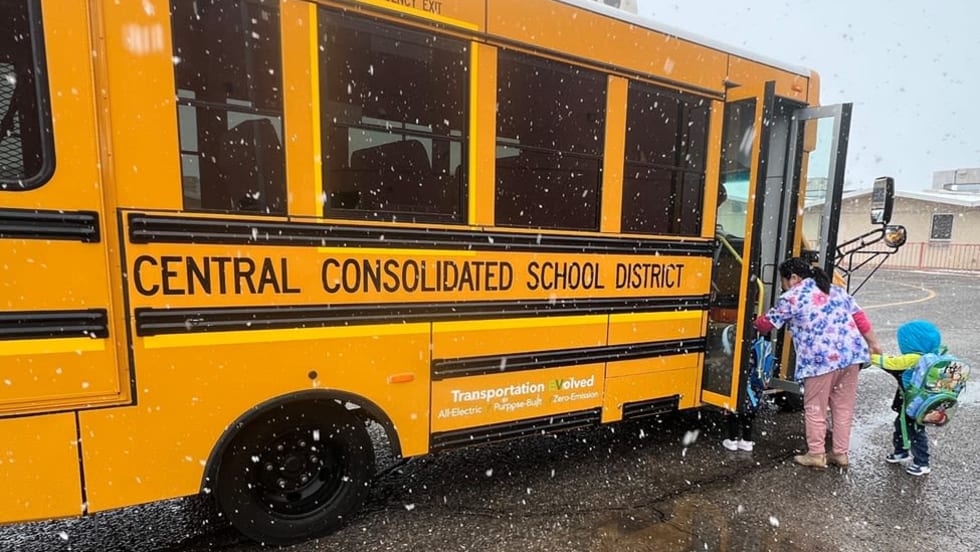
GreenPower Unveils New Heating Solution for Type A Bus
The all-electric bus manufacturer's new product aims to eliminate cold-cabin issues on its Nano BEAST zero-emission school buses operating in cold climates.
Read More →
Alt-Fuel Moves: Fleets Plug In for the Long Haul
School districts across the U.S. are moving electric school bus plans into operation, with new fleet deployments, charging infrastructure, and long-term electrification partnerships taking shape.
Read More →
The Achilles Heel of School Bus Electrification: BetterFleet’s Take
BetterFleet’s managing partner discusses AI-powered EV fleet management, vehicle-to-grid challenges, and the real challenges in bus electrification today, from ACT Expo.
Read More →
You're On Your Own to Pick a Drivetrain [Op-Ed]
After years of federal pressure toward electric school buses, districts are suddenly being told to choose their own path. Let’s explore the risks, realities, and politics behind school bus drivetrain decisions.
Read More →
Wattson: Thomas Built’s Largest EV School Bus Yet
Check in with Mark Childers on the new Wattson Type D electric school bus, featuring faster charging, expanded passenger capacity, and advanced safety technology.
Read More →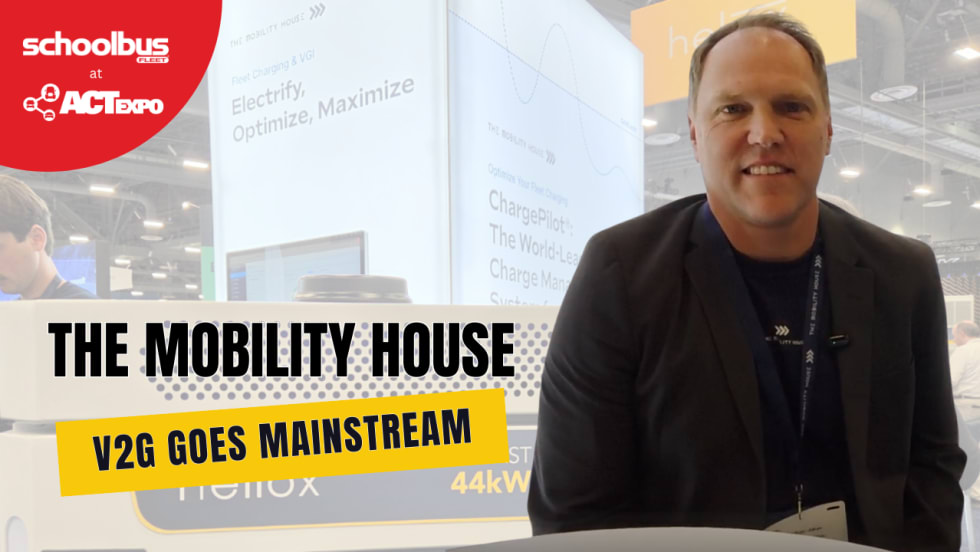
The New Era of Electric School Buses: V2G, Bidirectional Chargers & More
The Mobility House discusses AI-powered charging, vehicle-to-grid technology, smart energy management, and the next phase of school bus electrification.
Read More →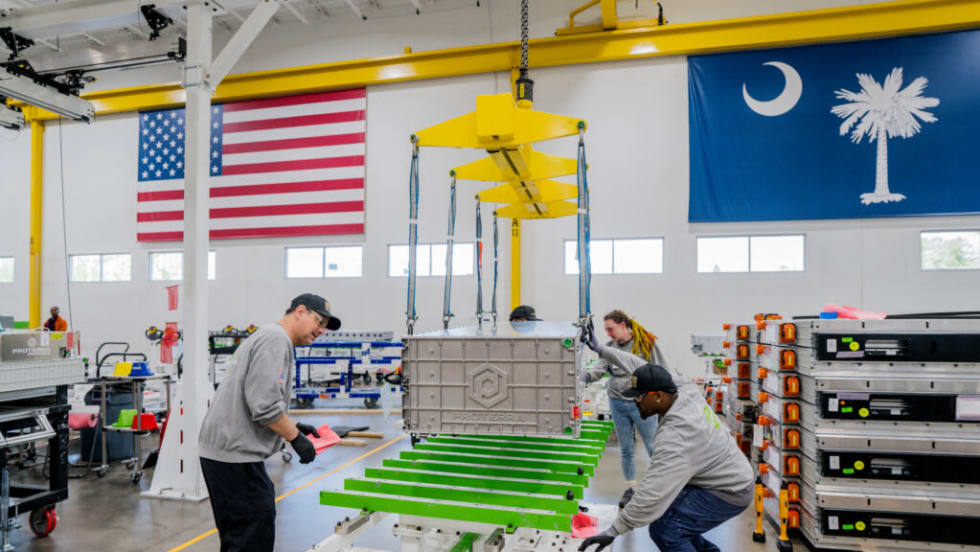
Now Made in America: Proterra Turns to U.S.-Built EV Batteries
Proterra announced a new U.S.-sourced battery cell option for its Onyx platform, boosting domestic content by more than 600% and strengthening EV supply chain resilience for commercial vehicle OEMs.
Read More →
A Look at the Battery Technology Powering Electric School Buses
Check in with Proterra on next-generation EV battery technology for school buses, including safety innovations, predictive diagnostics, EPA 2027 readiness, and the future of transportation from ACT Expo.
Read More →