



Can all-electric bus go the distance?
GOLDEN, Colo. — As the major school bus OEMs work toward providing more hybrid and propane buses, a new player is looking to break into the market wit...

GOLDEN, Colo. — As the major school bus OEMs work toward providing more hybrid and propane buses, a new player is looking to break into the market with a different twist on alternative-fuel propulsion.
Proterra LLC is developing a school bus that is powered exclusively by an electric motor that runs on batteries and, consequently, puts out no emissions. While the vehicle is expected to cost around $225,000, the company says that fuel savings will help in defraying the premium.
“In the 12-year life of the bus, you’ll save a minimum of $20,000,” said Dale Hill, CEO of Proterra. He said that projection was calculated with diesel at $4.50 per gallon, a mark that the national average later exceeded.
Hill and his Proterra associates aren’t newcomers to bus development. In the late ’90s, they built a fleet of hybrid CNG-electric transit buses for Denver’s 16th Street Mall. Those 36 vehicles have now logged more than 3 million miles and carried more than 150 million passengers.
The Federal Transit Administration (FTA) later prompted Hill’s team to reconvene and develop “the bus of the future,” Hill said. The FTA funded the team’s development of a hybrid battery-fuel cell transit bus.
Proterra’s school bus uses the same basic design platform as the transit bus, but it is all-battery rather than a hybrid. And, of course, it will meet the Federal Motor Vehicle Safety Standards for school buses as well as the varying state specifications.
A key element of the bus’ design is a low floor, which could enable students who use wheelchairs to board via a flip-out ramp. Also, the bus is built with composite body technology, which Hill said reduces weight while providing high impact-resistance.
The batteries on the bus are charged by plugging into an electric grid, and they capture additional energy through regenerative braking. Proterra’s standard charger can provide a full charge in less than two hours; a larger unit can do the job in 10 minutes.
The company calculates the cost of a full charge (at a typical nighttime electricity rate) to be approximately $9.80. The bus can travel about 70 miles on one charge, Hill said.
The company expects to have the bus ready to hit the road by the end of this year. Then it will be put to the test at several school bus operations in California, Colorado, Pennsylvania and Florida.
Ralph Knight, director of transportation at Napa (Calif.) Valley Unified School District, has been giving input to Proterra throughout the development of the bus, and his district will take delivery of one of the first units.
“It’s really out of the box, as far as the school bus industry is concerned, but I think it’s a perfect place for it,” Knight said of the bus. “Dale has pieced together a beautiful drivetrain. He has an old conventional bus that they’ve put the system into and that they’re testing with, and the batteries are doing a tremendous job.”
Wayne Johnston, director of transportation at Springfield Township School District in Oreland, Pa., has also been working with Proterra on the bus. He hopes to procure as many as three of the electric buses next year. To him, the clean-air aspect is vital.
“Something’s happening,” Johnston said. “We’re seeing the environmental changes in my district — we don’t get as much snow as we used to. If [the bus] cuts out the environmental impact, I’m all for it.”
Although Hill realizes that the high purchase price of the bus may be “a bit of a stumbling block,” he said that Proterra will offer 12-year, no-money-down financing. Grants from environmental agencies may also help in acquiring the bus.
Hill is optimistic about the prospects for this audacious new school bus, but he acknowledges that it could be somewhat limited in its draw.
“Is it going to take over the whole market? No,” Hill said. “But in areas like the Los Angeles Basin, where the presence of asthma in schoolchildren is way above the national average, I think it’s going to be readily accepted.”
More Alternative Fuels
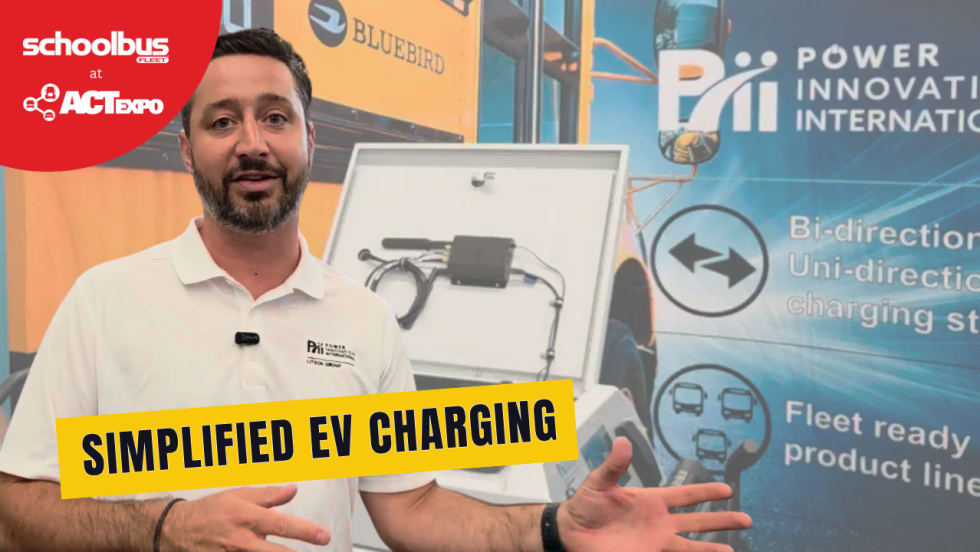
A Solution Helping School Buses Charge Without Major Infrastructure Upgrades
Power Innovations International dishes on its EV charging technology designed to reduce infrastructure barriers, improve reliability, and support V2G applications for school bus fleets.
Read More →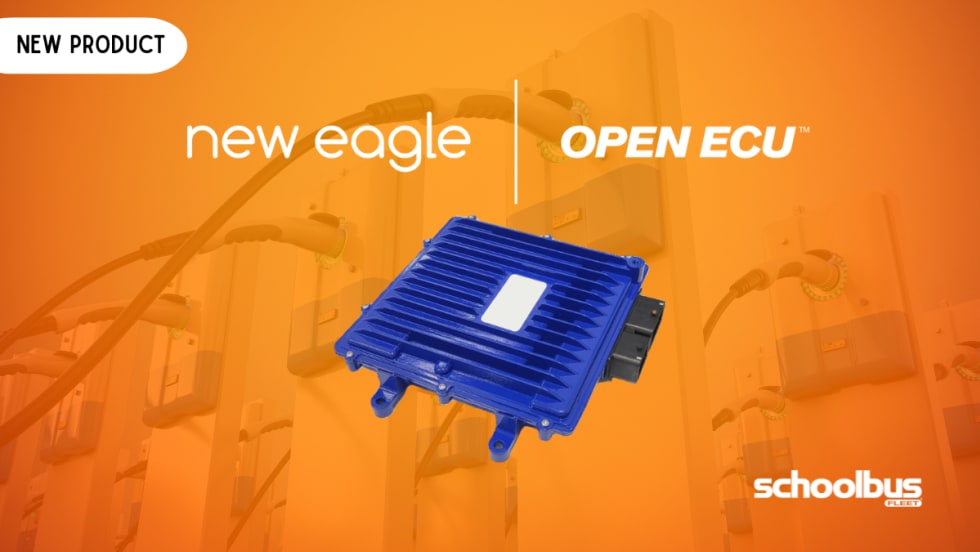
New Eagle Launches All-in-One EV Control Platform
The new OpenECU NX3 platform integrates charging and vehicle controls into a single platform, with support for megawatt charging and vehicle-to-grid technologies.
Read More →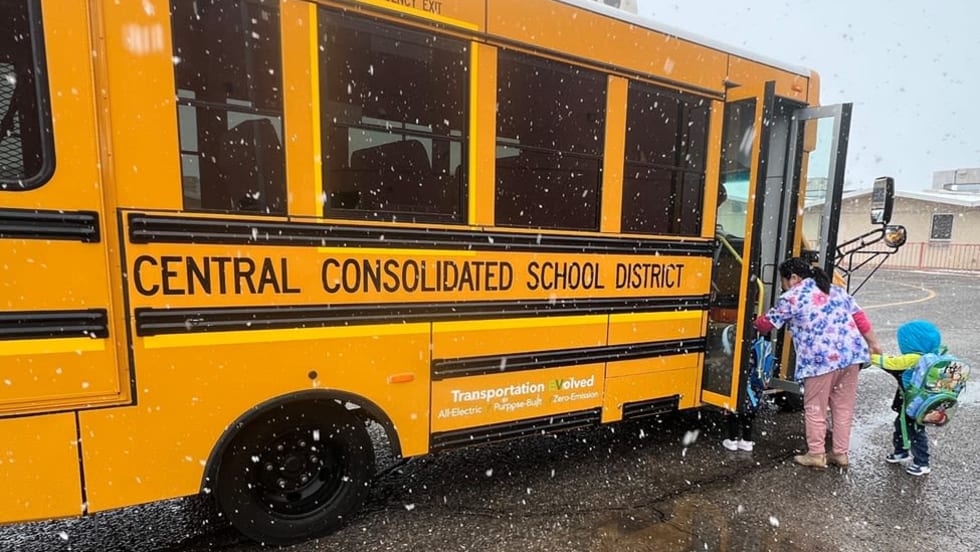
GreenPower Unveils New Heating Solution for Type A Bus
The all-electric bus manufacturer's new product aims to eliminate cold-cabin issues on its Nano BEAST zero-emission school buses operating in cold climates.
Read More →
Alt-Fuel Moves: Fleets Plug In for the Long Haul
School districts across the U.S. are moving electric school bus plans into operation, with new fleet deployments, charging infrastructure, and long-term electrification partnerships taking shape.
Read More →
The Achilles Heel of School Bus Electrification: BetterFleet’s Take
BetterFleet’s managing partner discusses AI-powered EV fleet management, vehicle-to-grid challenges, and the real challenges in bus electrification today, from ACT Expo.
Read More →
You're On Your Own to Pick a Drivetrain [Op-Ed]
After years of federal pressure toward electric school buses, districts are suddenly being told to choose their own path. Let’s explore the risks, realities, and politics behind school bus drivetrain decisions.
Read More →
Wattson: Thomas Built’s Largest EV School Bus Yet
Check in with Mark Childers on the new Wattson Type D electric school bus, featuring faster charging, expanded passenger capacity, and advanced safety technology.
Read More →
The New Era of Electric School Buses: V2G, Bidirectional Chargers & More
The Mobility House discusses AI-powered charging, vehicle-to-grid technology, smart energy management, and the next phase of school bus electrification.
Read More →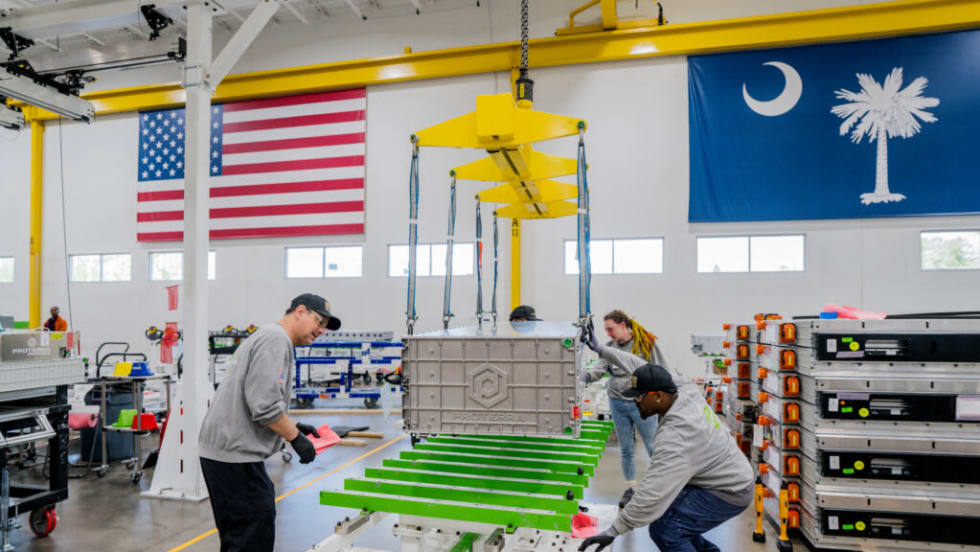
Now Made in America: Proterra Turns to U.S.-Built EV Batteries
Proterra announced a new U.S.-sourced battery cell option for its Onyx platform, boosting domestic content by more than 600% and strengthening EV supply chain resilience for commercial vehicle OEMs.
Read More →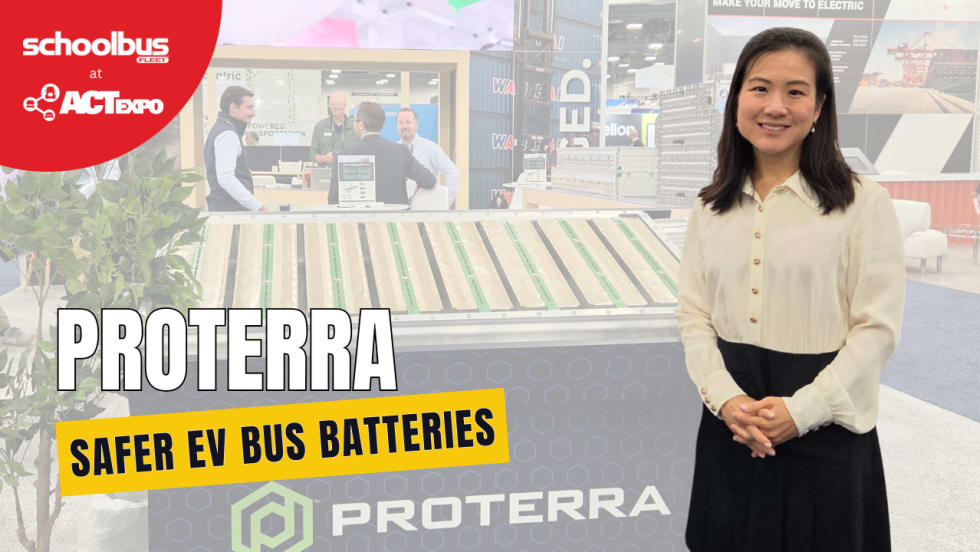
A Look at the Battery Technology Powering Electric School Buses
Check in with Proterra on next-generation EV battery technology for school buses, including safety innovations, predictive diagnostics, EPA 2027 readiness, and the future of transportation from ACT Expo.
Read More →