




Contractors on school busing now, and what lies ahead
In this roundtable, executives from several school bus companies discuss driver shortage, the potential for growth in the contractor market this year, and what impact legislative issues — at the national and state levels — will have on their business, and on the industry as a whole.


As the pupil transportation industry contends with the tough economic conditions, many school bus contractors are facing the same challenges, including school bus driver shortages. SCHOOL BUS FLEET’s 2012 Contractor Survey found that 83% of respondents reported some degree of shortage.
In speaking with executives at several school bus companies this year, SBF Managing Editor Kelly Roher learned that this continues to be an issue for some, and others predict that the shortage will continue as the economy recovers. The officials discuss efforts in place at their operations to help retain school bus drivers, and they shed light on other issues impacting their business, including the healthcare reform legislation.
SBF: What are you seeing in your areas of service in terms of school bus driver shortage? Are there any initiatives in place at your operation that you feel have helped to retain bus drivers?

JOHN BENISH: We started to see some minor shortages of drivers this fall. We have been especially hit hard with “underemployed drivers” who began to get back to the kind of jobs they left when the recession started. It is obvious trucking has taken off again, and this has also been tough on getting enough people in the driver seats of school buses. The initiatives we think have helped us quite a bit with retaining drivers are to make sure the current staff is happy and healthy. We feel emphasizing personnel health has been very important. Running contests for perfect attendance during the winter months has also helped us.
LINDA BURTWISTLE: We have seen pockets of driver shortage throughout North America. Over the last two years, we have worked to enhance our driver training programs to ensure that each driver feels confident and equipped to handle any situation that may arise. This builds confidence and improves morale. In addition, we are focused on employee welfare and empowerment — providing recognition, leadership opportunities and wellness initiatives across the organization.
JOHN CORRADO: The driver market has not been an issue for us over the last couple of years. I do, however, predict, as the economy recovers, we will see another significant shortage of drivers. This is still a part-time job, and attracting and keeping drivers with the typical weekly wage in our industry will be a big challenge by 2015 at the latest.
PATRICK DEAN: Our success in retaining employees starts with our personal interest in making them successful at their job. We spend many hours ensuring that new drivers and monitors understand our mission and their role in that mission before sending them out on the road.
Nearly two years ago, we implemented a school transportation applicant assessment test to help guide our staff in hiring individuals. This tool, along with our focus on the individual, has reduced turnover and increased the overall success of our identification of drivers and attendants who enjoy and succeed in their positions.
DAVID DUKE: We are seeing bus driver shortages in different parts of the U.S. and Canada. Importantly, the qualities of the person we want to recruit, hire and retain are the same that make them desirable to other employers. So as the economy improves, drivers looking for full-time work are moving to other industries and positions. To counter this, we continue to create and offer employee-centric programs to engage employees, increase self-esteem and morale, and contribute to their overall well-being. Our goal is to engage employees at every level, assuring them that they are a valued member of the organization and that their growth, development and satisfaction is important to us. A few initiatives being implemented are “listen and learn” employee focus groups that allow them to speak openly about any concerns they have, Employee of the Month, the Master Driver program, the Going the Extra Mile program, School Bus Slim Down and other proprietary programs.

DOMENIC GATTO: We do not experience school bus driver shortage in our New York City operations as a result of well-paid full-time driver positions with attractive benefits. We do experience pockets of shortage in some areas. We continually recruit and train driver applicants and provide incentives to retain them.
PATRICK VAUGHAN: As of this date, we have been fortunate to have limited shortages across North America. We credit our low turnover rate to our very experienced management team that recognizes the importance of creating a caring culture, and more importantly, a workplace environment that is focused on being responsive to our employees’ issues.
[PAGEBREAK]Do you anticipate seeing more school districts contracting out their bus service this year?
BENISH: Yes, I do anticipate more districts contracting out their bus service this year. We have already seen many districts all over the country take a look at this possibility. I want to make myself clear that outsourcing is not for every school district, but if a school district’s transportation budget is in the red, it makes sense for someone from the outside to take a look. Most of the time, the drivers and staff stay in place and the districts can still save a significant amount of money. Specific factors that have made outsourcing more popular are the shortage of states’ reimbursements to the individual school districts. Also, districts have not been able to purchase new equipment, and this has snowballed into a real problem in which some districts are operating very old equipment, therefore doubling and tripling their costs.

CORRADO: I do not see a big push to contract services out, but the New York School Bus Contractors Association is supporting legislation that would allow districts that save money through outsourcing to keep those savings in their budgets for up to five years. This could help if it passes. I truly hope that districts begin to consider using the private industry when they see fit. There are safety resources that we bring to the table and certain operating efficiencies that they could take advantage of.
DEAN: We continue to see interest in contracting for student transportation for both equipment and labor needs. Throughout the Midwest, schools continue to struggle with the need for new equipment. As a contractor, we are supplementing the needs of districts by providing extra trips and routes that cannot be covered due to labor or fleet shortages. We expect these types of hybrid relationships to continue to rise in the coming years.
The decline in school finances has also increased interest in evaluating contracted transportation services. In Michigan, Gov. Rick Snyder has appropriated money for school districts that meet certain “best practices,” including investigating contracted school transportation services. School districts in Michigan have used this tool to evaluate their current transportation department and establish market benchmarks against a third-party service. In this analysis process, many schools have chosen to contract for transportation services in Michigan, while others have used these bids to reshape their district-run department.
DUKE: We’ve seen an ongoing increase in the number of districts going out to bid for transportation services. Over a three-year period, the number of bids our organization engaged grew 16%, and the number of states with conversion activity grew within a two-year period from 14 to 21 states. The triggers to motivate districts have been consistent: financial, operational and the desire for administrators to spend less time on transportation issues.
How has the Patient Protection and Affordable Health Care Act (aka “Obama Care”) impacted your operation, or how do you expect it will impact your operation?
CORRADO: Most operators offer some type of health insurance coverage. However, due to the part-time nature of the job and the part-time wage levels, many drivers who need insurance do not take it if they have to make a weekly contribution. My guess is that this amounts to approximately 30% of our drivers. Once we are paying for health insurance for this group in 2014, we will need a 4% to 5% increase in our pricing to cover this cost increase.

Patrick Dean is director of development at Dean Transportation Inc. in Lansing, Mich. DEAN: Since we currently offer health insurance options, the current structure of the Patient Protection and Affordable Health Care Act may not have a major impact on our operations, and we expect our current healthcare coverage options to continue. However, we recognize that for our industry as a whole, the biggest challenge will be not only interpreting how the act will be implemented in 2014 as currently devised, but continuing to stay abreast of ongoing changes in the act’s definitions and final rules. There are many significant unknowns with regard to the federal reporting requirements, full-time employee tracking and standards of coverage, which make it challenging to forecast future expenses. … There is certainly the possibility that the industry will see significant increases in transportation employment costs in 2014.
GATTO: “Obama Care” will increase our costs. We have contracts that have prices locked in for several years, such that we are starting to request reopeners on most of our school district contracts and driver union contracts to address the impact of [the] costs of Obama Care. In the long run, the costs will be passed along to taxpayers through higher bus prices.

VAUGHAN: Alongside new regulations and initiatives in the healthcare industry, Student Transportation of America is in the process of rolling out several health and wellness initiatives across the company. While we cannot control what regulations go in effect, we can help our staff with access to more health resources on and off the job. We anticipate the benefits to our company and employees being reduced absenteeism, reduced healthcare costs, and it promotes healthier lifestyles.
[PAGEBREAK]Are there any regulatory issues at the state or national levels that you’re monitoring?
BENISH: We are keeping a close eye on the sleep apnea situation with the federal government. We believe this is going to be one of the most serious situations we have seen in the last 20 years with drivers’ health and hiring restrictions. We believe over 40% of the current drivers across the country will be affected by this new regulation.

BURTWISTLE: We are constantly monitoring regulatory issues across North America. In Illinois, the change from being a low-bid state will allow decisions to be made with a variety of factors in mind, benefitting both districts and providers. In eastern Canada, the shift to an RFP process changes the way bids are submitted and accepted. In several states, a change in summer unemployment status has impacted our drivers.
CORRADO: We are concerned about pending legislation in New York that would require all bus operators to retrofit every bus with a driver interlock system connected to a Breathalyzer. This is a direct result of three school bus driver DWI arrests on Long Island last fall. I believe this would be a terrible way to address this very real concern. There are several other steps that should be taken first before we are required to install interlocks on the buses.
DEAN: In response to several tragic accidents, our legislators and industry professionals are working to determine if safety bars should be required on Michigan school buses to prevent cars from sliding under the rear bumper.
Likewise, the Michigan Legislature is again reviewing school bus stop laws which currently allow school buses to utilize hazard lights as an alternative to a traditional red light stop in certain pickup and drop-off situations.

DUKE: Some of the regulatory issues we are currently monitoring include the elimination of unemployment compensation in certain states and “Obama Care.”
What are the biggest changes you’ve seen in the industry over the past several years that have impacted the contractor market?
BENISH: The biggest changes we have seen in the school transportation industry the last couple of years are the necessity of technology on school buses, and the responsibility of reporting this information correctly and quickly to our customers — digital cameras, GPS, and now we are seeing some districts asking for wireless Internet on our buses.
BURTWISTLE: Contractor consolidation is a change that we’ve seen over the last few years, which provides the customer with greater efficiency and greater economies of scale when it comes to overall purchasing power.
DUKE: Technology is impacting the operating environment more than ever. There was a time when GPS was “nice to have,” but it is quickly becoming an essential operating tool, helping us in managing on-time performance, vehicle idling and maintenance. Fuel prices are typically volatile, but we’ve seen a consistent climb in prices over the last several years.
GATTO: Over the past several years, the school transportation industry has been experiencing stagnation brought about by the prevailing economic conditions. We have seen school districts reduce daily routes, field trips, charters and eliminate bus service due to their financial stress. The high fuel prices of recent years made matters worse.
More Management
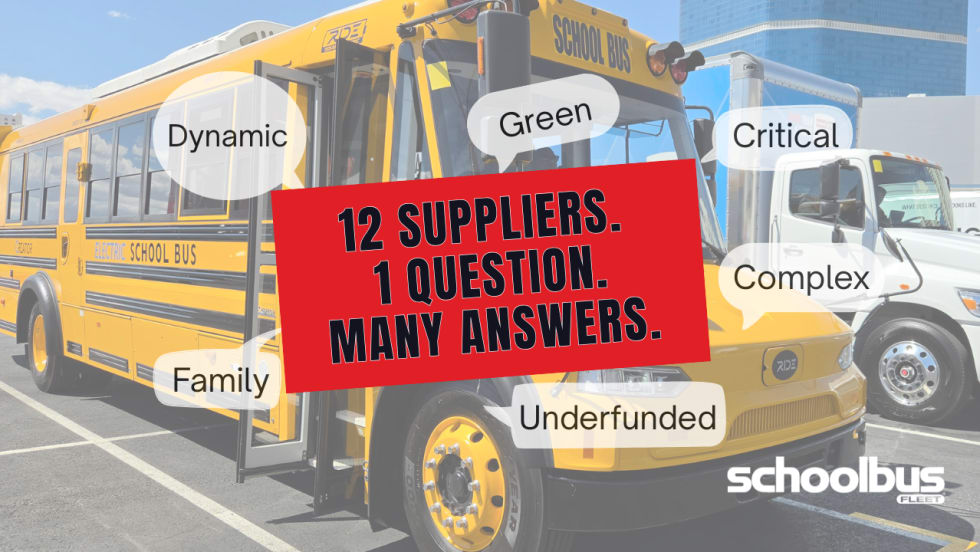
13 Industry Leaders Describe School Transportation in One Word
What word best describes the school bus industry today? We posed that question to over a dozen manufacturers, resulting in a revealing mix of perspectives on the challenges and opportunities ahead.
Read More →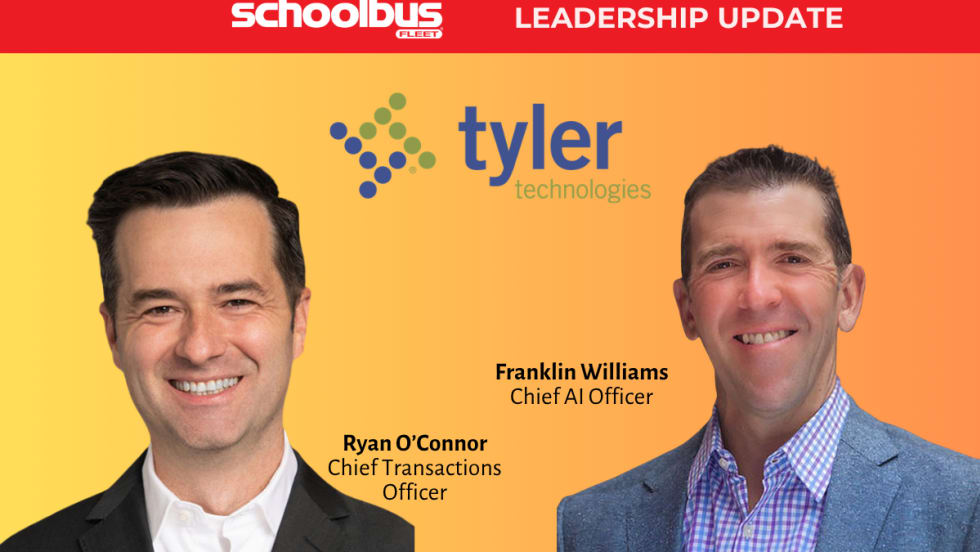
Tyler Technologies Adds New AI, Transactions Leadership Roles
Two company executives are promoted to newly created C-suite positions to accelerate the company's long-term growth in both artificial intelligence and payments.
Read More →
Pro-Vision Acquires Convoy Technologies
The deal aims to broaden customer relationships and adds specialized vehicle video capabilities for commercial fleets.
Read More →


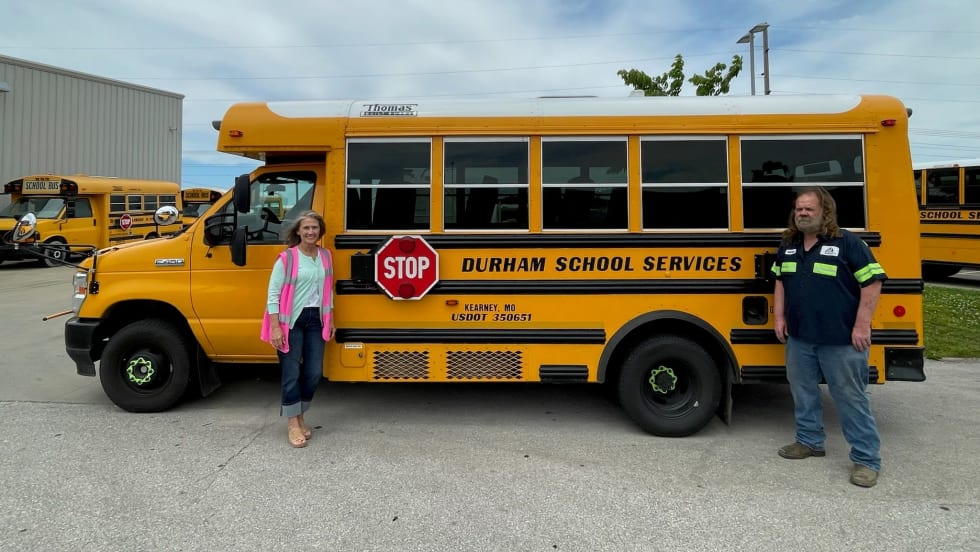
Durham School Services Maintenance Teams Earn Missouri Fleet Excellence Awards
Eight of the contractor’s school bus fleets achieved a distinction few maintenance teams earn during the state’s rigorous annual inspection program.
Read More →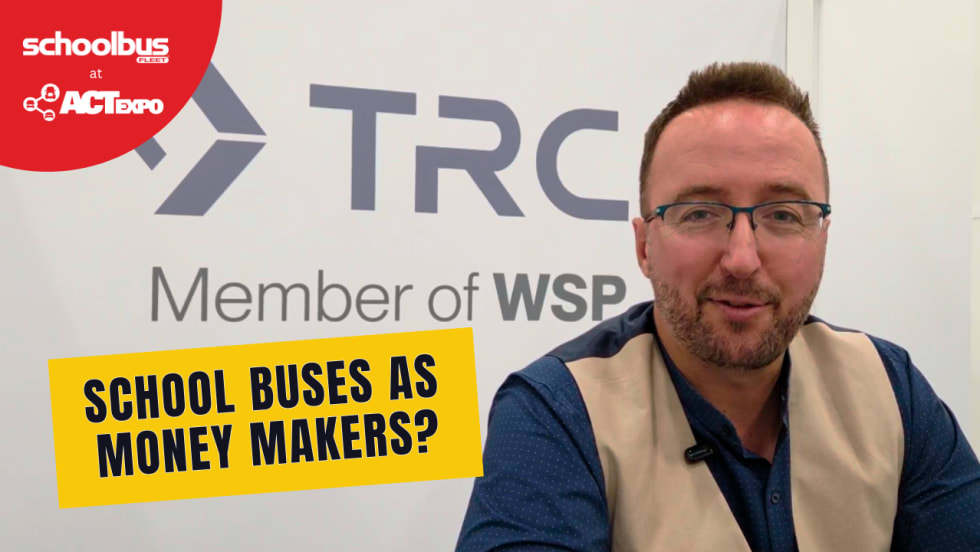
How Incentives, AI, and Energy Markets Are Reshaping School Transportation
Sit down with Joe Annotti of TRC Companies to talk district grant funding, utility challenges, AI, and why school buses are evolving from transportation assets into energy assets.
Read More →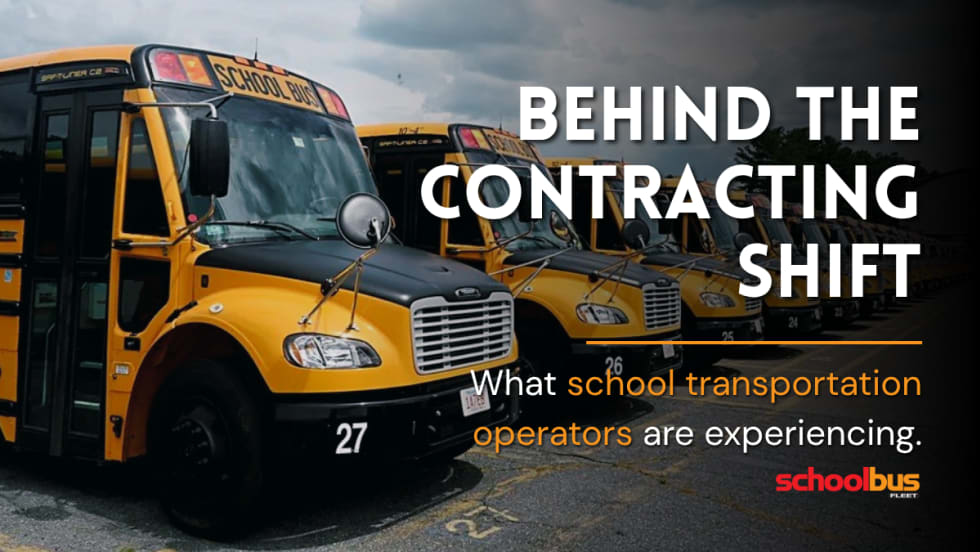
Inside the Contracting Shift: What School Transportation Operators Are Seeing Now
School transportation contractors weigh in on recent trends, costs, driver shortages, and the rise of multimodal student transportation.
Read More →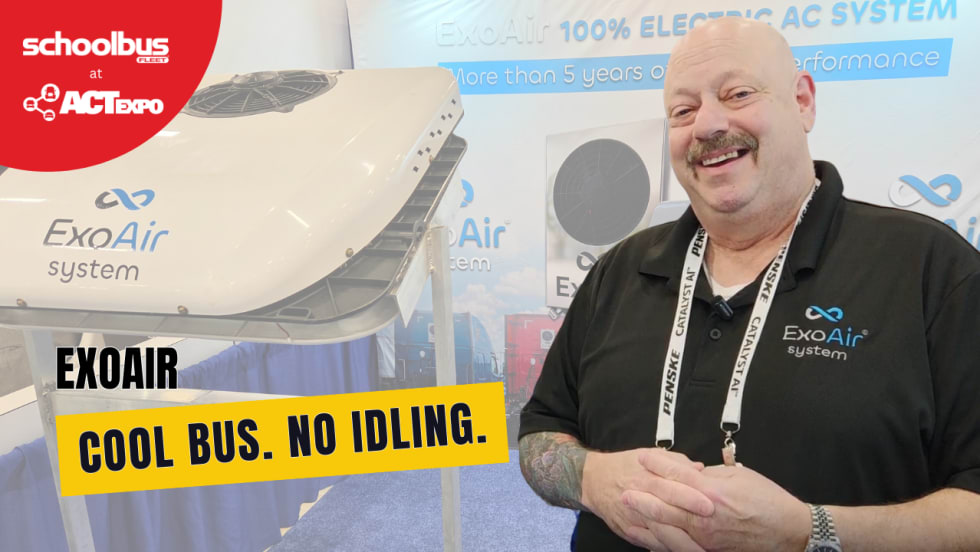
The No-Idling School Bus AC System
Take a peek at ExoAir Systems’ battery-powered cooling solution designed to run for up to 10 hours without the engine on, reducing fuel use and improving comfort for drivers and students.
Read More →
Geotab on Three Major Trends in School Transportation
School bus fleets are becoming more proactive than ever. From AI driver alerts to vehicle-to-grid opportunities, Geotab outlines the biggest technology trends transforming school bus operations.
Read More →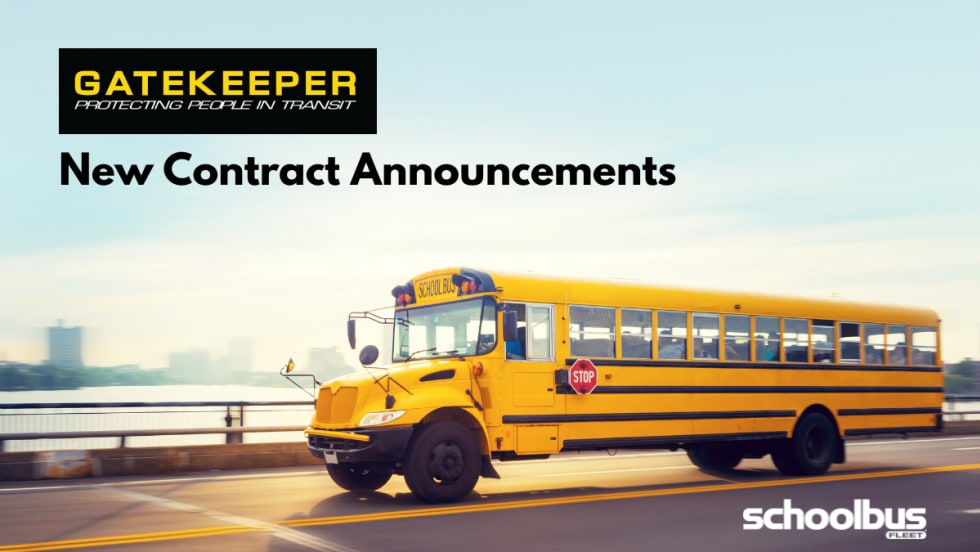
Gatekeeper Lands Major School Bus Deals as Revenue Surges
The video solutions provider announces contracts with Atlanta Public Schools and other fleet operators as it records quarterly revenue growth and expanding subscription business.
Read More →
Building Leaders Who Last: Creating a Successful Mentorship Program in Student Transportation
Discover five strategies for building an effective mentorship program to strengthen leadership development and support staff retention.
Read More →