



Contracting on the rise?
The Mackinac Center for Public Policy's 2011 school privatization survey found that 12.2 percent of districts in Michigan use privatized bus service, which is nearly triple the 2006 rate of 4.4 percent.
It’s no secret that the nation’s school districts are struggling financially, and when cuts have to be made, transportation is often a target.
In Illinois, for instance, Gov. Pat Quinn made an $89 million cut to school transportation reimbursements for fiscal year 2012. State legislators had an opportunity to restore the funds in the General Assembly’s extended veto session in late November, but they failed to do so.
At School District 54 in Schaumburg, Ill., as an example, the state cut means a loss of $1.4 million in revenue for the district.
In California, Gov. Jerry Brown announced in mid-December that funding for free school bus service would be eliminated, to the tune of $248 million.
The move came despite the objections of the California Association of School Transportation Officials and other groups, which argued that the cuts would be detrimental to students and families and would hit rural districts disproportionately hard.
So how do school districts continue busing their students when funding is slashed? Some find ways to make their transportation system more efficient. Brevard Public Schools in Cocoa, Fla., was able to save $1.2 million by changing its bell times. The district added 15 minutes between elementary and secondary bell times, which allowed for the number of bus routes to be reduced from 428 to 404.
Some school districts outsource their bus service as a way to save money. And in tough economic times like these, it seems likely that more districts would be looking to that option.
Each year, SBF collects state-by-state school transportation data, which breaks down most states’ school buses by how many are owned by districts, how many are owned by contractors and how many are owned by the state.
With those data, we can get an estimate of the proportion of school buses in the nation that are contractor owned and compare it to previous years.
In our most recent data, for the 2009-10 school year, 28.1 percent of school buses were contractor owned (that’s out of all of the school buses that states categorized as district, contractor or state owned).
In our data for the previous school year, the contractor proportion was 26.9 percent. And the year before that, it was 25.6 percent.
So there does appear to be a small but steady increase in the outsourcing of school busing. A recent report by the Mackinac Center for Public Policy showed this to be the case in Michigan.
The center’s 2011 school privatization survey found that 12.2 percent of districts in Michigan use privatized bus service, which is nearly triple the 2006 rate of 4.4 percent.
The Mackinac Center noted that the Woodhaven-Brownstown School District was expecting to save $331,200 in the first year by contracting its busing.
Still, the topic of contracting can be a contentious one in the pupil transportation community. Bus driver unions in particular have often fought tooth and nail against outsourcing.
Contracting out transportation services might not be the best solution for all school districts, but it’s an option that should at least be given serious consideration.
More Management
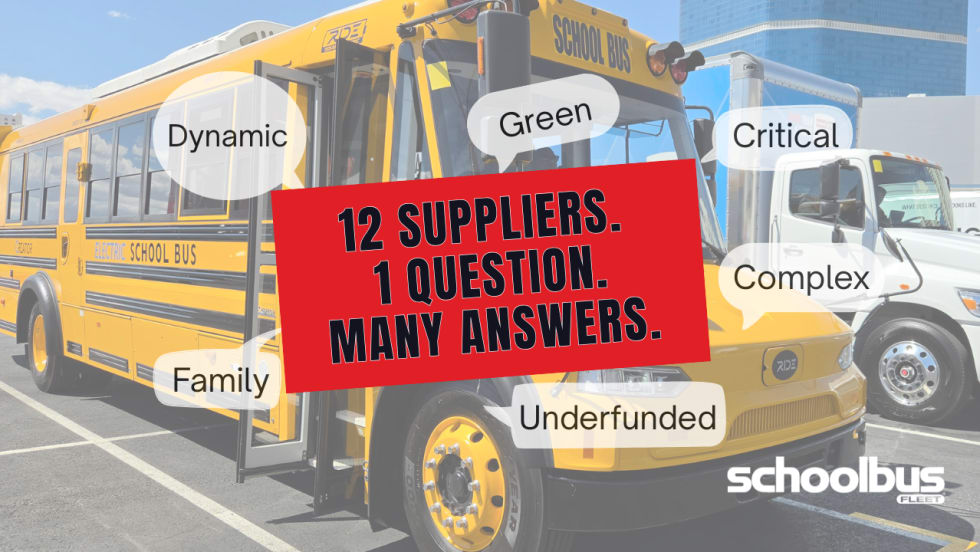
13 Industry Leaders Describe School Transportation in One Word
What word best describes the school bus industry today? We posed that question to over a dozen manufacturers, resulting in a revealing mix of perspectives on the challenges and opportunities ahead.
Read More →
Tyler Technologies Adds New AI, Transactions Leadership Roles
Two company executives are promoted to newly created C-suite positions to accelerate the company's long-term growth in both artificial intelligence and payments.
Read More →
Pro-Vision Acquires Convoy Technologies
The deal aims to broaden customer relationships and adds specialized vehicle video capabilities for commercial fleets.
Read More →


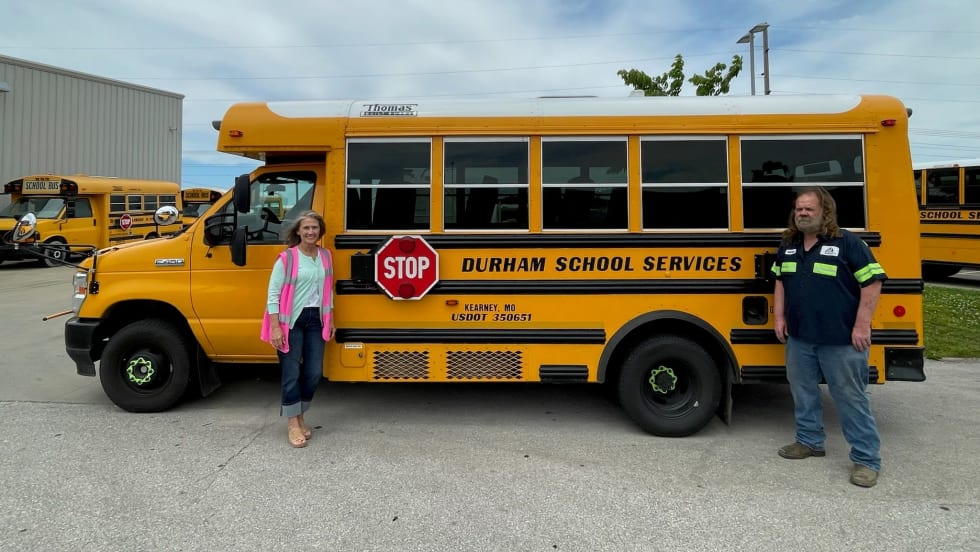
Durham School Services Maintenance Teams Earn Missouri Fleet Excellence Awards
Eight of the contractor’s school bus fleets achieved a distinction few maintenance teams earn during the state’s rigorous annual inspection program.
Read More →
How Incentives, AI, and Energy Markets Are Reshaping School Transportation
Sit down with Joe Annotti of TRC Companies to talk district grant funding, utility challenges, AI, and why school buses are evolving from transportation assets into energy assets.
Read More →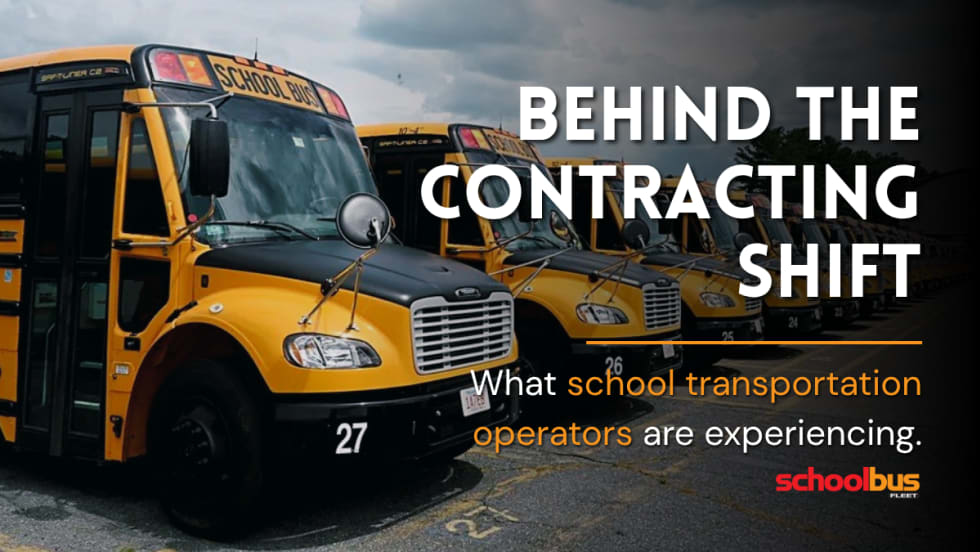
Inside the Contracting Shift: What School Transportation Operators Are Seeing Now
School transportation contractors weigh in on recent trends, costs, driver shortages, and the rise of multimodal student transportation.
Read More →
The No-Idling School Bus AC System
Take a peek at ExoAir Systems’ battery-powered cooling solution designed to run for up to 10 hours without the engine on, reducing fuel use and improving comfort for drivers and students.
Read More →
Geotab on Three Major Trends in School Transportation
School bus fleets are becoming more proactive than ever. From AI driver alerts to vehicle-to-grid opportunities, Geotab outlines the biggest technology trends transforming school bus operations.
Read More →
Gatekeeper Lands Major School Bus Deals as Revenue Surges
The video solutions provider announces contracts with Atlanta Public Schools and other fleet operators as it records quarterly revenue growth and expanding subscription business.
Read More →
Building Leaders Who Last: Creating a Successful Mentorship Program in Student Transportation
Discover five strategies for building an effective mentorship program to strengthen leadership development and support staff retention.
Read More →