



What's New in the Top 50?
Recent developments related to several of this year's largest school bus companies.

Trans Group explores electronic maintenance
Ron Gambini, vice president of fleet maintenance at The Trans Group LLC, details the company’s move to paperless inspections.
2009 has been a year of many successful technological innovations throughout our companies. For me, one of the most exciting of these innovations comes from a maintenance department pilot project called Paperless Inspection. For years, I have embraced computers in the shop and have always envisioned performing my preventive maintenance inspections electronically.
In early 2007, The Trans Group and Ron Turley Associates (RTA) came to an agreement that RTA would develop an enhancement to its fleet maintenance software package that would accomplish my vision of electronic inspections.
Since the first quarter of 2009, we have been piloting Paperless Inspection in our shops. During this time, we have enhanced the software to accommodate the needs and requests of the shop supervisors and technicians. It is obviously important that the tool is useful in the real world, and by involving them in the process, we believe we have achieved that usefulness. Technicians with all levels of computer skill have commented on the ease of use, and they welcome the structure that the tool brings to their inspections.
In many instances, the checklist items on an inspection are linked to PDF documents that can be opened by the technician for guidance pertaining to that area of the inspection.
One of the real high points of the system is the instant creation of work order lines for all defects found during the inspection. The shop clerk no longer has to decipher a technician’s handwriting, evaluate a VMRS code, create a line for each defect and post the parts and labor. Now, the clerk will post the parts and labor and close the work order. This eliminates a huge amount of time that was previously spent entering data.
The creation of the work order lines also allows us to use another RTA tool called Paperless Shop. Paperless Shop will allow the shop office to assign the defects found along with any other work in the system to a specific mechanic. The mechanics will sign in on a computer and be presented with their current assignments by priority.
Our inspections aren’t limited to vehicle preventive maintenance. We can do facility safety inspections, environmental compliance inspections, machinery inspections, etc. All of these inspections result in a work order being created before our inspectors leave the facilities. This reduces the paperwork for the inspector and ensures that the operations managers and shop supervisors have a detailed list of anything that needs to be addressed.
We believe that the system will improve productivity, improve the quality and consistency of all of our inspections, and reduce the use of paper in the shop.
Conversion in Pa. provides 7-year contract for STA
CARNEGIE, Pa. — Student Transportation of America Ltd. (STA) announced in early June that it has been awarded a contract to provide transportation services for the Williamsport Area School District (WASD).
The new seven-year contract will generate more than $2 million in annual revenue, beginning with the 2009-10 school year, and adds to the company’s regional operations in Pennsylvania.
“This is another excellent customer we are partnering with and a positive step in our efforts to increase our organic growth through conversions,” said Pete Pearson, STA regional chief operating officer.
“School districts throughout the U.S. are realizing that education is their core business. We are providing cost-effective solutions to their transportation needs in budget-friendly operations while providing the necessary capital investments for vehicles.”
STA said it plans to implement a new computerized routing and planning system along with a state-of-the-art digital video system in each bus.
WASD encompasses 98 square miles, with a student population of 5,600.
National Express targets cutting-edge service
National Express Corp., which is made up of Durham School Services in the U.S. and Stock Transportation in Canada, reports on its project to provide “next-generation” student transportation.At National Express Corp., we serve as a consultant to our customers and help them realize cost savings, greater efficiency and improved service.
Maintaining these promises means we must stay on the cutting edge of our industry. We are in the process of developing the next generation of student transportation services for our customers — advances that will redefine what school districts expect from student transportation.
We are proud to be the first company in the industry to develop these groundbreaking technologies and processes. A pilot program to test and refine our developments is underway, and the feedback from our customers is positive.
In particular, these improvements include:
Easy information sharing that keeps the right people informed.
New technology on buses that provides consistent, real-time data and allows for an even higher level of safety.
A team ready to respond at every level — locally, regionally and nationally.
Higher selection standards to place the most capable drivers behind the wheel.
Continual driver training with a focus on customer service.
Significant enhancements to our fleet operations.
Our next-generation student transportation service will soon allow school districts to receive real-time data on our buses that transport students in 29 states and two Canadian provinces.
Our strong commitment to provide quality transportation, outstanding customer service, positive employee relations and the highest level of safety is always top of mind. It takes continual improvement to live up to our mission, and with these latest innovations to school transportation services, we are ensuring we reach those goals every day.
First Student wins multiple new contracts
CINCINNATI — First Student Inc. announced in early June that it was awarded six new contracts to provide student transportation for the following school districts:Adrian (Mich.) School District — The three-year contract was set to begin July 1 for a 24-vehicle fleet.
Los Angeles County Office of Education — This renewed contract for special-education student transportation was set to begin June 30 and nearly doubles the existing fleet of First Student school buses to approximately 235 vehicles. All of the additional vehicles will be new school buses that run on either propane or ultra low emission gasoline.
Nashoba Regional School District in Bolton, Mass. — The contract, which was set to begin July 1, is a two-year agreement with two one-year options. First Student will provide a fleet of 33 new vehicles to transport students at seven schools throughout the district.
North DuPage Special Education Cooperative in Bloomingdale, Ill. — The three-year contract is for a fleet of 46 vehicles that will transport special-education students at schools throughout northern DuPage County. The contract will commence August 1.
Troy (Mich.) School District — The three-year agreement begins July 15 for a 92-vehicle fleet.
Wayzata Independent School District 284 in Plymouth, Minn. — First Student will expand its services to include special-education transportation throughout the district, beginning August 1. The contract is a two-year agreement, with a two-year option for a fleet of 30 new vehicles.
“We are pleased to be able to provide quality student transportation services for these school districts,” said Linda Bell, president of First Student. “By offering leadership in sustainable transportation services as well as an in-depth driver training program, we deliver the safest, most reliable transportation services for the families and children who rely on us each day.”
“First Student brings a number of advantages to each school district we serve, starting with cost savings that allow administrators to reallocate tax dollars into the classroom,” added David Duke, senior vice president of sales. “With the growth we are experiencing, we are able to reinvest in new technologies, such as GPS systems on every bus. Our focus on customer service and our stringent safety policies clearly demonstrate First Student’s core values of safety and customer satisfaction.”
In late April, First Student announced that it was awarded the full Cincinnati Public Schools student transportation contract, which had previously been operated by three providers, including First Student.
The five-year agreement includes the operation and maintenance of all student transportation services. First Student will expand its current fleet serving the district from 240 to 390 vehicles, with service set to begin July 1.
Cook-Illinois subsidiary celebrates 50 years
CRESTWOOD, Ill. — In early May, Cook-Illinois Corp.’s oldest subsidiary, Illinois School Bus, celebrated 50 years in business.The company employs almost 200 people and transports more than 12,000 students daily with its fleet of 165 buses.
Drivers were honored at a special luncheon, and another event included school officials, politicians and retired drivers.
Cook-Illinois Corp. owner John Benish emphasized the family-oriented nature of the company and its subsidiaries. Illinois School Bus was founded by Jackie Stahl and her husband, Lee. Benish and business partner Lee Stahl Jr. bought the company from the Stahls in 1961.
Today, Cook-Illinois has a total of 11 subsidiaries and 2,300 employees, operates 1,850 buses and transports students from more than 200 school districts.
In other news, Cook-Illinois recently rolled out the state’s first hybrid school bus from IC Bus. Cook-Illinois subsidiary Kickert School Bus Line in Lynwood, Ill., began running the plug-in hybrid in the Chicago area in April.
Cook-Illinois has adopted environmentally- friendly practices for many years. In the 1970s, it powered its fleet with compressed natural gas and it currently powers more than 90 percent of its school buses with biodiesel.
Birnie Bus Service acquires N.Y. company
ROME, N.Y. — Birnie Bus Service Inc. announced that it acquired the Arthur F. Mulligan Co. in January.The Tillson, N.Y.-based company has four locations and 200 employees, which brings Birnie Bus’ total workforce up to 1,200.
Founded in 1946 by Martin K. Birnie, the family business has grown from 12 employees, one motorcoach, two school buses and a station wagon to 1,000 school buses, 23 motorcoaches and 1,200 employees who work from 16 locations around the state.
School transportation is the majority of Birnie Bus’ business, along with transit and charter contracts. Tim Birnie, president, said the company does all non-emergency Medicaid transport in three counties and operates scheduled route service between Syracuse and Little Falls.
The motorcoach division of Birnie Bus recently became a member of the Trailways Transportation System, which is a North American network of independent, privately-owned motorcoach companies.
“Birnie Trailways’ long business history in upstate New York and exemplary operating standards make it a great addition to our team,” said Gale Ellsworth, Trailways president and CEO.
More Management
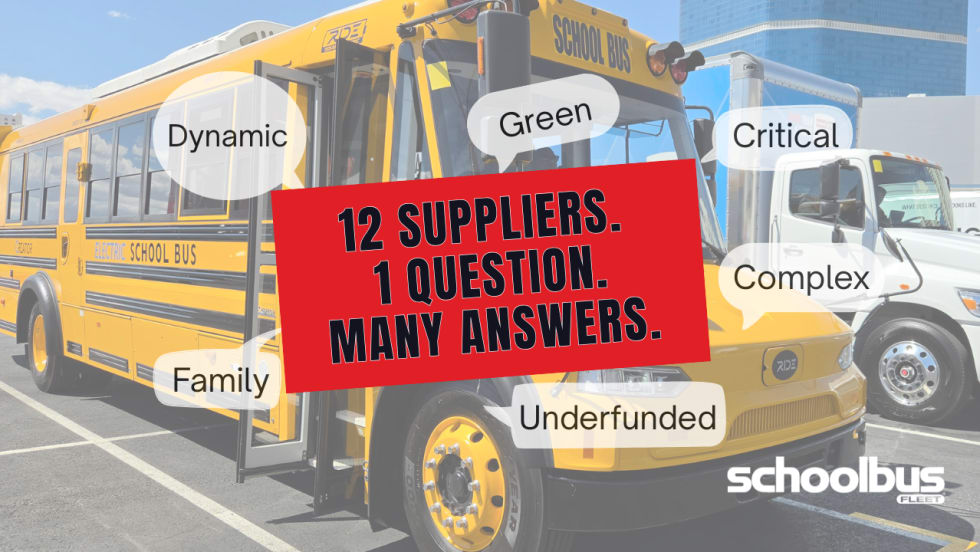
13 Industry Leaders Describe School Transportation in One Word
What word best describes the school bus industry today? We posed that question to over a dozen manufacturers, resulting in a revealing mix of perspectives on the challenges and opportunities ahead.
Read More →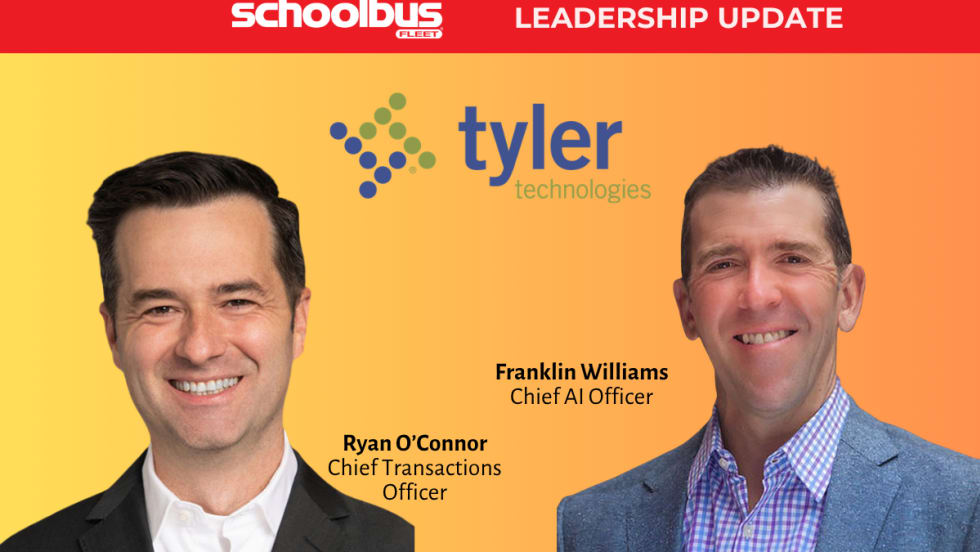
Tyler Technologies Adds New AI, Transactions Leadership Roles
Two company executives are promoted to newly created C-suite positions to accelerate the company's long-term growth in both artificial intelligence and payments.
Read More →
Pro-Vision Acquires Convoy Technologies
The deal aims to broaden customer relationships and adds specialized vehicle video capabilities for commercial fleets.
Read More →

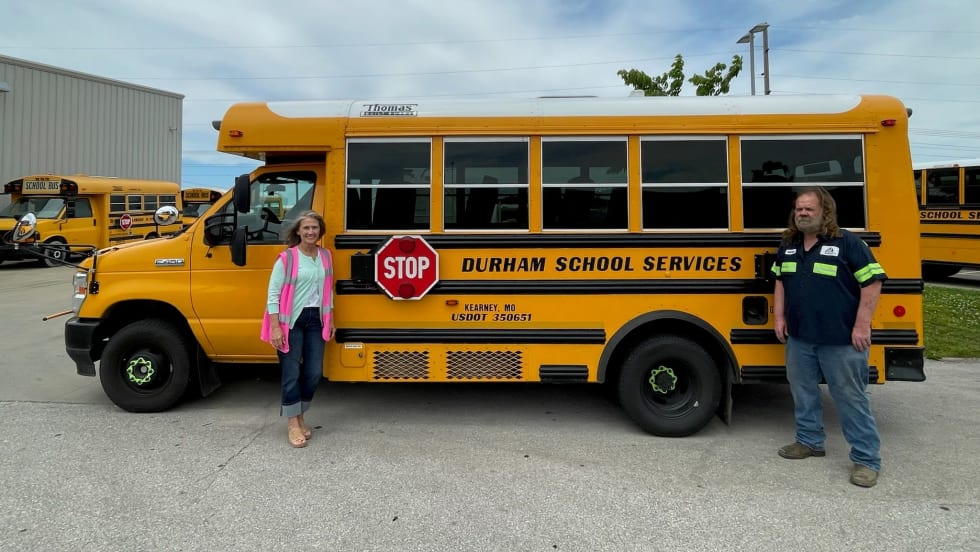
Durham School Services Maintenance Teams Earn Missouri Fleet Excellence Awards
Eight of the contractor’s school bus fleets achieved a distinction few maintenance teams earn during the state’s rigorous annual inspection program.
Read More →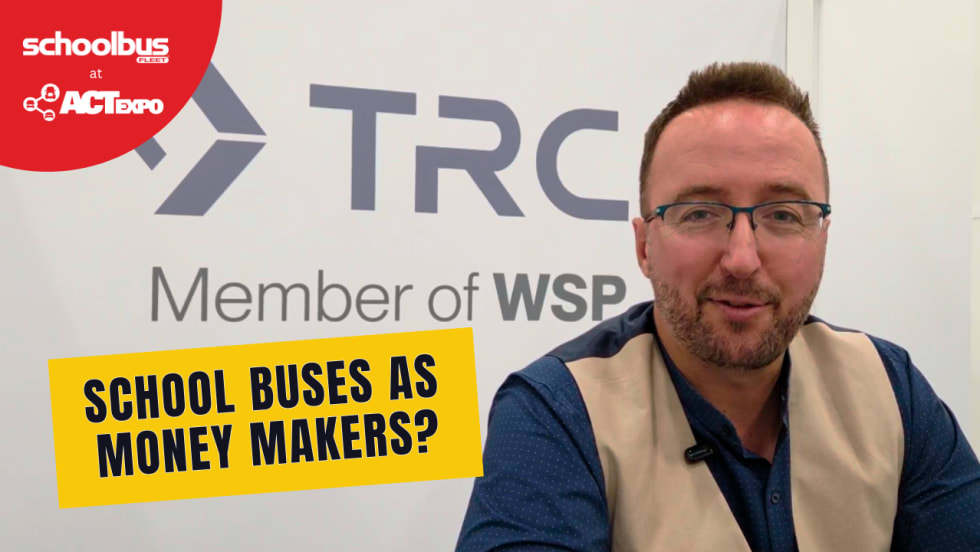
How Incentives, AI, and Energy Markets Are Reshaping School Transportation
Sit down with Joe Annotti of TRC Companies to talk district grant funding, utility challenges, AI, and why school buses are evolving from transportation assets into energy assets.
Read More →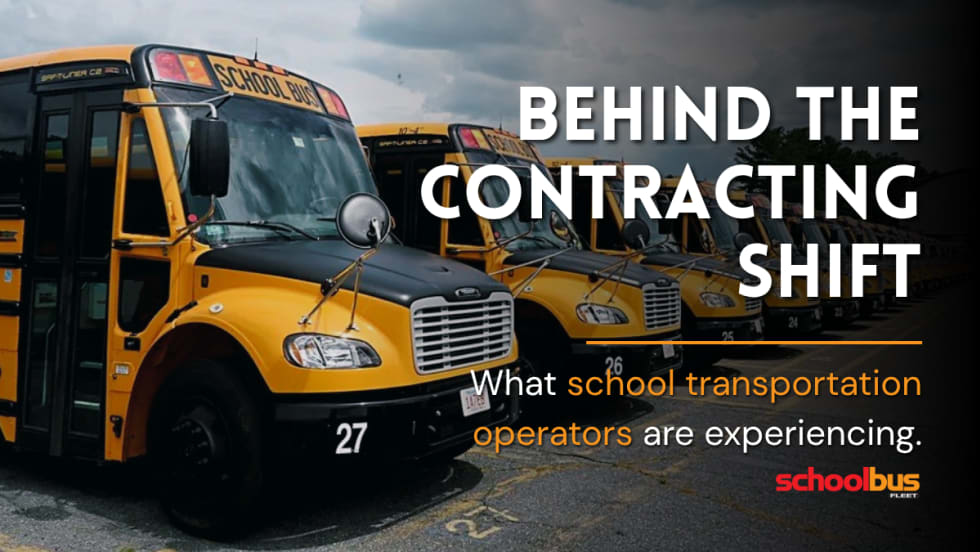
Inside the Contracting Shift: What School Transportation Operators Are Seeing Now
School transportation contractors weigh in on recent trends, costs, driver shortages, and the rise of multimodal student transportation.
Read More →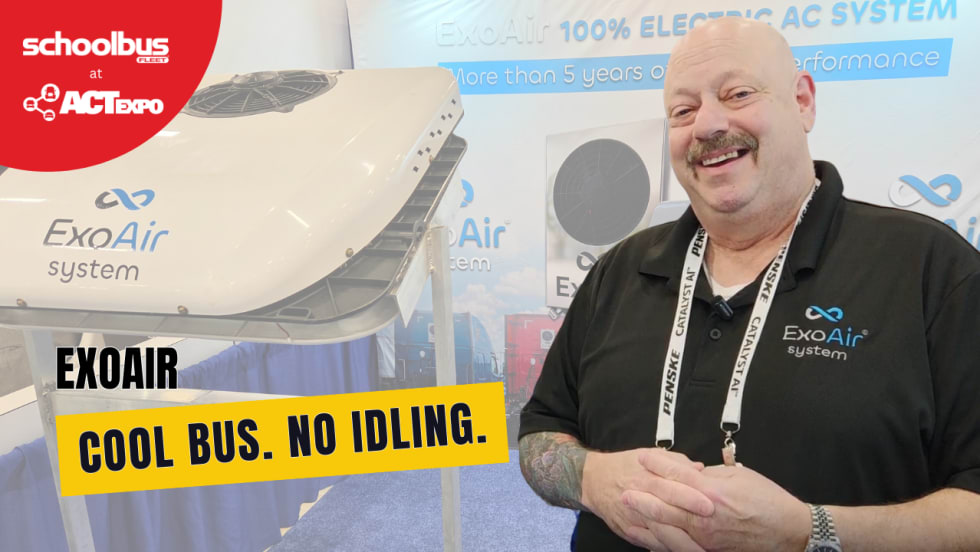
The No-Idling School Bus AC System
Take a peek at ExoAir Systems’ battery-powered cooling solution designed to run for up to 10 hours without the engine on, reducing fuel use and improving comfort for drivers and students.
Read More →
Geotab on Three Major Trends in School Transportation
School bus fleets are becoming more proactive than ever. From AI driver alerts to vehicle-to-grid opportunities, Geotab outlines the biggest technology trends transforming school bus operations.
Read More →
Gatekeeper Lands Major School Bus Deals as Revenue Surges
The video solutions provider announces contracts with Atlanta Public Schools and other fleet operators as it records quarterly revenue growth and expanding subscription business.
Read More →
Building Leaders Who Last: Creating a Successful Mentorship Program in Student Transportation
Discover five strategies for building an effective mentorship program to strengthen leadership development and support staff retention.
Read More →