




Jasper Engines and Transmissions focuses on quality
The company’s product line includes remanufactured gas and diesel engines, transmissions and differentials, which can be used for school buses, along with diesel fuel and air system components. Jasper’s production system is designed to provide consistent procedures for a quality product, and reduction of waste is also important to the company.

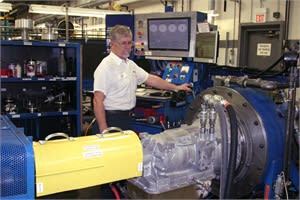
Here, a Jasper Engines and Transmissions associate tests a remanufactured Allison transmission.
JASPER, Ind. — Since its inception over 70 years ago, Jasper Engines and Transmissions has offered remanufactured vehicle components, and today its product line includes remanufactured gas and diesel engines, transmissions and differentials, which can be used for school buses.
The company also offers diesel fuel and air system components.
Jasper Engines and Transmissions was founded in 1942 by Alvin C. Ruxer, who owned a successful Ford dealership. At that time, automobile production ceased as manufacturing was devoted to the war effort, so remanufacturing became an alternate method of providing vehicle owners with reliable transportation in the absence of new cars.
When the war ended, Ruxer formed a new company: Jasper Engine Exchange. This became the basis of Jasper Engines and Transmissions and the many product lines it offers today.
Among the company’s goals are to provide high-quality, reliable and value-priced products to its customers, and to that end, Jasper Engines and Transmissions has developed the Jasper Production System (JPS).
The JPS is a combination of Jasper’s workforce and the processes and systems that guide the company’s remanufacturing procedures, officials said. JPS processes often include detailed directions and graphical instructions, all designed to provide consistent procedures throughout the company and maintain consistent quality in the finished product.
Jasper Engines and Transmissions has managed to keep prices consistent on most common units for the last five years, according to the company, with pricing reduced on some units.
Jasper has been able to accomplish this by implementing a policy of lean initiatives through continuous improvement and reduction of waste. The company encourages its associates to constantly evaluate the work they are doing and offer ideas on how they can do the work more efficiently. Today, the company is 30% more productive than it was three years ago, officials said.
Jasper’s main remanufacturing facility is located in Jasper, Ind. Remanufacturing facilities are also located in Crawford County, Ind., and Willow Springs, Mo. The company has 42 regional sales offices throughout the country.
Those regional locations are serviced by two main distribution centers: Crawford County, Ind., in the east, and Kingman, Ariz., for the western region. Sixty percent of Jasper’s inventory is housed at these distribution centers. The rest is housed throughout the regional locations.
For more information about Jasper Engines and Transmissions, visit www.jasperengines.com.
More Maintenance
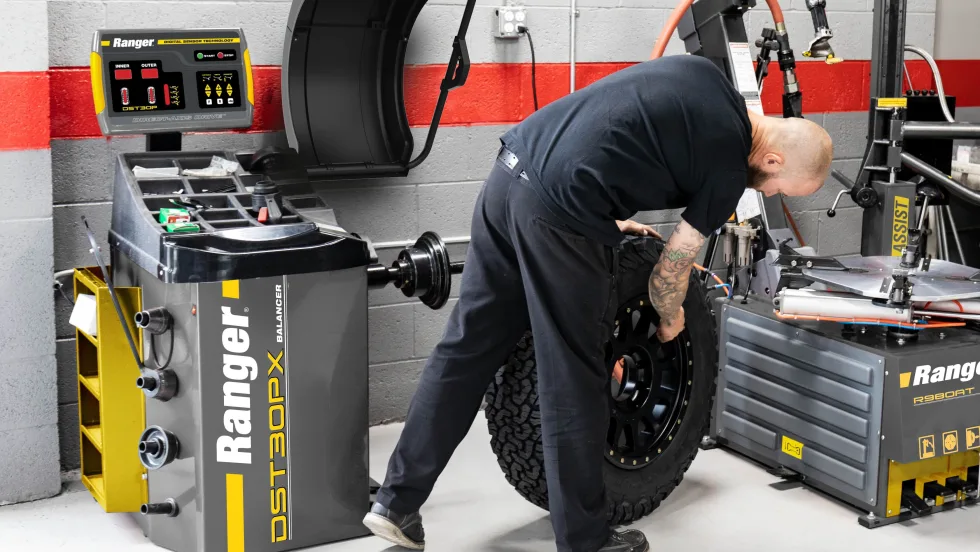
BendPak Launches Ranger DST30PX Wheel Balancer
BendPak's new wheel balancer handles tires up to 43 inches in diameter, with a reinforced design, precise weight placement, and faster service cycles.
Read More →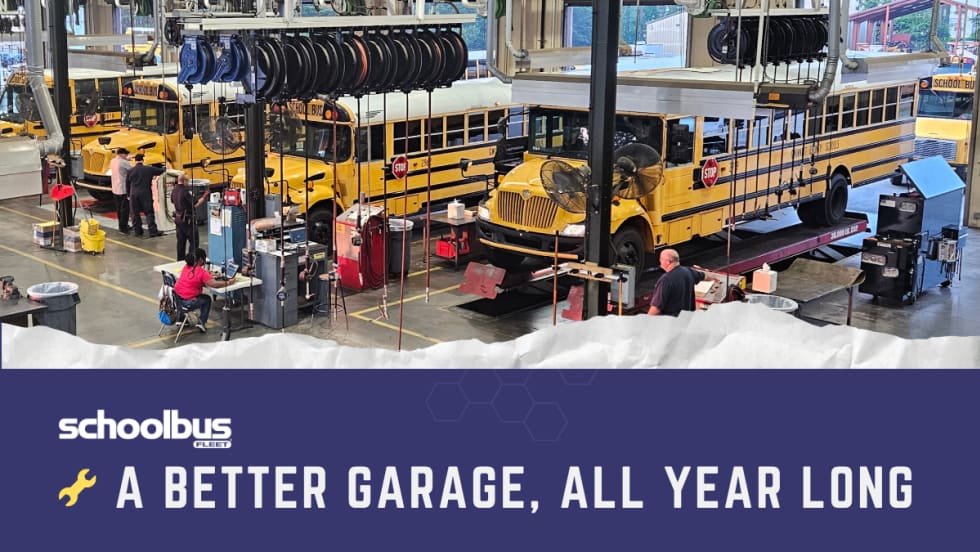
Tips for Ensuring School Bus Garages Are Safe and Warm Year-Round
Cold maintenance bays and rising heating costs? Learn how school bus garages can improve comfort with targeted heating, better airflow, and winter preparation.
Read More →
ASE Highlights School Bus Technician Certification Requirements
ASE is encouraging school bus maintenance professionals to maintain their certifications, highlighting seven specialized tests and five-year renewal requirements.
Read More →
International Adds E-Commerce Capabilities to Fleetrite.com
IC Bus customers can now browse, buy, and track shipments for more than 400,000 aftermarket parts online.
Read More →
The Most Expensive Thing You Do Before Selling a School Bus: Wait
When should you sell an aging school bus? Learn how maintenance, mileage, corrosion, specifications, and timing can affect resale value long before the auction.
Read More →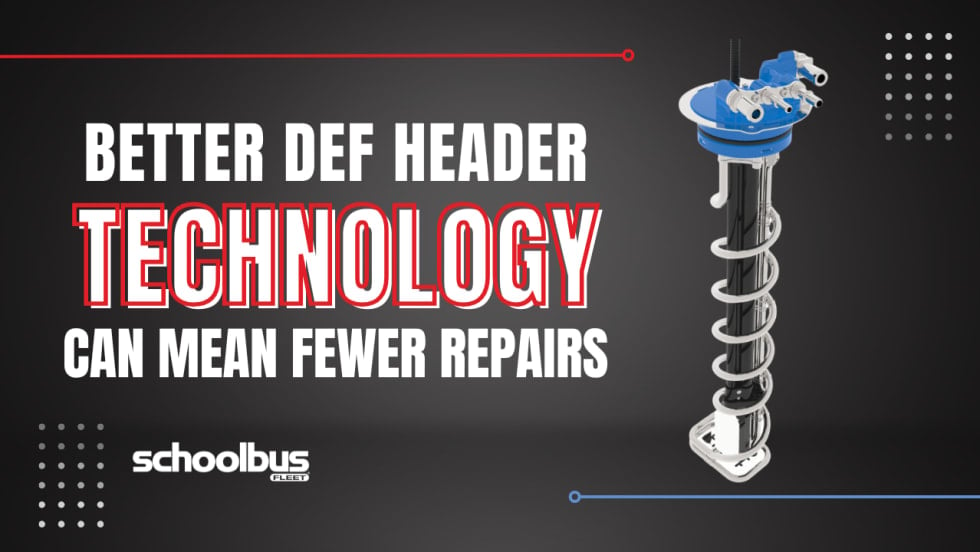
The Evolution of DEF Header Technology: What School Bus Operations Should Know at Replacement Time
See what school bus fleets should consider when replacing DEF headers to improve reliability, reduce repeat repairs, and control maintenance costs.
Read More →
The Essential Guide to School Bus Maintenance and Student Safety
Your district's buses carry students to school every day. This guide shows how predictive maintenance powered by fleet data helps keep buses reliable, drivers accountable and students safer from the first bell to the last stop.
Read More →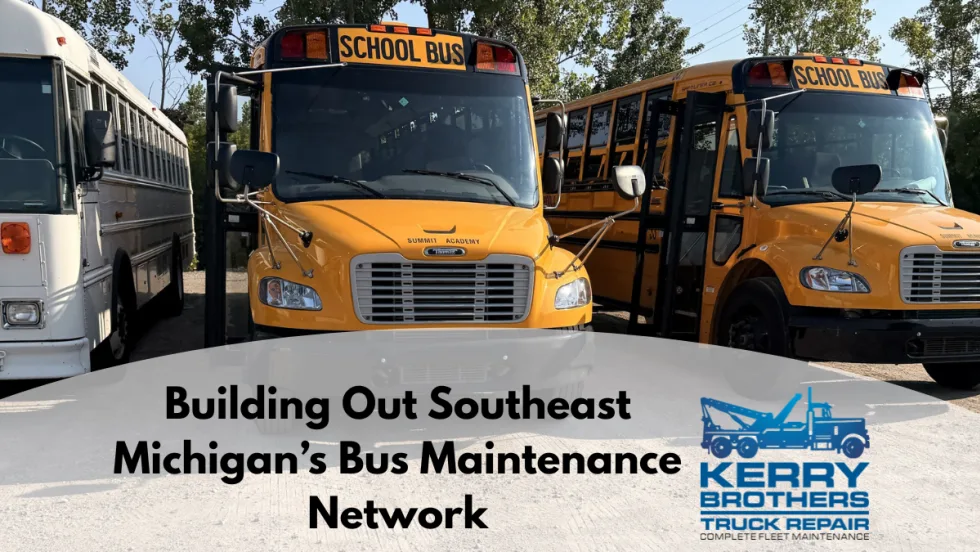
Kerry Brothers Grows Michigan School Bus Repair Network
The acquisition of Downriver Truck and Bus expands Kerry Brothers’ school bus maintenance footprint across southeast Michigan, adding repair capacity, diagnostic resources, and state inspection support.
Read More →
Noregon Introduces CAN Bus Diagnostic Tool, Expands JPRO Features
CAN Mentor and the latest JPRO update aim to simplify vehicle network diagnostics and improve repair efficiency for technicians of all experience levels.
Read More →
Cummins on Smarter, Simpler Engine Innovation
Cummins discusses its first-ever gasoline engine for school buses, EPA 2027, and why bus fleets still want durable, simpler internal combustion options.
Read More →