




Alarm aims to prevent bus rolling incidents
After incidents in which school buses rolled away when drivers failed to engage the parking brake, an Indiana school district and a bus dealership collaborate on a solution. The system warns drivers if they have unfastened their seat belt without engaging the air brake parking system.

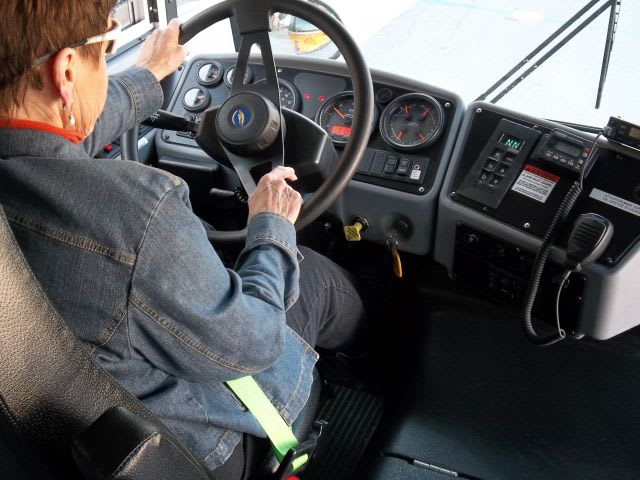
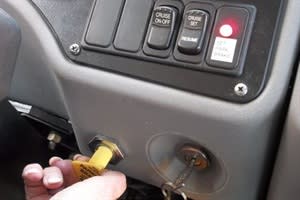
Fort Wayne Community Schools and MacAllister Power Systems collaborated on a system that warns drivers if they have unfastened their seat belt without engaging the air brake parking system (see close-up photo below).
FORT WAYNE, Ind. — A school district and a bus dealership here have combined efforts to develop a retrofit for school buses that they say enhances safety.
Fort Wayne Community Schools, the largest district in Indiana, has encountered numerous situations over the years that have been the result of drivers failing to engage the parking brake on buses with air brake systems when the bus was placed in neutral. When this happens, the bus can roll freely if it is parked on a hill.
The most significant incident in Fort Wayne involved a driver who dropped children off for a field trip and exited the bus, then discovered that the bus was rolling down a hill toward a busy roadway. The driver chased the bus to try to get back on board, but she fell beneath it and was run over by the rear wheels.
Gary Lake, transportation director for Fort Wayne Community Schools, told SBF that the driver in that incident only suffered compression injuries to the leg — no broken bones. But it reinforced the notion that something had to be done to prevent these types of mishaps.
Lake said that he and garage technicians Mike Emerson and Vin Smith have over the last several years tried to encourage manufacturers to come up with a system that warns drivers if the bus is in neutral and the parking brake has not been set.
Last spring, after a less-serious incident occurred, the discussion began again. This time, someone came up with an idea to solve the problem.
Brian Woodring, a product service and support specialist for Indiana Blue Bird dealership MacAllister Transportation, was in the technicians’ office and overheard the discussion. Woodring had an idea: Put a low pressure switch on the air brake engage button and wire it to a seat belt with a buzzer.
Woodring came back in a few days and had a simple mockup of a system that could be wired to a conventional truck seat belt that had a low-volt buzzer and light that could be seen and heard by a driver. The alarm would sound if a driver unfastened his or her seat belt and had not engaged the air brake parking system.
Lake said that the design was shared with Indiana State Police officers and state Department of Transportation inspectors and was found to not impair with any safety functions of the bus. The concept was then shared with Mike LaRocco, director of the Office of School Transportation at the Indiana Department of Education, who Lake said found it to be a useful safety device and approved it for retrofit installation on school buses.
Fort Wayne Community Schools currently has three buses equipped with the system and is making plans to convert its entire fleet. The cost for conversion parts is $355 per bus.
Lake said that he is encouraging manufacturers to include the alert system on new buses.
More Maintenance
BendPak Launches Ranger DST30PX Wheel Balancer
BendPak's new wheel balancer handles tires up to 43 inches in diameter, with a reinforced design, precise weight placement, and faster service cycles.
Read More →
Tips for Ensuring School Bus Garages Are Safe and Warm Year-Round
Cold maintenance bays and rising heating costs? Learn how school bus garages can improve comfort with targeted heating, better airflow, and winter preparation.
Read More →
ASE Highlights School Bus Technician Certification Requirements
ASE is encouraging school bus maintenance professionals to maintain their certifications, highlighting seven specialized tests and five-year renewal requirements.
Read More →
International Adds E-Commerce Capabilities to Fleetrite.com
IC Bus customers can now browse, buy, and track shipments for more than 400,000 aftermarket parts online.
Read More →
The Most Expensive Thing You Do Before Selling a School Bus: Wait
When should you sell an aging school bus? Learn how maintenance, mileage, corrosion, specifications, and timing can affect resale value long before the auction.
Read More →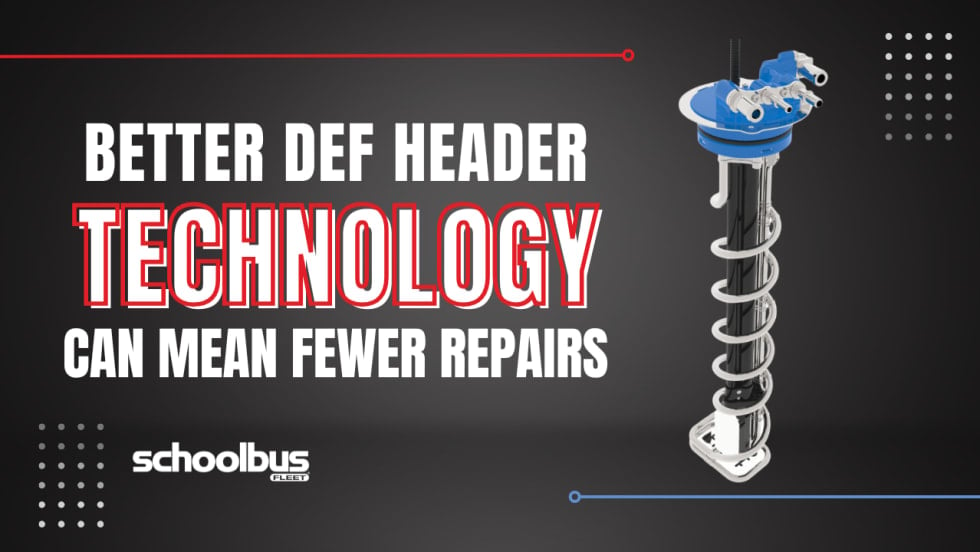
The Evolution of DEF Header Technology: What School Bus Operations Should Know at Replacement Time
See what school bus fleets should consider when replacing DEF headers to improve reliability, reduce repeat repairs, and control maintenance costs.
Read More →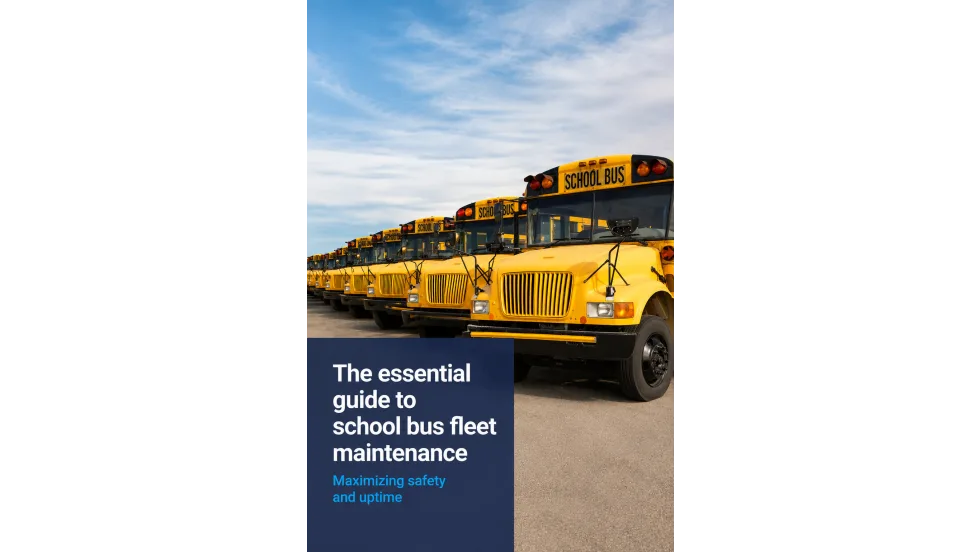
The Essential Guide to School Bus Maintenance and Student Safety
Your district's buses carry students to school every day. This guide shows how predictive maintenance powered by fleet data helps keep buses reliable, drivers accountable and students safer from the first bell to the last stop.
Read More →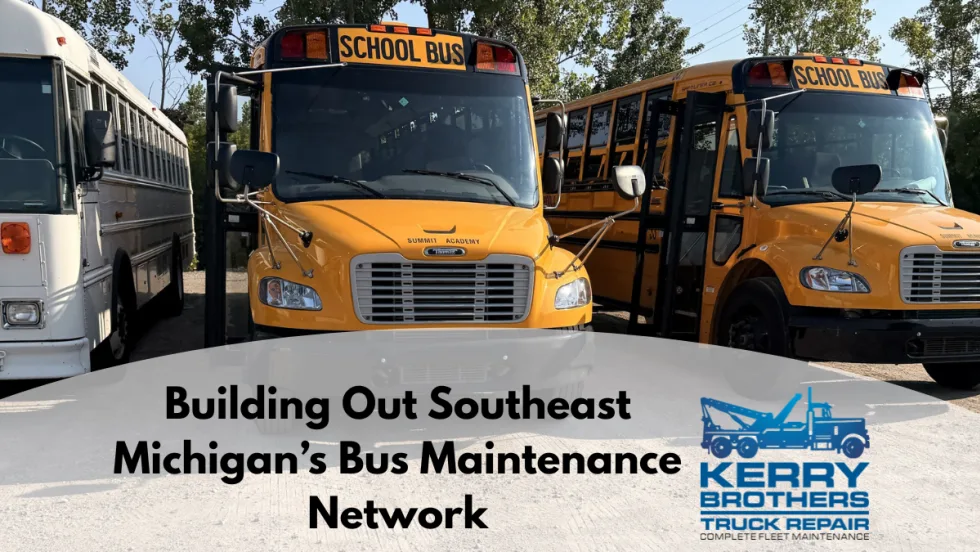
Kerry Brothers Grows Michigan School Bus Repair Network
The acquisition of Downriver Truck and Bus expands Kerry Brothers’ school bus maintenance footprint across southeast Michigan, adding repair capacity, diagnostic resources, and state inspection support.
Read More →
Noregon Introduces CAN Bus Diagnostic Tool, Expands JPRO Features
CAN Mentor and the latest JPRO update aim to simplify vehicle network diagnostics and improve repair efficiency for technicians of all experience levels.
Read More →
Cummins on Smarter, Simpler Engine Innovation
Cummins discusses its first-ever gasoline engine for school buses, EPA 2027, and why bus fleets still want durable, simpler internal combustion options.
Read More →