




How to make the most of technician training
Tech-to-tech instruction and partnering with neighboring school districts for training exercises provide easy opportunities to develop employees’ skills and knowledge. Having good equipment and taking advantage of resources available through state pupil transportation associations are also worthwhile.

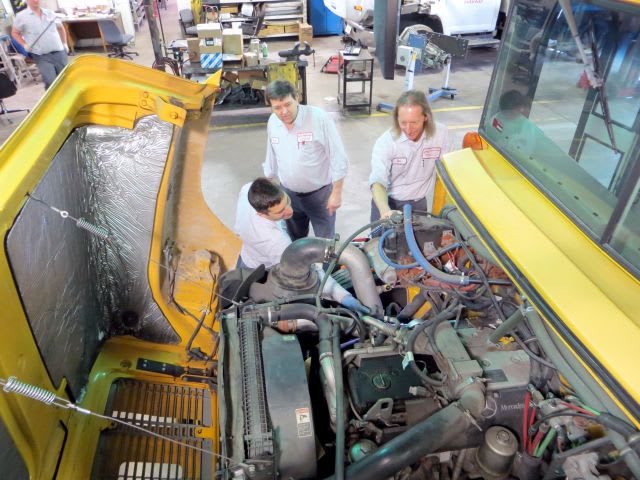
Technicians at Parkway School District in Chesterfield, Mo., have formed a “Shop Professional Learning
Community,” where they get together to share solutions to problems and develop maintenance best practices.
A well maintained fleet is an important component of safe pupil transportation, and at the helm of a well-maintained fleet is a team of well-trained technicians. Officials say that training must begin from day No. 1 when technicians are hired and continue regularly throughout each year.
“We use the Florida 30-day school bus inspection criteria as a guideline to test our techs,” says Don Ross, director of vehicle maintenance at the School District of Manatee County in Bradenton, Fla., “and when we hire a tech, we assign them to a seasoned tech as a mentor, and they stay with that mentor at least 12 months. They start out on our support fleet, things like cars and trucks. As they work through that, we’ll have a base knowledge based on [feedback from] their mentor, and based on their school bus inspection performance — that’s how we gauge them.”
Tech-to-tech training is a common practice at school districts’ maintenance operations, and it speaks to what officials say is essential to effective training: teamwork.
Techniques for assessing techs’ skills
Like the School District of Manatee County, the maintenance staff at Brevard Public Schools in Cocoa, Fla., uses what Director of Transportation Arby Creach calls a “technician team” approach to training and skill assessment.
“Experience, not necessarily seniority of the paired technicians, is the key element of this team concept,” Creach says. “This very personal approach creates professional partnerships between technicians and opens lines of communication that would otherwise not be realized in a classroom or large group training sessions. We find this approach enhances the speed, knowledge and retention rate for technician training and skills development. It also quickly identifies gaps or deficiencies in a particular skill area or repair technique.”
In conjunction with the technician partnerships, Creach says that Brevard pushes its technicians to “think outside of the box” during training sessions, thereby enabling them to further develop their skills.
“As an example, during the course of training, we will remove the option of just buying a new part and bolting it on,” Creach says. “We want our technicians to focus more on diagnostics and the root cause of a component failure or catastrophe. This trains the technician and our supervisors to address the repair in a manner that gathers data, which is helpful to the industry and allows fleet services to possibly predict the next failure long before it happens. When technicians think and diagnose, not just bolt on a new part, we save our district money, and by sharing our data, help other districts as well.”
[PAGEBREAK]Will Rosa, director of transportation at Parkway School District in Chesterfield, Mo., says his technicians have formed a “Shop Professional Learning Community,” which is in keeping with a new district-wide learning structure: Professional Learning Communities, or PLCs. With PLCs, individuals collaborate and share ideas to get positive results.
“It is natural to assume when you see three or even five technicians gathered around a bus that not much ‘wrenching’ is happening,” Rosa says. “But what is happening that may not be so visible on the surface is an exchange of thoughts, opinions and knowledge between technicians. This has evolved into a purposeful and powerful way to identify solutions and develop best practices. It takes some flexibility and willingness to listen to others to make this successful.”
Rosa also notes the importance of “management by walking around” in assessing technicians’ skills.
“Our fleet maintenance manager, Fred Matlack, can be seen deploying a similar strategy,” he says. “In addition to reviewing completed repair/maintenance tickets, he spends much of the time in the shop observing, inspecting and checking progress of technicians while they are working.”
Ed Mikelski, head mechanic at Wauconda (Ill.) Community Unit School District #118, expands on the idea of “management by walking around,” saying, “Key areas that tell you training is required are: The job is too difficult to perform; the job takes too long to perform; it may not be done right the first time; or we cannot diagnose the problem correctly.”
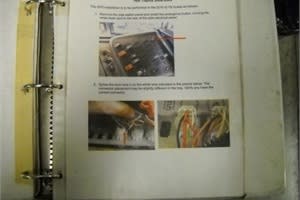
At the School District of Manatee County in Bradenton, Fla., techs document problems they’ve never experienced in a “Hot Topics” book at the shop with a photo and a description of the problem, along with the solution. At the end-of-the-year in-service training, all “Hot Topics” issues from the year are reviewed.
Invest in good equipment, track diagnostic problems
Officials say that technology presents a challenge in training technicians, mostly in terms of keeping them abreast of continual changes.
To address this, Creach invested in computers and Internet connectivity for each of his operation’s garage bays and technician supervisor offices.
“Each technician on the shift has a computer and associated support equipment now assigned for their exclusive use,” he explains. “There’s no more sharing and waiting in line to access online diagnostic and vendor sites. Additionally, as a function of skill building, we provide an opportunity for our technicians to participate in district-sponsored computer skills workshops on an as-needed basis.”
When diagnosing problems and making repairs to school buses or white fleet vehicles, keeping track of that data is not only important, it can provide a training opportunity for technicians.
At the School District of Manatee County, when technicians generate a work order off of an inspection or a write-up, if it’s not a common repair, they take a picture of it and print it with the work order so that there’s a visual along with a written description of the problem.
“We then take that one step further,” Ross says. “If an item pops up that we haven’t experienced before, we create a ‘Hot Topic.’ That topic is placed in a book with pictures of the failure, cause and solution, and then everyone has to read it, understand it, and they’re tested on it, and they sign off on it. At the end-of-the-year in-service training, we review all of the Hot Topic issues for the year.”
[PAGEBREAK]
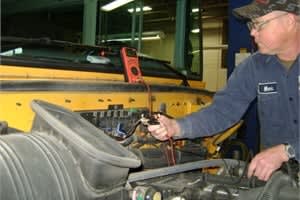
During training sessions at Washtenaw Intermediate School District in Ann Arbor, Mich., techs from all 10 districts that are part of the regional educational service agency participate. Here, tech Mark Fazel performs pinpoint voltage tests at a relay, using a breakout harness.
Work with neighboring operations
Just as teamwork is important within an operation for technician training, teamwork among school districts can be helpful.
Washtenaw Intermediate School District in Ann Arbor, Mich., is a regional educational service agency. Fleet Manager John Nikolich says there are 10 school districts within the agency, and when technicians undergo training, techs from all 10 districts attend.
“We discuss problems that we’ve seen, and we train each other,” he says. “We’ve hosted classes here based on technicians’ input and needs. We also share tools.”
Nikolich adds that working with one’s peers can go a long way in getting what’s needed from OEMs and suppliers. “We require that OEM bus suppliers provide our technicians with onsite training as part of new bus purchases. We invite neighboring districts to attend,” he says.
Brevard Public Schools also often partners with neighboring districts and local agencies for training, according to Creach.
“We recently taught proper techniques to recover a school bus from an accident site where the bus was lying on its side,” he explains. “We ‘staged’ an accident by rolling a surplus bus on its side and then trained our technicians in the safe, proper way to recover, secure and tow the vehicle. We invited participation from other county agencies, such as Brevard County Fire and Rescue, to use the event for their unique training purposes as well.”
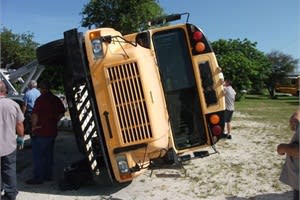
For a training exercise to help technicians learn how to properly recover, secure and tow a school bus after an accident, officials at Brevard Public Schools in Cocoa, Fla., staged a bus on its side. Local agencies, such as the fire and rescue department, were invited to participate.
Utilize state associations
Dewayne Ferrell, shop foreman at Metropolitan Nashville Public Schools in Nashville, Tenn., says that state associations can also be a valuable training resource for technicians. In addition to his duties at Metropolitan Nashville Public Schools, he coordinates the Tennessee Association of Pupil Transportation’s school bus technicians’ workshop.
Each year, Ferrell compiles information from school districts in counties throughout the state on maintenance-related problems they’ve been having, and he says he uses that as a guide for what will be presented in the workshop.
“I go to different vendors based on the problems people are having and get information that I can bring to the mechanics’ workshop,” he says.
For example, Ferrell says he reaches out to Thomas Built Buses, IC Bus and Blue Bird Corp., and representatives from the manufacturers attend the workshop to answer questions that technicians throughout the state have brought to Ferrell during the school year.
“They answer questions to issues related to specific buses and what’s needed to resolve specific problems,” he adds.
For more technician training tips, check out this Along for the Ride blog post.
More Maintenance
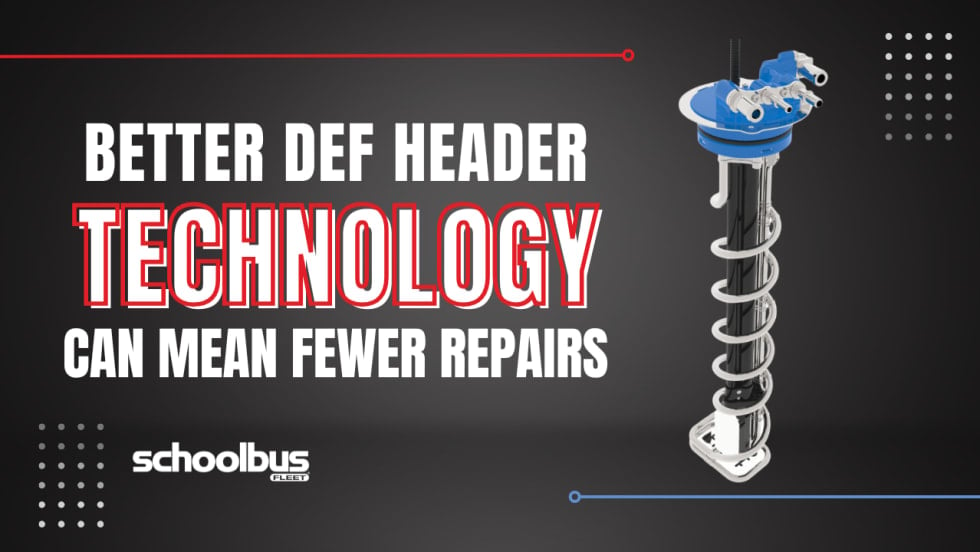
The Evolution of DEF Header Technology: What School Bus Operations Should Know at Replacement Time
See what school bus fleets should consider when replacing DEF headers to improve reliability, reduce repeat repairs, and control maintenance costs.
Read More →
The Essential Guide to School Bus Maintenance and Student Safety
Your district's buses carry students to school every day. This guide shows how predictive maintenance powered by fleet data helps keep buses reliable, drivers accountable and students safer from the first bell to the last stop.
Read More →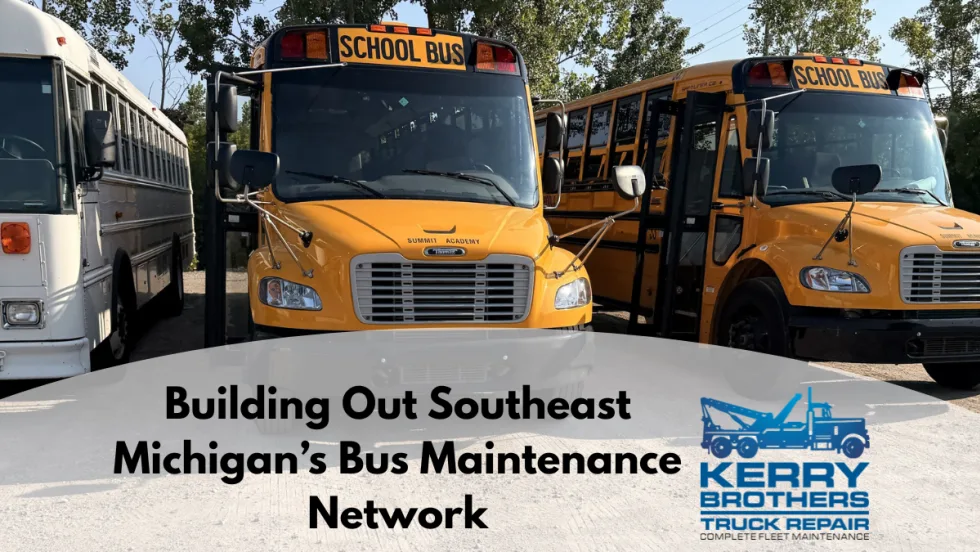
Kerry Brothers Grows Michigan School Bus Repair Network
The acquisition of Downriver Truck and Bus expands Kerry Brothers’ school bus maintenance footprint across southeast Michigan, adding repair capacity, diagnostic resources, and state inspection support.
Read More →
Noregon Introduces CAN Bus Diagnostic Tool, Expands JPRO Features
CAN Mentor and the latest JPRO update aim to simplify vehicle network diagnostics and improve repair efficiency for technicians of all experience levels.
Read More →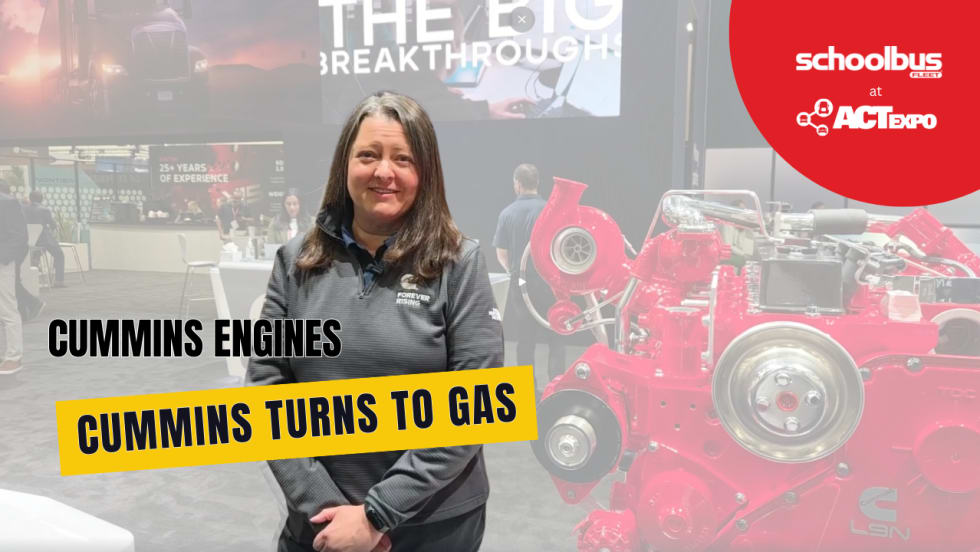
Cummins on Smarter, Simpler Engine Innovation
Cummins discusses its first-ever gasoline engine for school buses, EPA 2027, and why bus fleets still want durable, simpler internal combustion options.
Read More →
Report: 72% of Diesel School Buses Now Use Advanced Low-Emission Engines
New data shows advanced low-emission diesel technology continues expanding across school bus fleets, even as electric bus adoption gains momentum.
Read More →
Vampire Tools' CAIMAN 7.5-Inch Multi-Purpose Screw Extractor Long-Nose Pliers with Crimper
Vampire Tools introduced the VAMPLIERS Caiman 7.5-inch multi-purpose pliers, combining screw extraction, cutting, crimping, and gripping functions into a single tool designed for fleet maintenance professionals.
Read More →
How Advanced Diagnostics Helps Bus Fleets Stay Ahead of Repairs
Chat with Noregon’s Kevin Smallhorn at ACT Expo about bus diagnostic tools, telematics integration, CNG maintenance support, and strategies to help reduce downtime and improve uptime.
Read More →
How School Bus Fleets are Getting Ahead of Breakdowns
Don’t let bus downtime wear you down. Here’s how bus operators are shifting from manual processes to AI-powered, data-driven maintenance systems for improved reliability and safety.
Read More →
Pennsylvania School Bus Maintenance Team Praised for Dedication to Safety
Matthews Bus Company’s West Jefferson received a letter of commendation from the Pennsylvania State Police for their fleet inspections.
Read More →