



Hit the Road: Choosing the Right Tires
When selecting tires for a school bus, it is essential to consider how those tires will cope with harsh weather and road conditions, as well as frequent starts and stops.
As school bus drivers shuttle students to and from school, their buses encounter potential hazards, including uneven roads, sharp turns and curbs. In addition, frequent stops and starts can take a toll on the bus.
But what part of the bus endures the brunt of this daily abuse? The answer: tires.
SBF spoke with representatives from four tire companies about what makes a tire right for a school bus. Most important, they say, are the physical properties of the compounds that protect the tire from damage, as well as the durability of the casing construction so that retreading is an option.
Goodyear Tire & Rubber Co.
Goodyear Tire & Rubber Co. offers two tires for the school bus market: the G661 HSA and the G182 RSD. The G661 HSA is an all-position tire with a long original tread life, and the G182 RSD drive tire is optimal where enhanced traction is necessary for snowy climates.
The G661 HSA "works particularly well on the steer axle," according to Bruce Woodruff, director, business solutions marketing, commercial tire systems, Goodyear Tire & Rubber Co. "[It] features ... enhanced toughness to protect against sidewall abrasions."

Also, the G661 is equipped with Goodyear's TredLock Technology — interlocking microgrooves that enhance the tire's traction and lifespan.
Both tires are equipped with sidewall protector ribs and scrub-resistant compounds to protect against damage from everyday wear and tear, Woodruff explains.
Woodruff also points out that "retreading is a great way to reduce the cost of a tire program ... a retread costs about one-third the price of a new tire."
Goodyear has 125 authorized retreaders in its network, and its retreaded tires are available through hundreds of commercial tire dealers across North
America, according to Woodruff.
"Goodyear offers a G182 retread that matches the tread design and performance of the new tire," he says. "For bus operators who prefer to run all new tires on their buses, the casings from worn tires can be sold to retreaders, who will retread these casings for other uses."
Maintenance is also an important issue when it comes to tires. Goodyear's fleetHQ network offers school bus fleets a breakdown service, standard pricing wherever fleets operate and consolidated billing through the fleet's local dealer.

Hankook Tire America Corp.
Hankook Tire America Corp.'s "AH24, AH12 and AH11 tires are the most appropriate designs for use on school buses, and work well in all tire positions," says Brian Sheehey, director, commercial tires for Hankook Tire America Corp. "For school buses operated in areas where optimal traction is desired, the Z35A and DH06 tires make good choices for the drive tire positions, while using one of the other three designs on the steer position."
The AH24, AH12, and AH11 tires have tread compounds that are formulated for optimal performance in highscrub applications.
Hankook's tires are built to prevent uneven wear, chips, cuts and tearing. Sheehey explains: "Stone ejectors are located in the groove bottoms to protect the tires from stone drilling. Also, the compounds used in our tires are resistant to ozone cracking and weathering."
When selecting tires for a school bus, Sheehey says safety is key.
"Hankook tires have high standards for endurance and undergo both lab and field testing to validate the expected performance and meet government safety requirements," he explains.
Michelin Americas Truck Tires
Michelin Americas Truck Tires offers several tires that can address the unique challenges of transporting children safely to and from school, according to Doug Jones, customer engineering support manager for the company.
[PAGEBREAK]

"Our most popular tire for school buses is the Michelin XZE2 all-position tire," he says.
The climate in which a bus is operated affects tire choice. "Buses that operate in difficult winter conditions may choose to take advantage of the Michelin XDN2 drive-axle tire, which delivers superior levels of traction, even in extreme conditions," Jones explains.
Michelin designs these tires to provide the needed levels of traction and responsiveness required to safely operate a bus, as well as withstand the potential for sidewall damage from curb impacts or debris, Jones says. "By using a casing construction and sidewall compound that are more damage resistant, the tires will be better able to endure the rigors of school bus service," he adds.
Some of the tires also incorporate the company's Matrix Spring technology,which helps to provide needed traction and protects the tread by "locking together for the stability normally associated with solid tread blocks," Jones explains.
"It is also important that the tires are properly maintained, especially the tire pressure," Jones says. "An under- or over-inflated tire's performance will suffer compared to that of a properly inflated school bus tire."
Jones also notes that proper vehicle alignment is integral to maximizing tire life, and that school bus operators should avoid using products on a bus' tires that could potentially harm the tire.

Double Coin Holdings
Double Coin Holdings’ RT 500 all-position tire is an especially popular product for the school bus industry, according to Aaron Murphy, vice president at China Manufacturers Alliance (CMA). CMA, the North American subsidiary of Double Coin Holdings, also produces the RT 600 and the RT 606+, both newer generation tires equipped with special tread compounds designed to fight rapid wear.
Each of these tires has sidewall protectors on both sides of the tire, so that if “you retread the tire and one side of the sidewall is worn down, you can turn that tire around and you’ve got a brand new sidewall protector ready for use,” Murphy explains.
“We also have special siping in the tread areas to fight irregular wear, because what occurs in an urban environment … is you’re maneuvering in and out of driveways or over railroad tracks,” he adds. “You want to try to preserve the tread as much as you can.”
This siping also prevents rib tearing. The sipes help to increase tire traction in wet environments, and torn ribs could compromise bus safety or even prematurely end the life of a tire.
In addition, Double Coin tire “casings are manufactured to withstand urban use because … [school bus drivers] are not just driving in a straight line. They’re twisting and turning, creating lateral forces, so the tire has to have a strong casing,” Murphy says.
Double Coin also offers federal, state and local government fleet pricing, as well as over 1,000 points of sale throughout North America.
More Maintenance

Cummins on Smarter, Simpler Engine Innovation
Cummins discusses its first-ever gasoline engine for school buses, EPA 2027, and why bus fleets still want durable, simpler internal combustion options.
Read More →
Report: 72% of Diesel School Buses Now Use Advanced Low-Emission Engines
New data shows advanced low-emission diesel technology continues expanding across school bus fleets, even as electric bus adoption gains momentum.
Read More →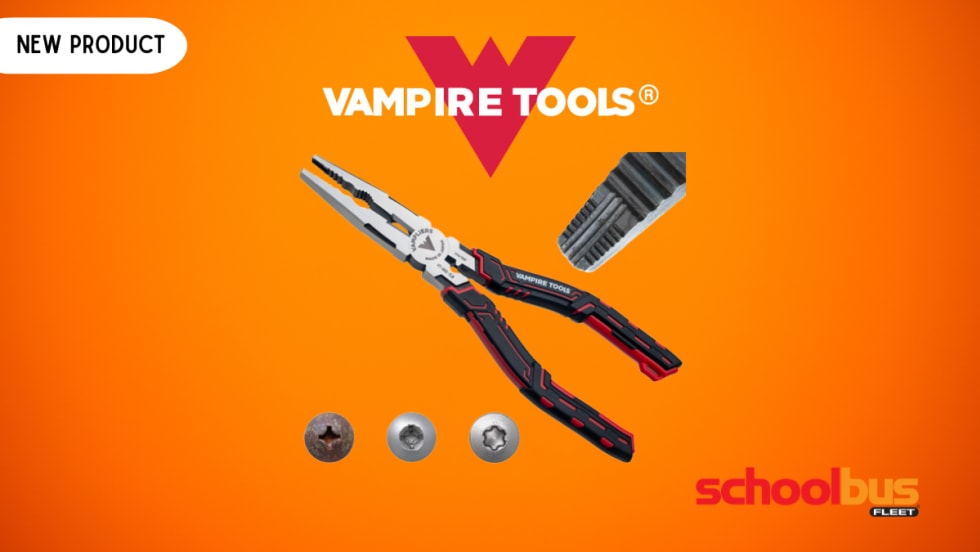
Vampire Tools' CAIMAN 7.5-Inch Multi-Purpose Screw Extractor Long-Nose Pliers with Crimper
Vampire Tools introduced the VAMPLIERS Caiman 7.5-inch multi-purpose pliers, combining screw extraction, cutting, crimping, and gripping functions into a single tool designed for fleet maintenance professionals.
Read More →
How Advanced Diagnostics Helps Bus Fleets Stay Ahead of Repairs
Chat with Noregon’s Kevin Smallhorn at ACT Expo about bus diagnostic tools, telematics integration, CNG maintenance support, and strategies to help reduce downtime and improve uptime.
Read More →
How School Bus Fleets are Getting Ahead of Breakdowns
Don’t let bus downtime wear you down. Here’s how bus operators are shifting from manual processes to AI-powered, data-driven maintenance systems for improved reliability and safety.
Read More →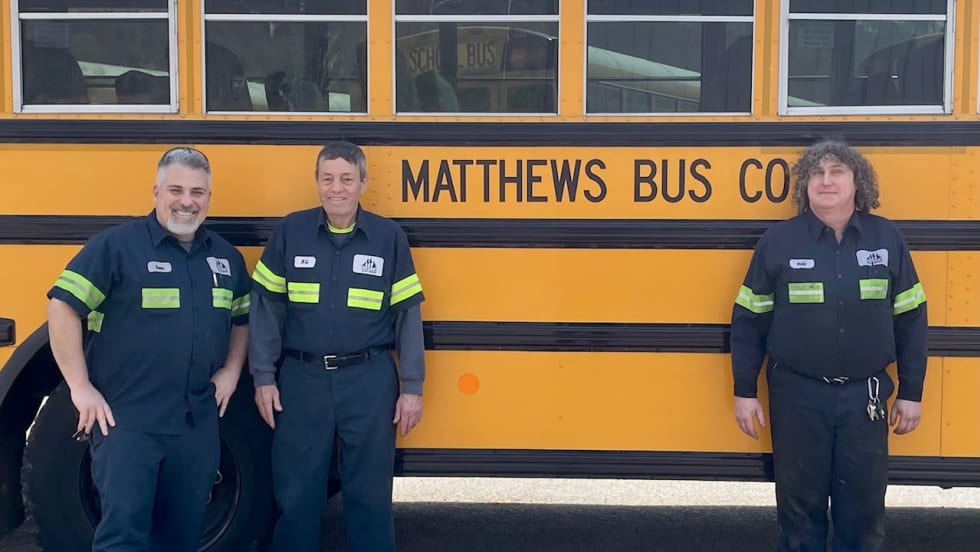
Pennsylvania School Bus Maintenance Team Praised for Dedication to Safety
Matthews Bus Company’s West Jefferson received a letter of commendation from the Pennsylvania State Police for their fleet inspections.
Read More →
2026 State of Student Transportation Report
Student transportation teams are being asked to do more with less, facing driver shortages, rising costs, and increasing safety expectations. This report uncovers how fleets are adapting, where technology is making the biggest impact, and why student ridership tracking is emerging as a top priority. Download the report to explore the key trends shaping 2026 and what they mean for your operation.
Read More →
From Chaos to Clarity: How School Districts Are Running Leaner Transportation Operations
Covering 38 routes on a Friday afternoon. Buses idling while routes overlap. Parents calling nonstop about late arrivals. Sound familiar? This whitepaper explores how district transportation leaders solved these exact problems — and what measurable results followed.
Read More →
The New Playbook for Safer, Smarter School Bus Maintenance
As school districts juggle aging buses, technician shortages and rising safety expectations, proactive fleet maintenance is becoming essential. This guide explores how telematics, predictive maintenance and real-time vehicle data can help transportation departments reduce breakdowns, extend vehicle life, improve compliance and keep students safer on the road.
Read More →
2026 School Bus Fleet Vendor Directory & Buyer's Guide
Searching for the right equipment, technology, or services for your school transportation program? This industry guide brings together manufacturers and suppliers across the entire school bus market, all in one place. Download it to find the partners who can help move your operation forward.
Read More →