




The Right Brakes for the Bus
SCHOOL BUS FLEET spoke with officials from three braking system manufacturers about how managing weight, drag and temperature with the right system can keep a school bus safe.
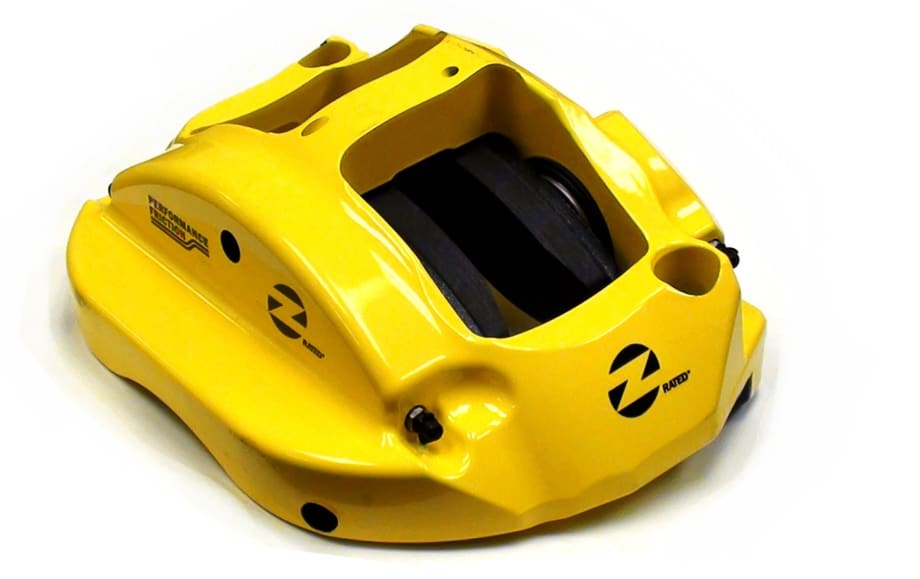
Performance Friction's Zero Drag caliper has no slide pins, a design that limits deflection. This caliper can be used in race car, truck or school bus applications.
Fundamental to the operation of every vehicle on the road today, a well-built braking system can allow the operator to slow and stop in time for a stop sign, or avoid a dangerous traffic collision. The braking system on a school bus carries the weight of a larger-than-average vehicle and must protect the lives of the students on board, even under the strain of high braking temperatures and uneven terrain.
SBF spoke with three braking system manufacturers — Haldex, Smartbrake and Performance Friction Corp. — about hydraulic disc, secondary engine and air braking systems for the school bus industry. Choosing the right braking system for your bus, they agreed, is about strength, durability and finding the right features to suit the specifications of your vehicle.
Systems must properly handle vehicle weight
“A braking system needs to be engineered to match the amount of weight being carried over the axles,” says Scott Corbett, director, technical service and warranty for Haldex, North America. “Sometimes too much braking is not a good thing, so it really needs to be a matched system for the vehicle and the application that it’s in.”
Haldex manufactures air braking system components which can be assembled to fit school bus, truck, tractor or military applications. This includes air valves, brake actuators, friction materials and foundation component hardware. Vehicle manufacturers can assemble these parts to meet the braking needs of school buses or other vehicles.
“Having the right components for the application is the first and foremost concern [when it comes to braking systems],” Corbett continues. “And, after that, if [the system has] the right components, it’s basically maintenance and inspection after that to keep everything working properly.”
Braking systems from Smartbrake are calibrated to suit the characteristics of individual engines before installation. This allows them to be used to maximum benefit without compromising the integrity of the vehicle’s engine.
“We can apply our braking system to many if not all school buses,” explains David Phillips, vice president of Smartbrake.
The Smartbrake system is a secondary engine brake, and weighs less than a compression brake and transmission retarder. The lighter weight of the braking system allows for the vehicle to carry increased loads.
When it comes to hydraulic disc braking systems, Performance Friction Corp. applies the same philosophy to race cars and school buses alike: “You want light weight, you want low drag and you have to be able to handle high temperatures,” explains David Mohr, vice president of OEM and technical sales.
The company uses “Zero Drag” technology in most of its school bus applicable systems, which reduces temperature due to drag and off-brake wear.
“The Zero Drag brake system design has been shown to improve brake disc and pad life dramatically, and can save hundreds of gallons of fuel per year in commercial applications,” Mohr says.
While a lightweight braking system might not be as important in school buses as in heavy-duty trucks that need to carry increased payloads, Performance Friction offers lightweight brake systems that have aluminum calipers and floating discs to take weight down that can be used on buses.
“We’re trying to give the best possible brakes to the medium truck or school bus user so that he can lower his cost of maintenance,” Mohr says.
[PAGEBREAK]

Temperature, stability and drag must be managed properly
While Haldex has not recently introduced any new technology for the school bus industry, Corbett believes some of the company’s newer systems will eventually transition into the school bus market.
“We have a new system called TRS [trailer rollover stability system]. It’s an antilock braking system and roll stability in one unit,” he says. “I think down the road probably a roll-over type system [will be available for school buses].”
The TRS adjusts for trailer conditions during normal and antilock braking system (ABS) events. In the case of a rollover, the system will act accordingly by applying the service brakes to slow and stabilize the trailer.
“I think you’re going to see the government mandate these types of systems [for school buses],” Corbett adds.
Smartbrake systems are built for endurance, Phillips says. Each is built with materials that can withstand heat and longterm stress.
“Our newest system is called our Air-Set Smartbrake,” Phillips explains. “It provides powerful secondary braking, rapid engine warm and maintains a constant engine temperature.” The system also maintains pressure as suggested by the engine manufacturer.
Oil-tempered silicon chrome springs and stainless steel push rods are some of the materials used in Smartbrake systems to ensure durability.
“The primary braking is so important for the safety of the students,” Phillips adds. “I think that there should be more engine braking regulation to increase the safety.”
ABS signal ring failure can be prevented by Performance Friction’s “Zero Failures” brake disc, which lowers the temperature of a system engaged in braking. In doing so, it lessens the amount of thermal deformation of the ABS signal ring.
“This has been shown in the field to completely eliminate premature ABS signal ring failure,” Mohr explains. “This problem is very costly for all school bus fleets and manufacturers.”
[PAGEBREAK]

Regular maintenance extends product lifetime
Mohr suggests that low maintenance costs is one of the most important features of a good braking system, as well as thermal management, low drag and the correct amount of torque to stop the bus in the proper distance.
“We [at Performance Friction] suggest that the fleet maintenance manager be aware of changes to manufacturing locations for their service parts,” he adds. “The manager who is responsible for the safe operation of school buses and for the cost of maintenance has to be more concerned that he or she is using good parts, made to the OEM-tested specifications, on their vehicles as service parts.”
If maintained correctly, Smartbrake products can have the same life expectancy as that of the bus or truck in which they are installed.
“The Smartbrake is very reliable and only requires an annual maintenance,” Phillips says. Installation of a Smartbrake system takes, on average, only a few hours.
“What we [at Haldex] always say is that proper maintenance and inspection are key to long service life,” Corbett says. “We preach that in our technical schools, and when it comes to customers, we always say that because that really is the key.”
Maintenance, Corbett continues, is especially important to the school bus industry because any problems have the potential to affect the lives of students.
“Inspection in the school bus industry is more stringent than in some of the other vocations we deal with, and rightfully so,” he concludes.
More Maintenance
Cummins on Smarter, Simpler Engine Innovation
Cummins discusses its first-ever gasoline engine for school buses, EPA 2027, and why bus fleets still want durable, simpler internal combustion options.
Read More →
Report: 72% of Diesel School Buses Now Use Advanced Low-Emission Engines
New data shows advanced low-emission diesel technology continues expanding across school bus fleets, even as electric bus adoption gains momentum.
Read More →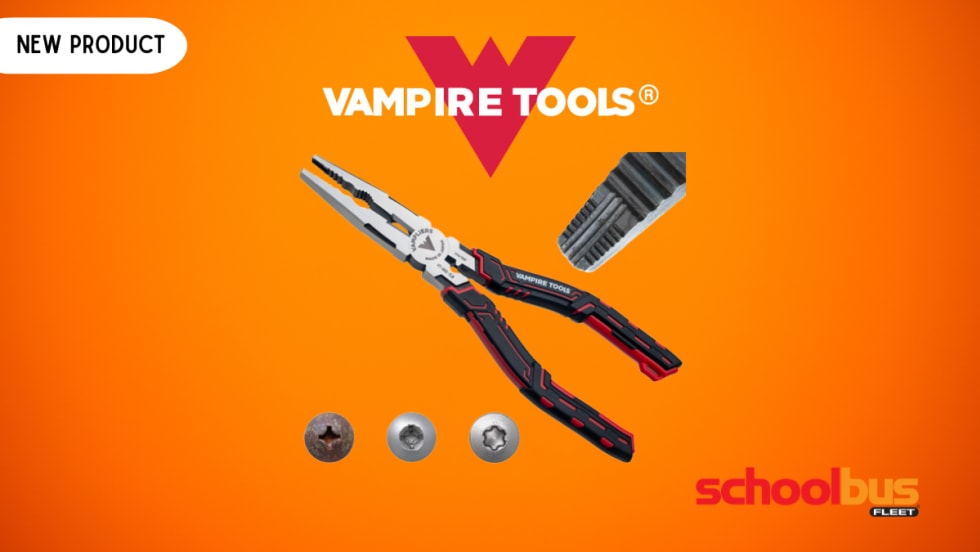
Vampire Tools' CAIMAN 7.5-Inch Multi-Purpose Screw Extractor Long-Nose Pliers with Crimper
Vampire Tools introduced the VAMPLIERS Caiman 7.5-inch multi-purpose pliers, combining screw extraction, cutting, crimping, and gripping functions into a single tool designed for fleet maintenance professionals.
Read More →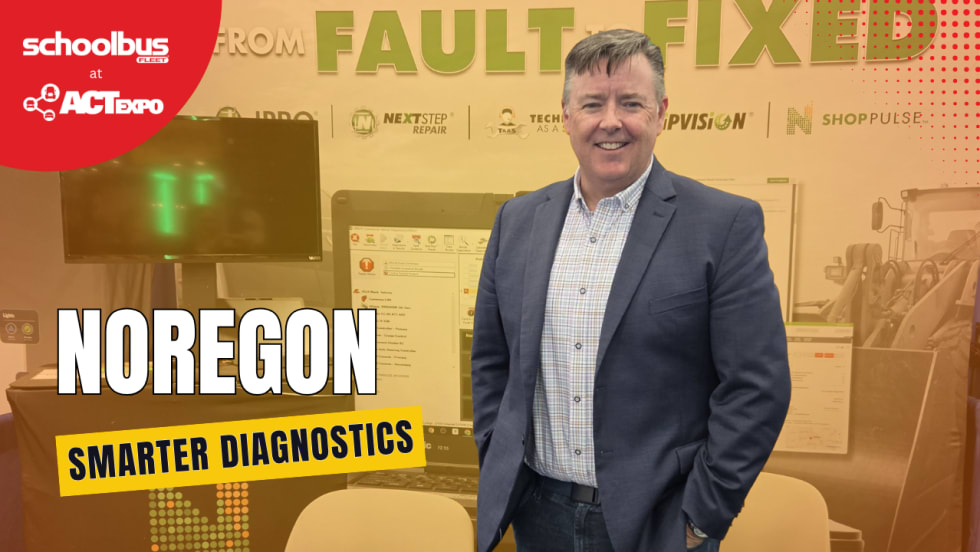
How Advanced Diagnostics Helps Bus Fleets Stay Ahead of Repairs
Chat with Noregon’s Kevin Smallhorn at ACT Expo about bus diagnostic tools, telematics integration, CNG maintenance support, and strategies to help reduce downtime and improve uptime.
Read More →
How School Bus Fleets are Getting Ahead of Breakdowns
Don’t let bus downtime wear you down. Here’s how bus operators are shifting from manual processes to AI-powered, data-driven maintenance systems for improved reliability and safety.
Read More →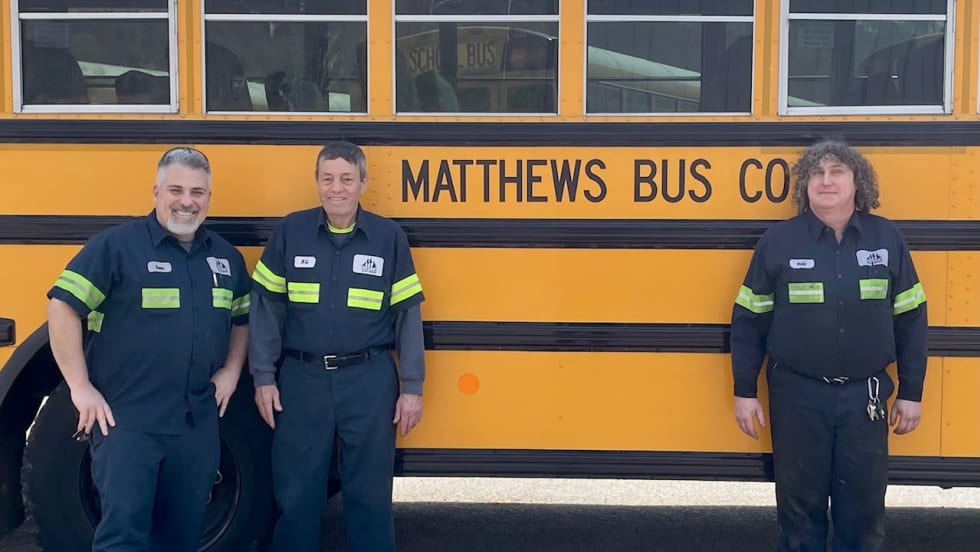
Pennsylvania School Bus Maintenance Team Praised for Dedication to Safety
Matthews Bus Company’s West Jefferson received a letter of commendation from the Pennsylvania State Police for their fleet inspections.
Read More →
2026 State of Student Transportation Report
Student transportation teams are being asked to do more with less, facing driver shortages, rising costs, and increasing safety expectations. This report uncovers how fleets are adapting, where technology is making the biggest impact, and why student ridership tracking is emerging as a top priority. Download the report to explore the key trends shaping 2026 and what they mean for your operation.
Read More →
From Chaos to Clarity: How School Districts Are Running Leaner Transportation Operations
Covering 38 routes on a Friday afternoon. Buses idling while routes overlap. Parents calling nonstop about late arrivals. Sound familiar? This whitepaper explores how district transportation leaders solved these exact problems — and what measurable results followed.
Read More →
The New Playbook for Safer, Smarter School Bus Maintenance
As school districts juggle aging buses, technician shortages and rising safety expectations, proactive fleet maintenance is becoming essential. This guide explores how telematics, predictive maintenance and real-time vehicle data can help transportation departments reduce breakdowns, extend vehicle life, improve compliance and keep students safer on the road.
Read More →
2026 School Bus Fleet Vendor Directory & Buyer's Guide
Searching for the right equipment, technology, or services for your school transportation program? This industry guide brings together manufacturers and suppliers across the entire school bus market, all in one place. Download it to find the partners who can help move your operation forward.
Read More →