




Heating Systems Help Reduce Emissions, Costs
Today’s engine heating systems available for the school bus segment help make vehicle start-up more efficient, reducing idle times and thus emissions ...

Today’s engine heating systems available for the school bus segment help make vehicle start-up more efficient, reducing idle times and thus emissions and fuel consumption.
While all of the systems detailed here provide preheating for the engine and heat bus interiors in cold weather, not all of them use the same technology. The products from the three companies discussed below offer a variety of unique features and capabilities.
Espar’s E-Guardian system is compatible with biodiesel and features a digital programmable timer.
Espar Products Inc.
Espar Products, based in Mississauga, Ontario, offers its E-Guardian series of engine preheaters, which operate as hot water furnaces, utilizing the bus’ own diesel fuel and batteries to produce heat. The heater’s water pump circulates engine coolant to transfer heat to the engine and heat exchangers. “It’s a true, compact heating system with all components integrated into the system, not just a stripped-down heater,” says John Dennehy, Espar’s vice president of marketing and communications. “The heater is capable of heating the engine, defogging the windshield and heating the passenger compartment, all at the same time.”
The E-Guardian 5 provides engine preheating, instant defrost and driver standby heat. Basic kits for the E-Guardian 5 include the heater, installation kit and crash sensor.
The 8, 10 and 12 models — in addition to the features of the E-Guardian 5 — provide supplemental heat to the entire passenger cabin. Kits also include a protective enclosure, mounting tray and digital programmable timer.
“It is a mobile system, in that it goes where the bus goes — there’s no need for electrical plug-ins,” Dennehy says. “The E-Guardian also features a diagnostic system, making it easy to maintain. The brushless water pump motor and blower also provide reduced maintenance costs and downtime, even as units age,” he explains.
Timer controls can switch heaters on remotely one to two hours prior to engine start-up, eliminating cold starts and operator waiting time. The set-and-forget digital programmable timer allows for continual repetition of the selected cycle event. “The timer helps ensure heater usage, adding to the success of the [operation’s] idle reduction program,” Dennehy says.
The E-Guardian’s compact design allows for a variety of location mounts. Other features include automatic altitude adjustment and a boxed design for protection from the elements. “It’s packaged for turnkey installation, so there are no hidden costs for the school,” Dennehy says.
The 40,000 BTU-plus heating system is approved by the California Air Resources Board (CARB), Dennehy says. It is also verified by the EPA and compliant with Department of Transportation regulations. In addition, he says it is the only fuel-operated heater that is compatible with biodiesel.
Espar’s E-Guardian provides a particular benefit to school bus operations due to the availability of a nationwide service network through IC Bus dealers, Espar MSDs (master sales distributors) and other original equipment manufacturer dealers. “Driver acceptance of fuel-operated heaters has been exceptional, resulting in more successful idle-reduction technology implementation,” Dennehy says.
[PAGEBREAK]
Ventech’s Liquid Heat Generator system uses hydraulic friction to create heat.
Ventech LLC
Ventech’s rapid heating system, known as the Liquid Heat Generator (LHG), provides a heating capacity of 75,000 BTU to the compartment — 65,000 of which is created in the first five minutes, according to the company.
The elements that make up the system include the heat transfer chamber; the housing and working chamber of the LHG, where heat is generated through hydraulic friction; the manifold, which controls coolant flow and modulation; and the clutch, which is used to disengage the system based on system warmth or driving needs.
“The LHG 513 heats the engine’s coolant without a flame, fuel lines or exhaust,” says Reid Landis, director of sales and marketing. “Our device preconditions the interior of a bus and defrosts windshields, defogs windows and heats the interior.”
LHG serves as the primary heating source for the interior of the bus when the engine is cold or below optimum temperatures, reducing cabin and engine warm-up and idling time, and decreasing emissions by 50 to 70 percent, Landis says. “The heat our device generates goes directly into the heat exchangers on the bus, offering incredible heat even at idle,” Landis explains. “Producing 45,000 BTU of heat to the interior brings school districts and contractors in compliance with any state mandates on idle times and interior temperature minimums — the bus interior must be at least 45 degrees before the first student is picked up in Alaska.”
The heater has an estimated in-service life of up to 3,000 hours and a zero-maintenance feature that eliminates the need for weekly programming, according to the company.
Ventech has established a dealer network throughout North America and will soon be EPA certified, Landis says. The company’s placement on the Idle-Reduction Technology list will qualify its products for grants and funding opportunities. In addition, all LHG 513 manufacturing is done at Ventech’s plant in Wixom, Mich.
Webasto’s larger Scholastic heater model reduces fuel consumption and emissions; the smaller TSL 17 warms the vehicle without having to start the engine.
Webasto Product North America
The Webasto Scholastic and TSL 17 fuel-operated heaters preheat school bus engines to eliminate cold starts and extend engine life. The Scholastic heater reduces fuel consumption and tailpipe emissions, accelerates window defrosting, provides in-duty supplemental heat, stops white smoke at engine start-up, and is EPA verified, according to the company.
When Webasto began developing the Scholastic model, this type of heating system originating in Europe had not been engineered specifically for school buses, says National Sales Manager Paul Baczewski. “Because of some of the fuel regulations, they had to have external parts [to make them compatible],” he explains. “The Scholastic unit is the only product of its type that is fully built for a North American school bus.”
The Scholastic maximizes the heating capacity of the bus’ engine system. “That’s important when you’re transporting students with special needs, where you might have a handicap door that’s open for four or five minutes,” Baczewski says. “You have a massive heat loss. With the Scholastic unit, you’ll have virtually instantaneous heat recovery.”
Baczewski says the Scholastic heater is available through all the major school bus manufacturers and is entirely manufactured in the U.S., in Fenton, Mich.
The Webasto TSL 17 eliminates unnecessary engine idling, which results in reduced emissions by up to 90 percent, according to the company. The TSL 17 is CARB approved and EPA verified. Also known as the Thermo Top, the TSL 17 is a scaled-down version of the Scholastic that is used solely as an idle reduction product, warming the vehicle without having to start the engine, Baczewski says.
More Maintenance
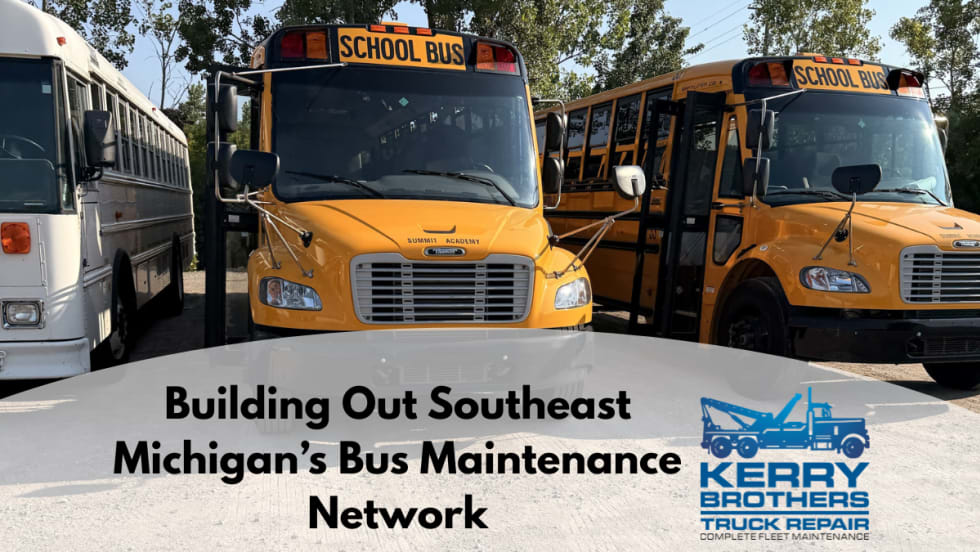
Kerry Brothers Grows Michigan School Bus Repair Network
The acquisition of Downriver Truck and Bus expands Kerry Brothers’ school bus maintenance footprint across southeast Michigan, adding repair capacity, diagnostic resources, and state inspection support.
Read More →
Noregon Introduces CAN Bus Diagnostic Tool, Expands JPRO Features
CAN Mentor and the latest JPRO update aim to simplify vehicle network diagnostics and improve repair efficiency for technicians of all experience levels.
Read More →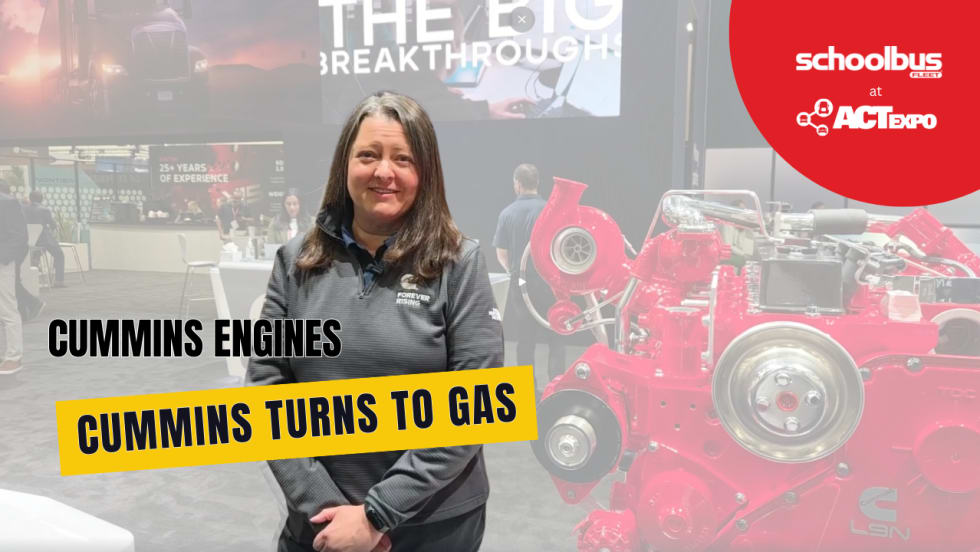
Cummins on Smarter, Simpler Engine Innovation
Cummins discusses its first-ever gasoline engine for school buses, EPA 2027, and why bus fleets still want durable, simpler internal combustion options.
Read More →
Report: 72% of Diesel School Buses Now Use Advanced Low-Emission Engines
New data shows advanced low-emission diesel technology continues expanding across school bus fleets, even as electric bus adoption gains momentum.
Read More →
Vampire Tools' CAIMAN 7.5-Inch Multi-Purpose Screw Extractor Long-Nose Pliers with Crimper
Vampire Tools introduced the VAMPLIERS Caiman 7.5-inch multi-purpose pliers, combining screw extraction, cutting, crimping, and gripping functions into a single tool designed for fleet maintenance professionals.
Read More →
How Advanced Diagnostics Helps Bus Fleets Stay Ahead of Repairs
Chat with Noregon’s Kevin Smallhorn at ACT Expo about bus diagnostic tools, telematics integration, CNG maintenance support, and strategies to help reduce downtime and improve uptime.
Read More →
How School Bus Fleets are Getting Ahead of Breakdowns
Don’t let bus downtime wear you down. Here’s how bus operators are shifting from manual processes to AI-powered, data-driven maintenance systems for improved reliability and safety.
Read More →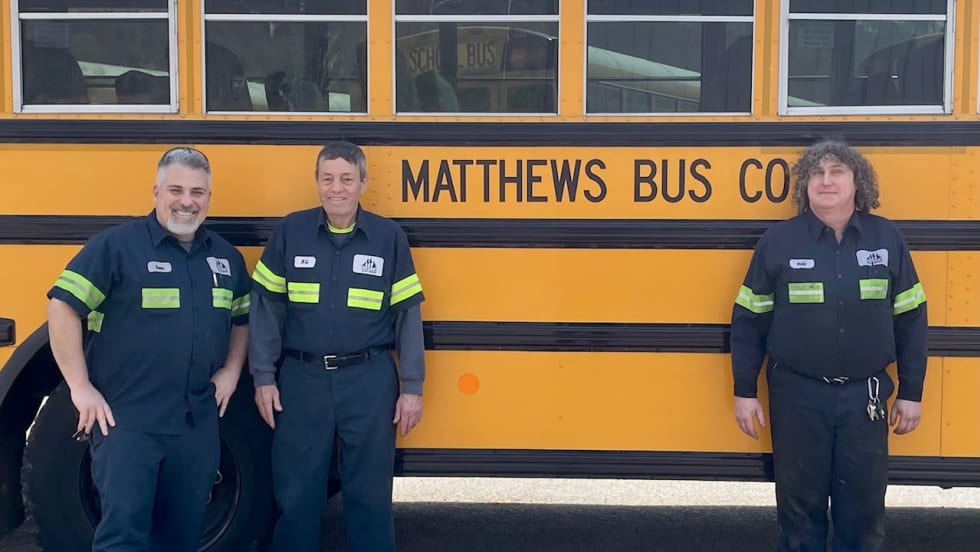
Pennsylvania School Bus Maintenance Team Praised for Dedication to Safety
Matthews Bus Company’s West Jefferson received a letter of commendation from the Pennsylvania State Police for their fleet inspections.
Read More →
From Chaos to Clarity: How School Districts Are Running Leaner Transportation Operations
Covering 38 routes on a Friday afternoon. Buses idling while routes overlap. Parents calling nonstop about late arrivals. Sound familiar? This whitepaper explores how district transportation leaders solved these exact problems — and what measurable results followed.
Read More →
2026 School Bus Fleet Vendor Directory & Buyer's Guide
Searching for the right equipment, technology, or services for your school transportation program? This industry guide brings together manufacturers and suppliers across the entire school bus market, all in one place. Download it to find the partners who can help move your operation forward.
Read More →