




Technology on the horizon: polyurethane tires
In our changing world, technological advances seem to come at us every day. Some are introduced gradually into our lives, such as the various typ...
In our changing world, technological advances seem to come at us every day. Some are introduced gradually into our lives, such as the various types of alternative fuels, and some come unexpectedly.
One technological advance that grabbed my attention recently is the development of materials aimed at replacing the rubber tire we are all so familiar with.
Amerityre Corp. in Boulder City, Nev., has developed new compounds that, when blended, create a polyurethane tire that the company says runs cooler, lasts longer and costs no more than a standard rubber tire. It is also clean to manufacture and clean to dispose of, Amerityre says.
The prospect of a tire that could run for 100,000 miles or more, could run fl at for extended periods with no compound deterioration, and is environmentally friendly was more than enough to pique my interest.
Is it a contender?
I contacted Guy Walenga at Bridgestone Firestone, a longtime manufacturer of rubber tires, and asked for his thoughts on the development of the polyurethane tire. While he expressed skepticism that Amerityre’s technology is commercially viable at this point, he acknowledged that there are benefits to using polyurethane in tires: lighter weight, good resistance to wear, easy to manufacture in colors.
However, Walenga said that polyurethane tires would not measure up to current rubber pneumatic tires in terms of cornering, braking and traction performance.
Amerityre begs to differ, saying that its tires pass all performance testing with a “B” classification, which is only slightly less than perfect. The company also said that it recently passed the grueling government standards for tires, FMVSS 109 and FMVSS 139, the latter of which became effective in September 2007.
In actual road testing, a late model Chevrolet Corvette was outfitted first with standard rubber compound tires and then with polyurethane tires. The driver of the car noticed no difference in cornering, handling or performance, according to Amerityre.
Dave Martin of Amerityre said that the polyurethane tire is not affected by UV light. This means it would not experience the casing deterioration that the sun can cause in current rubber formulated tires. Additionally, oil does not penetrate polyurethane.
Keep it clean
The manufacturing process includes mixing compounds together much like you would mix together epoxy parts A and B to achieve the final cured product. Although there is much more involved in the polyurethane tire than that, the process is very clean. Less than 1 percent is wasted during the manufacturing process, all of which is 100-percent recyclable.
The tires are poured into a mold and then allowed to cure. I asked Martin how a tire can be poured into a mold without developing imperfections. He said that Amerityre uses a vacuum in the process, which removes any voids. Tires come out of the mold perfectly round and true, Martin said, requiring no machining to make them balanced.
It is also interesting to note that polyurethane tires could be manufactured in any color — even clear — and virtually any tread design could be built into them. However, Martin noted that the practicality of a colored tire would be slim unless it was a special order for a custom application, and this would increase the cost since one-time compounds would have to be used.
In the works
Amerityre’s current production is focused on automotive tires, but the company is in the development stages of a polyurethane retread for a rubber casing truck tire.
Gary Benninger, president and CEO of Amerityre, said that the retread is undergoing lab tests and should be ready for real-world tests within a few months. He said that he hopes this new development will be on the market within the next year.
After that, Benninger said, Amerityre’s efforts will shift toward a dedicated polyurethane truck tire. Then, the company will branch out into other modes of transportation.
For more information on Amerityre’s polyurethane technology, go to www.amerityre.com.
More Maintenance

Cummins on Smarter, Simpler Engine Innovation
Cummins discusses its first-ever gasoline engine for school buses, EPA 2027, and why bus fleets still want durable, simpler internal combustion options.
Read More →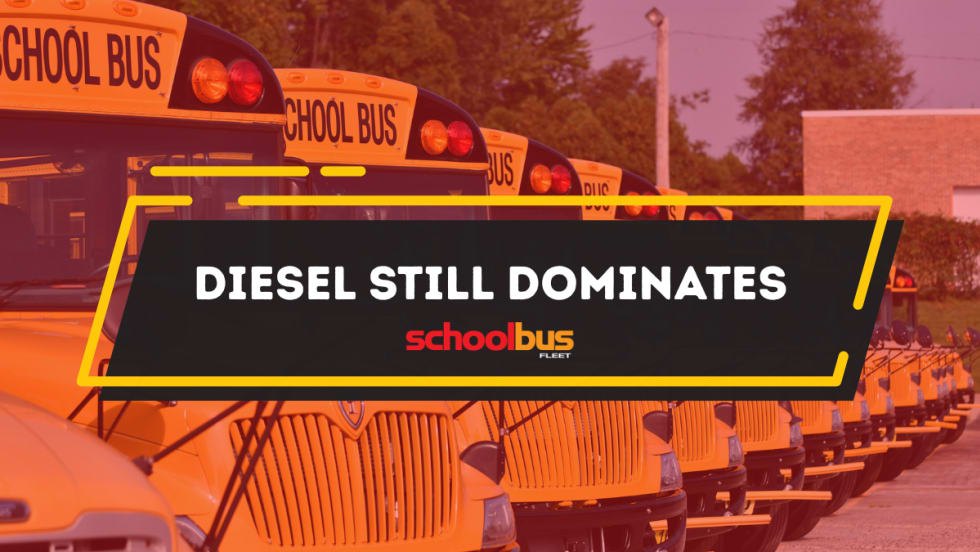
Report: 72% of Diesel School Buses Now Use Advanced Low-Emission Engines
New data shows advanced low-emission diesel technology continues expanding across school bus fleets, even as electric bus adoption gains momentum.
Read More →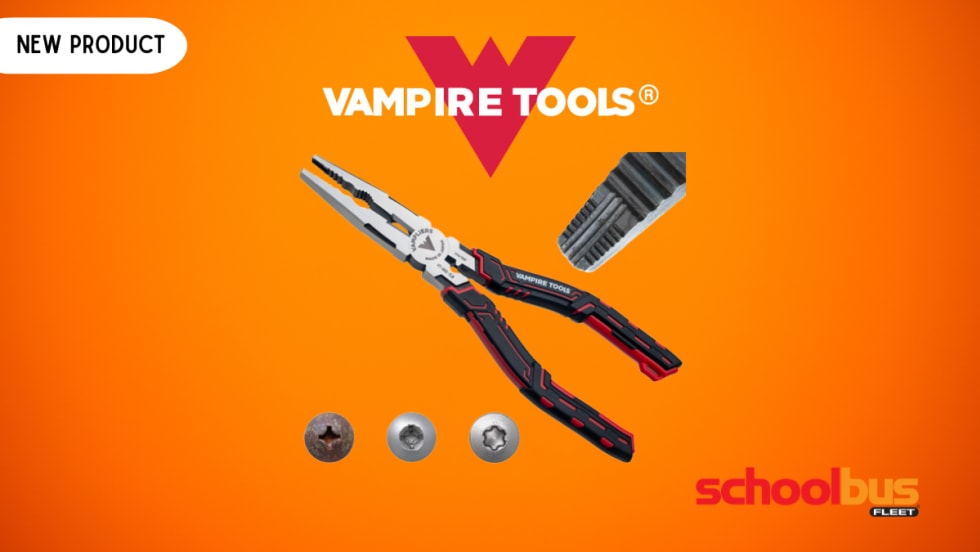
Vampire Tools' CAIMAN 7.5-Inch Multi-Purpose Screw Extractor Long-Nose Pliers with Crimper
Vampire Tools introduced the VAMPLIERS Caiman 7.5-inch multi-purpose pliers, combining screw extraction, cutting, crimping, and gripping functions into a single tool designed for fleet maintenance professionals.
Read More →
How Advanced Diagnostics Helps Bus Fleets Stay Ahead of Repairs
Chat with Noregon’s Kevin Smallhorn at ACT Expo about bus diagnostic tools, telematics integration, CNG maintenance support, and strategies to help reduce downtime and improve uptime.
Read More →
How School Bus Fleets are Getting Ahead of Breakdowns
Don’t let bus downtime wear you down. Here’s how bus operators are shifting from manual processes to AI-powered, data-driven maintenance systems for improved reliability and safety.
Read More →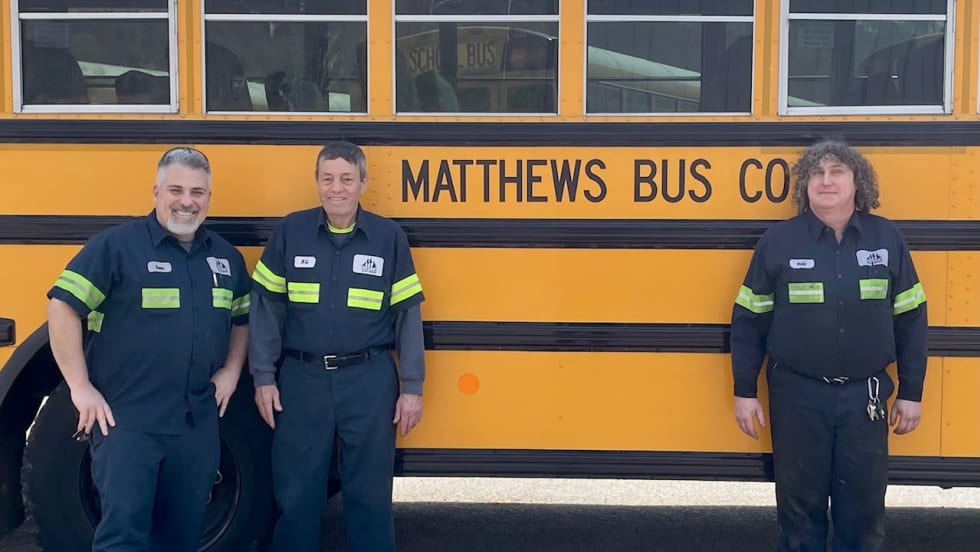
Pennsylvania School Bus Maintenance Team Praised for Dedication to Safety
Matthews Bus Company’s West Jefferson received a letter of commendation from the Pennsylvania State Police for their fleet inspections.
Read More →
2026 State of Student Transportation Report
Student transportation teams are being asked to do more with less, facing driver shortages, rising costs, and increasing safety expectations. This report uncovers how fleets are adapting, where technology is making the biggest impact, and why student ridership tracking is emerging as a top priority. Download the report to explore the key trends shaping 2026 and what they mean for your operation.
Read More →
From Chaos to Clarity: How School Districts Are Running Leaner Transportation Operations
Covering 38 routes on a Friday afternoon. Buses idling while routes overlap. Parents calling nonstop about late arrivals. Sound familiar? This whitepaper explores how district transportation leaders solved these exact problems — and what measurable results followed.
Read More →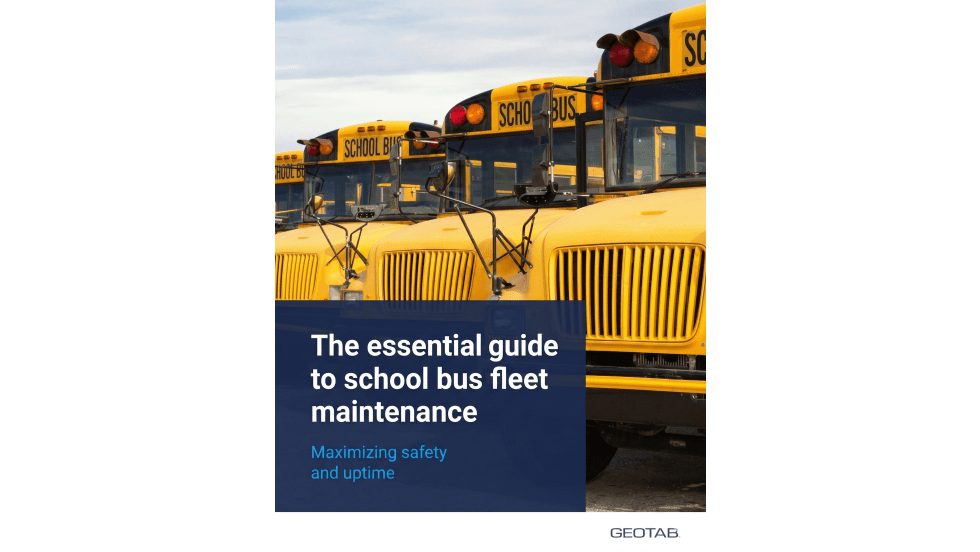
The New Playbook for Safer, Smarter School Bus Maintenance
As school districts juggle aging buses, technician shortages and rising safety expectations, proactive fleet maintenance is becoming essential. This guide explores how telematics, predictive maintenance and real-time vehicle data can help transportation departments reduce breakdowns, extend vehicle life, improve compliance and keep students safer on the road.
Read More →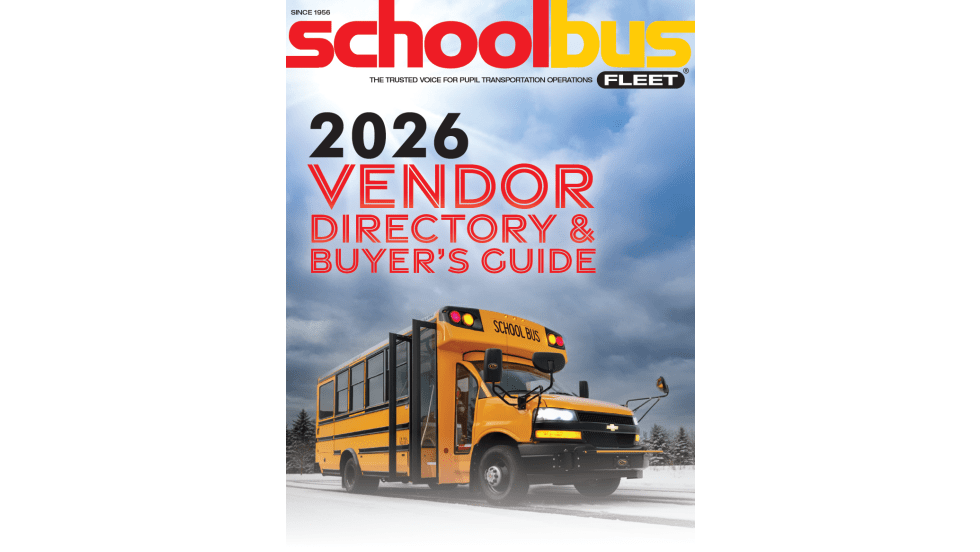
2026 School Bus Fleet Vendor Directory & Buyer's Guide
Searching for the right equipment, technology, or services for your school transportation program? This industry guide brings together manufacturers and suppliers across the entire school bus market, all in one place. Download it to find the partners who can help move your operation forward.
Read More →