




Bus Washing Is a Matter of Touch
When it comes to his school bus fleet, “Image is everything,” says Al Olkowitz, transportation administrator at Jackson Township (N.J.) School Distric...

When it comes to his school bus fleet, “Image is everything,” says Al Olkowitz, transportation administrator at Jackson Township (N.J.) School District in New Jersey.
“I always like to have clean vehicles,” Olkowitz says. “A clean vehicle projects to the public the image of a well-maintained fleet.”
Olkowitz faced many hurdles when trying to find an appropriate bus-wash system that was both reliable and cost effective.
Fleetwash Inc., based in West Caldwell, N.J., now does the job for Olkowitz’s fleet of 150 buses. The service is provided once a month for $7.50 per bus, which Olkowitz says is cheaper than a car wash.
A mobile unit such as Fleetwash’s can be a viable option for school bus operators that do not wish to purchase their own wash equipment.
But for some districts and contractors, an automatic fleet-washing tool is hands down the best option for cost- and time-effectiveness. Several types of systems are manufactured by a wide variety of companies.
Clean while you go
A basic bus-washing procedure, used by many school districts across the country, is the drive-through brush system. The units are equipped with two, four or six brushes and generally feature a soap-application arch at the entrance and a final rinse arch at the exit.
Ross and White Co., based in Cary, Ill., is a major supplier of brush wash systems. The company offers two models that were specifically designed for use by school bus fleets: the B-1025 and the Giant Brush SB 1000.
“Schools are looking for the most economical system that can do the functions they’re looking for,” says Jeff Ross, president and CEO of Ross and White. “However, that isn’t always the most economical way to do it long term. Initial equipment investment is important and is usually the determining factor in how inexpensively the district can wash its vehicles.”
Ross and White’s school bus wash models, aside from brush size, are similar in how they perform. Both systems are controlled on a drive-through basis by overhead dangle and hip switches while two pivoting detergent brushes scrub the sides and rear of the bus.
Cindy Peychich, dispatch coordinator for Rochester (Mich.) Community Schools, uses a standard drive-through system to keep her fleet of 105 buses clean.
“I’ve been here 15 years and my mom was here 20, and it’s been the same wash system since we’ve been here,” Peychich says. “We have a very old system but it does the job — sometimes it just costs us a lot to repair it when it breaks down.”
{+PAGEBREAK+} Roll over, wash system
Another type of system is the rollover gantry, which consists of framework in an upside-down “U” shape that rolls back and forth over a parked vehicle, running on steel rails mounted in the floor.
“Districts recently seem to be more interested in purchasing roll-over systems,” says David Newell, sales distributor for SSI — a vehicle wash system manufacturer located in Tonawanda, N.Y., and Mississauga, Ontario.
Rollover gantries also come in a touchless version, in which the brushes are replaced with vertical and horizontal spray bars. Also available are hybrid rollover gantries that include friction and touchless elements in one system.
“We are starting to see hybrid systems or what we call pressure-and-brush type systems, and, in my opinion, this is the most effective way to wash a bus,” Ross says.”
Along these lines, N/S Wash Systems of Inglewood, Calif., combined an existing system with a high-pressure touchless arch.
“Generally, the default will be for a touchless wash, but the driver can choose brushes to scrub the vehicle for a deep cleaning,” says Gordon Risser, regional transit account manager.
The hybrid system allows three options: friction wash, touchless wash and a combination of the two.
Touchy subject
Yet another type of automatic bus-wash system is the overhead robotic gantry. Belanger Inc. of Northville, Mich., makes a system of this type called the V-Max. It is a gantry-style machine in that the vehicle drives in and parks. However, the V-Max has an elevated carriage that travels on steel rails over the top of the bus. This design protects equipment from the negative effects of water, chemicals and grime.
“Touchless washing is being adopted in school buses in particular because a lot of these manufacturers are coming out with new electric mirrors that are easily damaged by brush systems,” says Tim Tobias, large vehicle wash sales specialist at Belanger. “People want the new mirrors, but if they have an old brush-type bus washer, they rip the mirrors off. The idea of the touchless washer sounds very appealing and practical.”
Hands up
In spite of the technology available, some districts still wash their buses by hand, whether it’s due to a lack of funding, smaller fleet size or just personal preference.
For instance, the Houston School District hires a crew of four individuals who manually wash all 1,000 of the district’s buses.
“Because we still wash by hand, we are not the most efficient,” says a spokesman for the Houston transportation department. “We have two crews, each with a truck and flatbed trailer with a 500-gallon tank on it, and they come in once a month.”
Weather matters
When deciding on appropriate bus-wash equipment, geographic location is an important consideration. In certain areas of the country, the winter season brings a whole new set of challenges to maintaining clean vehicles.
Snow, ice and salt on the roads can cause buildup and increase the amount of rust that accumulates on the bus.
“During the winter months, with temperatures as low as -20, having an outdoor wash bay can be hard,” says Richard Heintzman, transportation foreman for Rapid City (S.D.) Area Schools.
{+PAGEBREAK+} Peychich of Rochester Community Schools agrees. Michigan’s winter weather makes it difficult for her fleet to remain clean.
“We have quite a few rural roads around here, so we have a lot of mud,” Peychich says. “In the winter, we have a big bucket filled with washer fluid and water, and the drivers have to use scrub brushes and wash by hand.”
Finding the bus-wash system that is best suited for your district’s specific needs is crucial to operating a successful fleet.
“Keeping a clean bus is a priority not just for safety reasons, but to let the public know that our drivers take pride in their job and the piece of equipment they drive,” Heintzman says. “As everyone knows, a school bus transports the most precious cargo in the world.”
Choose wisely
School bus operators should thoroughly research the wash-system industry and its wide range of products prior to purchasing a system. This includes speaking with not only vendors and suppliers, but more importantly, existing customers. So says James Stieva of ACC International Inc., located in Beamsville, Ontario, and Niagara Falls, N.Y.
“The biggest thing is to obtain references of people who use the equipment every day and find out what they think,” Stieva says. “When considering any type of equipment, it is important to look at all facets, including all initial costs, parts and service availability and general maintenance.”
Regardless of the type or manufacturer of bus-wash equipment an operation considers, one of the most crucial elements to any successful vehicle wash program is the availability of competent, reliable, local maintenance service and support, according to Tim Tobias of Belanger Inc.
“Unfortunately, the majority of the bus-wash equipment manufacturers you will encounter are smaller, regional companies,” he says. “They have the ability to market and install nationwide, but generally lack the resources to properly service or support the equipment they install outside their region.”
When considering bus-wash options, look for a system that has the best combination of safety, longevity, per-unit cost and wash time. These criteria will provide the best long-term results, according to Bruno Albanesi of Bitimec International Inc. in Stamford, Conn.
“If a district spends a little more money and uses three times as much water, it’s going to end up costing them,” he says. “If they spend a little less money on the wash-machine and get a system that doesn’t have as much warranty, they will also lose money.”
More Maintenance

Cummins on Smarter, Simpler Engine Innovation
Cummins discusses its first-ever gasoline engine for school buses, EPA 2027, and why bus fleets still want durable, simpler internal combustion options.
Read More →
Report: 72% of Diesel School Buses Now Use Advanced Low-Emission Engines
New data shows advanced low-emission diesel technology continues expanding across school bus fleets, even as electric bus adoption gains momentum.
Read More →
Vampire Tools' CAIMAN 7.5-Inch Multi-Purpose Screw Extractor Long-Nose Pliers with Crimper
Vampire Tools introduced the VAMPLIERS Caiman 7.5-inch multi-purpose pliers, combining screw extraction, cutting, crimping, and gripping functions into a single tool designed for fleet maintenance professionals.
Read More →
How Advanced Diagnostics Helps Bus Fleets Stay Ahead of Repairs
Chat with Noregon’s Kevin Smallhorn at ACT Expo about bus diagnostic tools, telematics integration, CNG maintenance support, and strategies to help reduce downtime and improve uptime.
Read More →
How School Bus Fleets are Getting Ahead of Breakdowns
Don’t let bus downtime wear you down. Here’s how bus operators are shifting from manual processes to AI-powered, data-driven maintenance systems for improved reliability and safety.
Read More →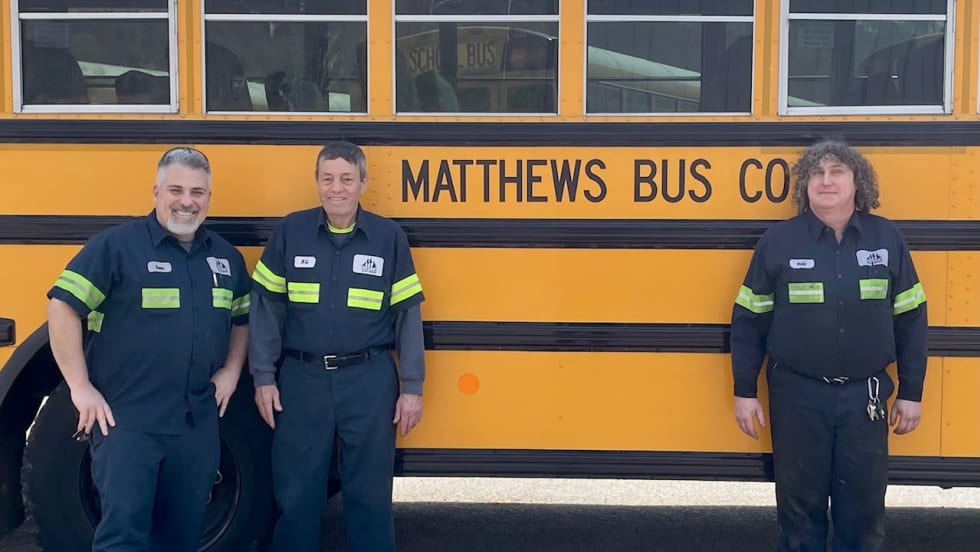
Pennsylvania School Bus Maintenance Team Praised for Dedication to Safety
Matthews Bus Company’s West Jefferson received a letter of commendation from the Pennsylvania State Police for their fleet inspections.
Read More →
2026 State of Student Transportation Report
Student transportation teams are being asked to do more with less, facing driver shortages, rising costs, and increasing safety expectations. This report uncovers how fleets are adapting, where technology is making the biggest impact, and why student ridership tracking is emerging as a top priority. Download the report to explore the key trends shaping 2026 and what they mean for your operation.
Read More →
From Chaos to Clarity: How School Districts Are Running Leaner Transportation Operations
Covering 38 routes on a Friday afternoon. Buses idling while routes overlap. Parents calling nonstop about late arrivals. Sound familiar? This whitepaper explores how district transportation leaders solved these exact problems — and what measurable results followed.
Read More →
The New Playbook for Safer, Smarter School Bus Maintenance
As school districts juggle aging buses, technician shortages and rising safety expectations, proactive fleet maintenance is becoming essential. This guide explores how telematics, predictive maintenance and real-time vehicle data can help transportation departments reduce breakdowns, extend vehicle life, improve compliance and keep students safer on the road.
Read More →
2026 School Bus Fleet Vendor Directory & Buyer's Guide
Searching for the right equipment, technology, or services for your school transportation program? This industry guide brings together manufacturers and suppliers across the entire school bus market, all in one place. Download it to find the partners who can help move your operation forward.
Read More →