



How to Fine-Tune Your Oil Program
The motor oil program is a cornerstone of any maintenance routine, but today’s market offers so many products and best practices that it’s difficult t...
The motor oil program is a cornerstone of any maintenance routine, but today’s market offers so many products and best practices that it’s difficult to decide which is right for you.
The key is recognizing that there is no one best practice and that your oil program should reflect the singular needs of your fleet. Choosing motor oils and filters, selecting a supplier and determining oil-change intervals are all opportunities to maximize the fleet value.
Oil programs come in as many varieties as school bus fleets, but what everyone agrees on is the importance of investing in high-quality products. Although tight budgets may make bargains tempting, the most important consideration when designing your program is purchasing products that meet your specifications.
“Today’s engines are more compact and produce more power, creating a need for quality engine oil in conjunction with a quality filtration system,” says Cecil Tomlin, director of transportation at the Stockton (Calif.) Unified School District. “Performance and longevity come with a higher cost but certainly pay off in the long run.”
Quality is top priority
There is a host of reasons to invest in high-quality motor oil and filters, including better performance, reduced engine wear and extended oil-change intervals. It’s important to pick products that will not only protect your engine, but also will not void your warranty. Just as a superior product will improve performance, an inferior one can actually cause problems.
Synthetic oils, although more costly than their petroleum counterparts, can be cost effective despite the higher upfront investment. “They don’t break down, they don’t oxidize and they’re cleaner,” says Ed Newman, marketing manager for Amsoil Inc. in Superior, Wis. Extended oil drains, often up to three times the interval for petroleum products, justify the higher cost of the lubricant, he says.
Newman also points to the ability of synthetic oils to withstand the frigid temperatures experienced by fleets in the northern U.S. earlier this year. “The low pour points of synthetic oils enable your school buses to keep going even when the temperatures drop really low,” he says.
Says John Davies, transportation director at Independence (Mo.) Public Schools, “We use oil that has proven itself despite the cost, because in the long run, buying oil that breaks down easily creates other more expensive maintenance problems. The same philosophy applies to filters.”
Jeff Armstead, transportation director for Cheatham County (Tenn.) School District, agrees. “When you find a brand that works well for your fleet, stick with it even if it may cost slightly more,” he says.
The significance of your investment in high-quality products is even greater with newer vehicles. According to Robert Morgan, fleet maintenance manager for the School District of Hillsborough County (Fla.), increasingly complex engines mean an increased need for high-quality filtration systems.
“Choosing a motor oil and filter type has never been more challenging,” Morgan says. “Quality of oil is important for the operation of the hydraulically actuated electronically controlled unit injector (HEUI) fuel system. Poor oil will result in surging, erratic injector actuation pressure and rough running.”
{+PAGEBREAK+} Choosing a vendor
It is also critical to find a supplier that provides reliable, service-minded access to the products of your choice. Just as the oil and filters need to be fleet specific, vendors should be judged on criteria that are particular to your needs.
Tim McShane, vehicle maintenance manager for Highline (Wash.) School District, picks suppliers based on a number of factors, including convenience. “[Our product] choices are based on having a fully integrated supplier who will provide a high-quality product that exceeds specifications at a competitive price with local factory representation and frequent deliveries,” he says.
For Scott Bearrows, director of buildings and grounds for the Meridian (Ill.) Community Unit School District #223, choosing a supplier means listening to his mechanics’ preferences and looking at the vendor’s track record. “The way we choose the oil brand is based on past performance and confidence in the oil,” Bearrows says.
Keeping costs down
High quality doesn’t have to mean high prices, however. There are strategies you can use to lower costs. It’s just as important to research your options when choosing a supplier as it is when writing your specifications.
Louk Markham, transportation manager for Portage (Mich.) Public Schools, says being an informed consumer is critical. “Do your homework before you send out bids, and talk to your vendors to make sure that your current products and procedures are appropriate for today’s fleet.”
Buying on bid allows Wayne Hopkins, fleet manager for Baltimore County Public Schools, to comparison shop. “With a fleet of almost 800 school buses, I specify the highest-quality products available to ensure vehicle reliability,” he says. “We send out requests for bids to numerous vendors. We then purchase from the vendors offering the lowest price on products meeting our specifications.”
If your fleet size isn’t appropriate for soliciting bids, buying in bulk is another way to keep prices down. If your storage capacity doesn’t make bulk purchases possible, you still may be able to invest when the market is particularly good.
Building relationships with your suppliers can also control costs by providing vendors an incentive to reward loyalty. Says Davies, “We buy in bulk and check the market on a regular basis for price comparisons. We have found it less expensive to stay with the same supplier, as they are more likely to provide a discount to regular customers.”
Whether buying in bulk, on bid or in a strategic manner, what’s key to keeping costs down is being aware of the going price for oils and filters that meet your specifications.
Dean Kesling, fleet service manager for St. Lucie County (Fla.) Public Schools, performed an oil study five years ago. “Out of four major oil companies, I found ours to offer everything I was looking for, including a written warranty on product failure,” he says. “Same holds true with the filters we use. I buy in bulk, do not accept bids and the company has always been comparable for pricing.”
{+PAGEBREAK+} The impact of intervals
The value of your oil program is also dependent on your oil-change interval. An interval that is too brief wastes money by disposing functional oil, while one that is too long will cost you in engine wear and tear.
According to Morgan at Hillsborough County, there are several factors to consider when deciding the length between oil changes, including fuel consumption, distance, service hours and calendar time.
Oil analysis is another way to determine where to set the interval. One of the benefits of the process is that it allows you to adjust your interval to the needs of certain vehicles. The same data can also measure how well your engine is aging.
Jerry Davidson, transportation coordinator for Shelby County (Ala.) Schools, finds the process helpful. “We use analysis to determine if the oils we are using are doing the job and also to determine at what intervals to change the oil,” he says.
With or without oil analysis, setting an interval that suits your fleet is key. Davies’ vehicles are serviced every 3,000 miles or three months, whichever comes first.
Hopkins uses a longer interval and hopes to extend it even further. “We used to change oil and filter every 4,000 miles,” he says. “For the past several years, we have increased the interval to 6,000 miles with no ill effects. We will be using oil analysis in the near future to see if we can safely extend our oil-change intervals.”
Age also affects intervals. Kesling integrates new buses into the oil program as they age. “Our new buses are driven to the recommended mileage for oil change. At 18,000 miles, we change to our long-term program and start our oil analysis. We change filters every 9,000 miles.”
As with everything else, the program for new buses must be tailored to the operation. McShane’s urban school district in Burien, Wash., stresses his vehicles with stop-and-go traffic. All of his fleet, new and old, is on the same oil program.
According to Roger Botti, transportation manager for the North Allegheny (Pa.) School District, “Oil and filters are cheap, engine overhauls aren’t. The key is to choose a mileage/hour interval that serves your operation successfully.”
What works for you
When it comes to oil programs, the best practice is the one that works for your fleet. For Tomlin, his best practice is cooperation. “Communicate with upper management, listen to ideas from your maintenance staff, maintain accurate records and ask your vendors to assist you,” he says. “Many have test programs at no charge that can provide valuable information.”
Adds Tomlin, “Considering budget uncertainties facing departments, we need to think outside the box if we are expected to do more with less.”
More Maintenance
Cummins on Smarter, Simpler Engine Innovation
Cummins discusses its first-ever gasoline engine for school buses, EPA 2027, and why bus fleets still want durable, simpler internal combustion options.
Read More →
Report: 72% of Diesel School Buses Now Use Advanced Low-Emission Engines
New data shows advanced low-emission diesel technology continues expanding across school bus fleets, even as electric bus adoption gains momentum.
Read More →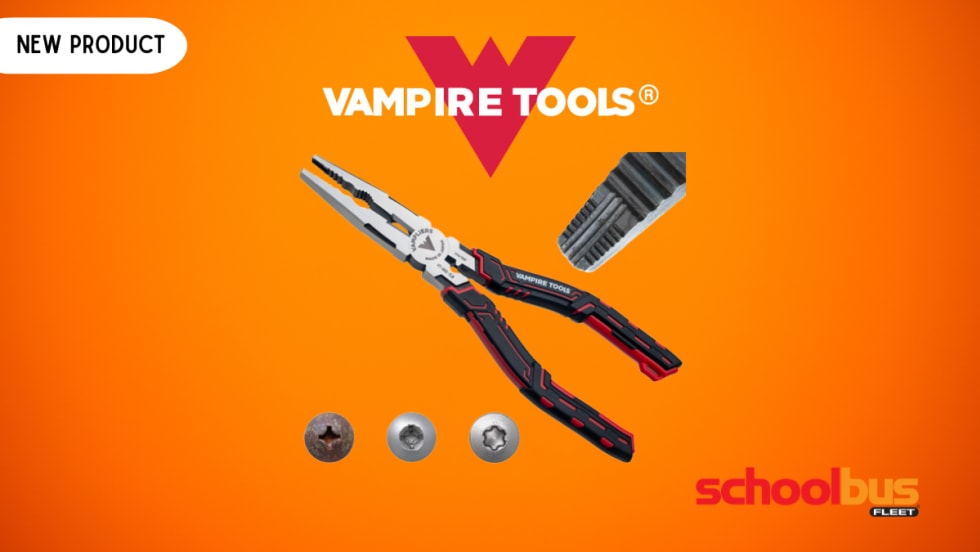
Vampire Tools' CAIMAN 7.5-Inch Multi-Purpose Screw Extractor Long-Nose Pliers with Crimper
Vampire Tools introduced the VAMPLIERS Caiman 7.5-inch multi-purpose pliers, combining screw extraction, cutting, crimping, and gripping functions into a single tool designed for fleet maintenance professionals.
Read More →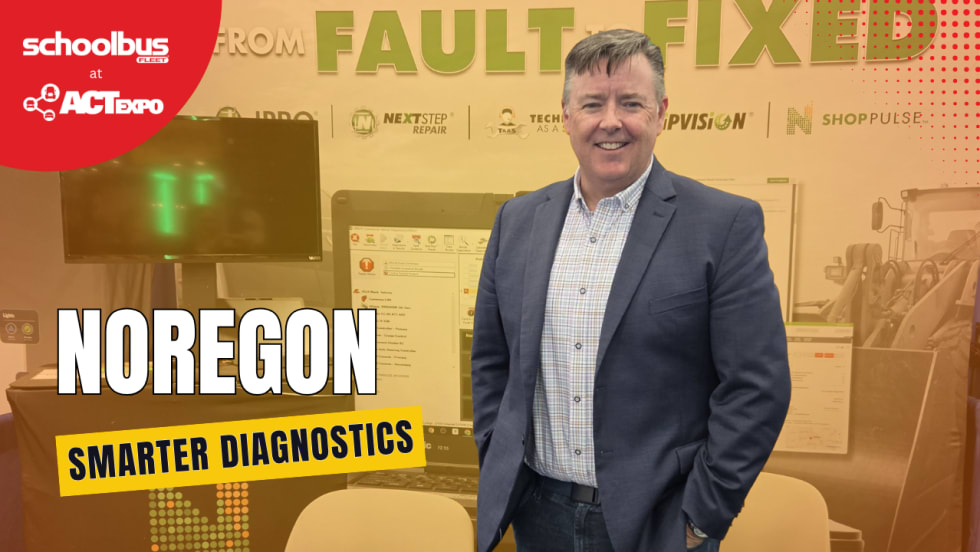
How Advanced Diagnostics Helps Bus Fleets Stay Ahead of Repairs
Chat with Noregon’s Kevin Smallhorn at ACT Expo about bus diagnostic tools, telematics integration, CNG maintenance support, and strategies to help reduce downtime and improve uptime.
Read More →
How School Bus Fleets are Getting Ahead of Breakdowns
Don’t let bus downtime wear you down. Here’s how bus operators are shifting from manual processes to AI-powered, data-driven maintenance systems for improved reliability and safety.
Read More →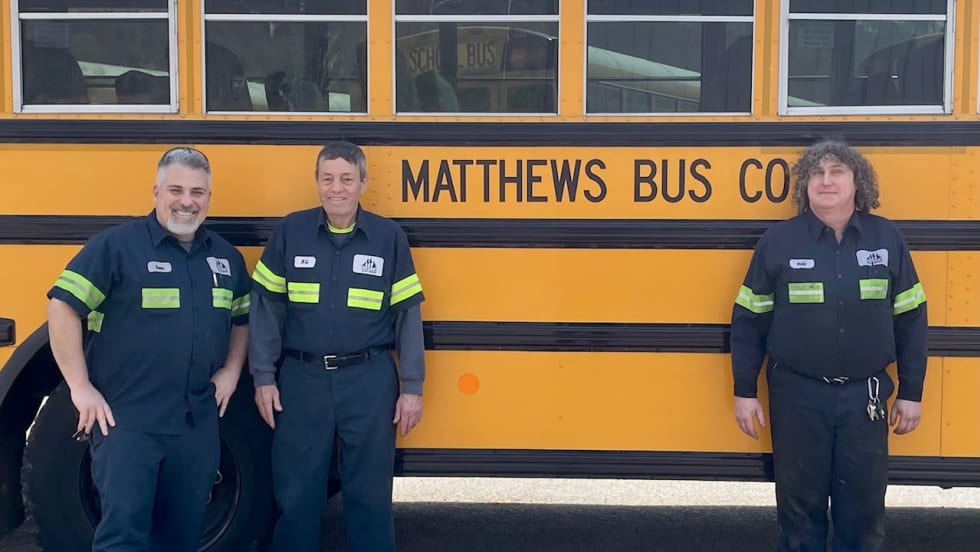
Pennsylvania School Bus Maintenance Team Praised for Dedication to Safety
Matthews Bus Company’s West Jefferson received a letter of commendation from the Pennsylvania State Police for their fleet inspections.
Read More →
2026 State of Student Transportation Report
Student transportation teams are being asked to do more with less, facing driver shortages, rising costs, and increasing safety expectations. This report uncovers how fleets are adapting, where technology is making the biggest impact, and why student ridership tracking is emerging as a top priority. Download the report to explore the key trends shaping 2026 and what they mean for your operation.
Read More →
From Chaos to Clarity: How School Districts Are Running Leaner Transportation Operations
Covering 38 routes on a Friday afternoon. Buses idling while routes overlap. Parents calling nonstop about late arrivals. Sound familiar? This whitepaper explores how district transportation leaders solved these exact problems — and what measurable results followed.
Read More →
The New Playbook for Safer, Smarter School Bus Maintenance
As school districts juggle aging buses, technician shortages and rising safety expectations, proactive fleet maintenance is becoming essential. This guide explores how telematics, predictive maintenance and real-time vehicle data can help transportation departments reduce breakdowns, extend vehicle life, improve compliance and keep students safer on the road.
Read More →
2026 School Bus Fleet Vendor Directory & Buyer's Guide
Searching for the right equipment, technology, or services for your school transportation program? This industry guide brings together manufacturers and suppliers across the entire school bus market, all in one place. Download it to find the partners who can help move your operation forward.
Read More →