



Picking a Washing System: Wash What You're Doing!
Chances are good that if you’ve washed more than one school bus by hand, you’ve thought about a washing system. Not that hand washing a bus is necessa...


Chances are good that if you’ve washed more than one school bus by hand, you’ve thought about a washing system. Not that hand washing a bus is necessarily an undesirable task — many transportation folks find fulfillment in giving one of their vehicles a good scrub. But even for a small fleet, keeping the buses clean is a big-time commitment. And, of course, time is money. Washing systems can alleviate that burden and even cut down on water consumption while doing just as good or better of a job. However, finding a high-quality product that is appropriate for your operation is crucial.
For almost 10 years, Brad Barker, shop foreman at Park City (Utah) School District, put up with a system that he says was expensive to operate and didn’t even clean well. "We used a system that was touchless and had spinners on the rinse arch," says Barker. "This system used a very large amount of water — over 500 gallons per wash — and it was very poorly designed."
When the spinners started wearing out, Barker found out that each replacement spinner cost more than $500, and the model he was using had 12. "Due to the expense of operating and repairs, we finally shut the system down and actually went for more than a year of washing all of our buses by hand while we investigated new systems," says Barker.
Besides operating and repair costs, the initial purchase price of washing systems should be enough to prompt school bus operators to do their homework before buying. It may be a big investment, but the potential benefits of going the hands-free route are bigger.
Size up the job
The amount of space available at your facility is a major consideration in selecting a washing system. Fortunately, they come in many shapes and sizes. A large automatic rollover system can take up 18 by 20 by 60 feet, while some systems can be tucked away in a corner.
"If you have a special wash bay, lots of space and a lot of money to spend, a fully automatic rollover is kind of nice," says Martin van Tol, president of ACC International in Beamsville, Ontario. "But you have to buy a good one, because often people buy the cheap ones and then they have a lot of problems."
ACC offers a cheaper and less space-consuming option with its Eco-Power Brush. One person can walk the unit, a sort of spinning brush tower on wheels, around a stationary bus to clean it. Van Tol says the brush can be stored out of the way and used inside or outside.
As Jeff Ross, president of Ross and White points out, fleet size is another significant factor in deciding whether to buy a washing system. "If you’re paying some kid $6 an hour, you have 10 buses and he washes your fleet up pretty well, that’s probably not too bad," says Ross. "However, if you’re trying to wash a fleet of 30 or 40 buses every day or every other day, it can get pretty time-consuming and expensive."
Ross and White manufactures drive-through brushing systems that start at $25,000 plus installation costs and range up from there. Ross says that in the long run, fleet operators can save money using these systems compared to hand washing by cutting labor time significantly.
Dave Hottenstein, transportation director for the Iowa Grant School District in Livingston, Wis., agrees. Hottenstein previously worked for a contractor who ran 25 school buses and 49 motorcoaches and purchased ACC's Eco-Power brush to handle the fleet’s washing needs.
"It saved about 10 minutes per bus compared to hand scrubbing and did a better job," says Hottenstein. Now working with 21 school buses and hand-washing them, he says that he misses having a washing system.
After getting rid of his old, sour system, Barker of Park City School District bought a new touchless washer — another type of system that doesn’t use brushes — from Red Arrow Inc. The system was designed for a 60-foot-long bay, but Barker’s shop had more than enough space, at 100 feet in length. Barker says it was advantageous to space the three arches — which apply an acid-based detergent, a neutralizing release agent and rinse, respectively — even farther apart. Barker figured the cost per wash with the system to be $6.50, excluding any electricity or gas charges.
Watch the water
Water usage is another important consideration, especially in locations with shortages and limited access. Before committing to a washing system, find out how much water it will use. Many actually consume less than a hand-washing job would.
"We've found that if you do a bus by hand, the average customer uses 50 to 100 gallons per bus," says van Tol of ACC. "With our machine, you’re roughly between 15 and 25 gallons. So you cut your water consumption, and you use fewer chemicals."
Barker says his shop’s old system used 500-plus gallons of water per wash and didn’t clean well, but the new touchless washer uses less than 125 gallons per wash and results in a spotless bus.
"This system is so much more economical to use, which is important with the water shortage we are encountering in the West," says Barker.
With any type of system as well as with hand washing, school bus operators need to be sure that water used in the wash will drain properly. Though regulations differ by area, a wash bay that will capture the waste water and send it to a treatment plant is compulsory because of the oils and greases that can come off the buses.
"What we call 'wash in place' is not accepted anymore," says Ross of Ross and White. "I'm sure there a lot of people out there that do it, but it’s considered wrong."
Ask around
Any system can look good on paper, but getting the opinion of someone who’s used it can be a boon in finding the right washer for your fleet.
"I think the most important thing is to go to existing customers who use the system you’re looking for," says van Tol. "Because I’ve found that customers on average don’t tell you stories — they will tell you pretty honestly what they like or don’t like."
Van Tol says that with this type of equipment, people often buy from a brochure without knowing much about a product. For that reason, ACC gives demos to interested customers at their location.
"They can try it, they can feel it, we can look at the building and we can tell if it will work," says van Tol.
Barker found the right system by watching it in action firsthand. When his operation was looking to buy, he and his staff looked at a wide variety of systems — brush-types and touchless — and received many brochures from various companies.
"We were almost sold on a system when another vendor called and asked me to visit a local facility that had their system in it," says Barker. "After the wash — one pass — I wiped my finger down the side of the bus to see how much road film remained. There wasn’t any at all."
Keep it clean
Decide how often you want to clean your fleet before buying a washing system, because the more you use it, the higher the return will be on your investment, both in terms of finances as well as in public relations.
"The most visible part of the maintenance of your fleet is always how it looks," says Ross. "When you consider the high value of the cargo it carries, I would expect my school bus fleet to look absolutely tip-top. Otherwise, you send a message to the parents of those children that you’re not a well-maintained fleet."
More Maintenance
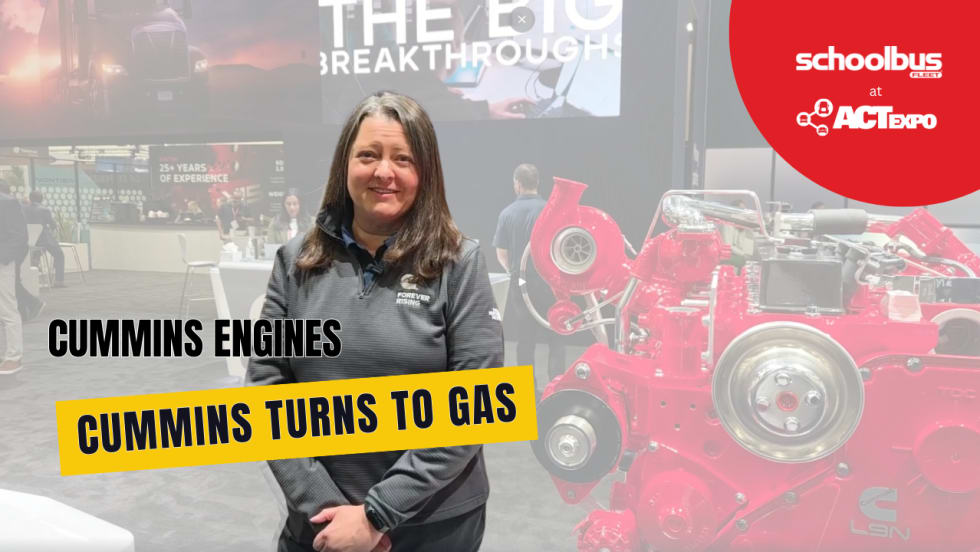
Cummins on Smarter, Simpler Engine Innovation
Cummins discusses its first-ever gasoline engine for school buses, EPA 2027, and why bus fleets still want durable, simpler internal combustion options.
Read More →
Report: 72% of Diesel School Buses Now Use Advanced Low-Emission Engines
New data shows advanced low-emission diesel technology continues expanding across school bus fleets, even as electric bus adoption gains momentum.
Read More →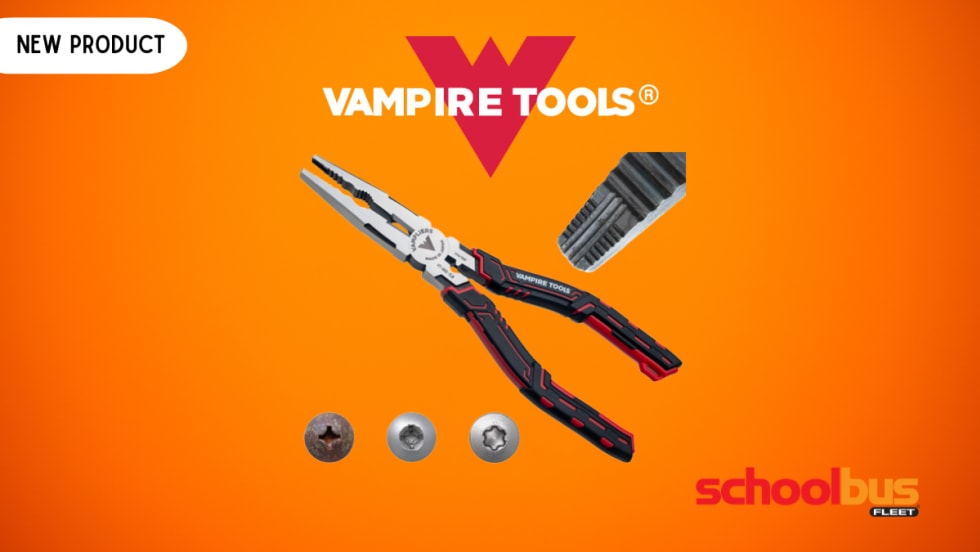
Vampire Tools' CAIMAN 7.5-Inch Multi-Purpose Screw Extractor Long-Nose Pliers with Crimper
Vampire Tools introduced the VAMPLIERS Caiman 7.5-inch multi-purpose pliers, combining screw extraction, cutting, crimping, and gripping functions into a single tool designed for fleet maintenance professionals.
Read More →
How Advanced Diagnostics Helps Bus Fleets Stay Ahead of Repairs
Chat with Noregon’s Kevin Smallhorn at ACT Expo about bus diagnostic tools, telematics integration, CNG maintenance support, and strategies to help reduce downtime and improve uptime.
Read More →
How School Bus Fleets are Getting Ahead of Breakdowns
Don’t let bus downtime wear you down. Here’s how bus operators are shifting from manual processes to AI-powered, data-driven maintenance systems for improved reliability and safety.
Read More →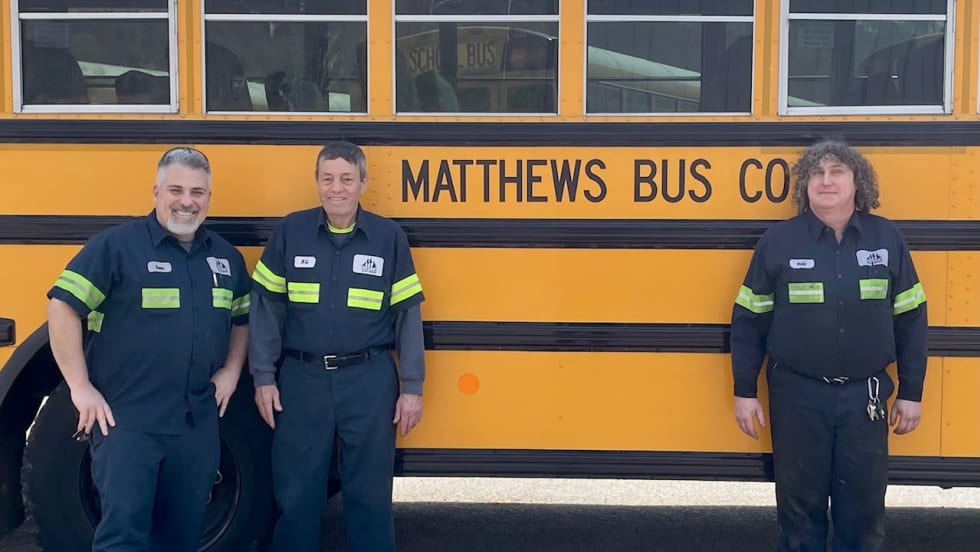
Pennsylvania School Bus Maintenance Team Praised for Dedication to Safety
Matthews Bus Company’s West Jefferson received a letter of commendation from the Pennsylvania State Police for their fleet inspections.
Read More →
2026 State of Student Transportation Report
Student transportation teams are being asked to do more with less, facing driver shortages, rising costs, and increasing safety expectations. This report uncovers how fleets are adapting, where technology is making the biggest impact, and why student ridership tracking is emerging as a top priority. Download the report to explore the key trends shaping 2026 and what they mean for your operation.
Read More →
From Chaos to Clarity: How School Districts Are Running Leaner Transportation Operations
Covering 38 routes on a Friday afternoon. Buses idling while routes overlap. Parents calling nonstop about late arrivals. Sound familiar? This whitepaper explores how district transportation leaders solved these exact problems — and what measurable results followed.
Read More →
The New Playbook for Safer, Smarter School Bus Maintenance
As school districts juggle aging buses, technician shortages and rising safety expectations, proactive fleet maintenance is becoming essential. This guide explores how telematics, predictive maintenance and real-time vehicle data can help transportation departments reduce breakdowns, extend vehicle life, improve compliance and keep students safer on the road.
Read More →
2026 School Bus Fleet Vendor Directory & Buyer's Guide
Searching for the right equipment, technology, or services for your school transportation program? This industry guide brings together manufacturers and suppliers across the entire school bus market, all in one place. Download it to find the partners who can help move your operation forward.
Read More →