




Keys to the Perfect Marriage of Engine and Transmission
First, determine how the bus will be used. Second, rate the importance of performance, fuel economy and serviceability. Third, consider affordability.
The marriage between engine and transmission is a key consideration when you’re spec’ing a school bus. A fleet manager who overlooks any aspect of equipment specification is not going to get the life expectancy and driver satisfaction he needs for safe, cost-effective transportation. The engine and transmission are especially important because they affect so many characteristics of the ride and performance of a school bus. Paul Cochran, fleet maintenance supervisor at Kyrene School District #28 in Tempe, Ariz., says there are three key considerations when spec’ing the engine and transmission of a school bus — application, performance and price.
Application is key
“The most important consideration is how you plan to use the bus,” Cochran says. Is it going to be used on daily routes or for activity trips that might include several-hundred- mile runs along fast-flowing highways? What kind of terrain will it encounter? Steep hills and winding roads? Straight, flat thoroughfares? Will it be used in the city, with a lot of stop-and-go driving? Or will be used in the country, with high mileage along unpaved roads? These questions are a good starting point for spec’ing the size and passenger capacity of the bus, which, in turn, will affect the choice of engine and transmission. Mitch Murray, tactical marketing manager for Allison Transmission in Indianapolis, says a school district that’s looking for an activity bus that might have to drive hundreds of miles through hilly areas should look at horsepower as the key determinant. “You won’t be using it all the time, but the higher horsepower can make all the difference when you’re stuck behind an 18-wheeler,” he says. Stepping up to a more powerful engine could require an upgrade in transmission as well.
Performance counts, too
Performance is a critical factor in choosing an engine and transmission. Some city driving requires good acceleration and low-end performance, while highway driving may focus on high-end performance. You’ll also want to consider fuel economy, especially in light of recent upswings in prices for fossil fuels. “Serviceability cannot be ignored,” Cochran adds. You need to consider how and where to get service. This is where local dealership satisfaction plays a major role. The repair history of the engine and the transmission should also be scrutinized. If you’ve ordered the same tandem in other buses and have had headaches, do you want to continue the marriage? Cochran says the final link in the quest for the perfect match of engine and transmission is price. Can you afford the equipment that you need? The answer to that question will vary from school district to school district and contractor to contractor. Murray says the retail list price of the 2000 series is about $600 to $800 more than the AT 545. Meanwhile, the MD 3060 (World) transmission adds a premium of $4,000 to $5,000.
More speed than need?
Murray says customers need to be careful when spec’ing the 2000 series, which was introduced to the school bus market last fall. The 2000 series is designed to replace the AT 545, which has been a standard in the industry. But Murray says customers should be aware that replacing an AT 545 with the 2000 series will produce changes in the top gear speed. “If you keep the same axle ratio and just put in the 2000, you could get in excess of 20 percent greater speed in high gear,” he says. A good reason to switch to the electronically controlled 2000 series from the mechanical AT 545 is that new engines are also electronically controlled. Thus, the interface between the engine and transmission provides excellent communication. Mating an electronic engine with an AT 545 doesn’t produce the same communication. “There’s no question that the interface [between electronic engines and transmissions] is better,” Murray says. If you’re uncertain about how to spec the engine and transmission, consult with your local dealers. You can find a dealer close to you by calling Allison at 800/252-5ATD.
More Maintenance

Cummins on Smarter, Simpler Engine Innovation
Cummins discusses its first-ever gasoline engine for school buses, EPA 2027, and why bus fleets still want durable, simpler internal combustion options.
Read More →
Report: 72% of Diesel School Buses Now Use Advanced Low-Emission Engines
New data shows advanced low-emission diesel technology continues expanding across school bus fleets, even as electric bus adoption gains momentum.
Read More →
Vampire Tools' CAIMAN 7.5-Inch Multi-Purpose Screw Extractor Long-Nose Pliers with Crimper
Vampire Tools introduced the VAMPLIERS Caiman 7.5-inch multi-purpose pliers, combining screw extraction, cutting, crimping, and gripping functions into a single tool designed for fleet maintenance professionals.
Read More →
How Advanced Diagnostics Helps Bus Fleets Stay Ahead of Repairs
Chat with Noregon’s Kevin Smallhorn at ACT Expo about bus diagnostic tools, telematics integration, CNG maintenance support, and strategies to help reduce downtime and improve uptime.
Read More →
How School Bus Fleets are Getting Ahead of Breakdowns
Don’t let bus downtime wear you down. Here’s how bus operators are shifting from manual processes to AI-powered, data-driven maintenance systems for improved reliability and safety.
Read More →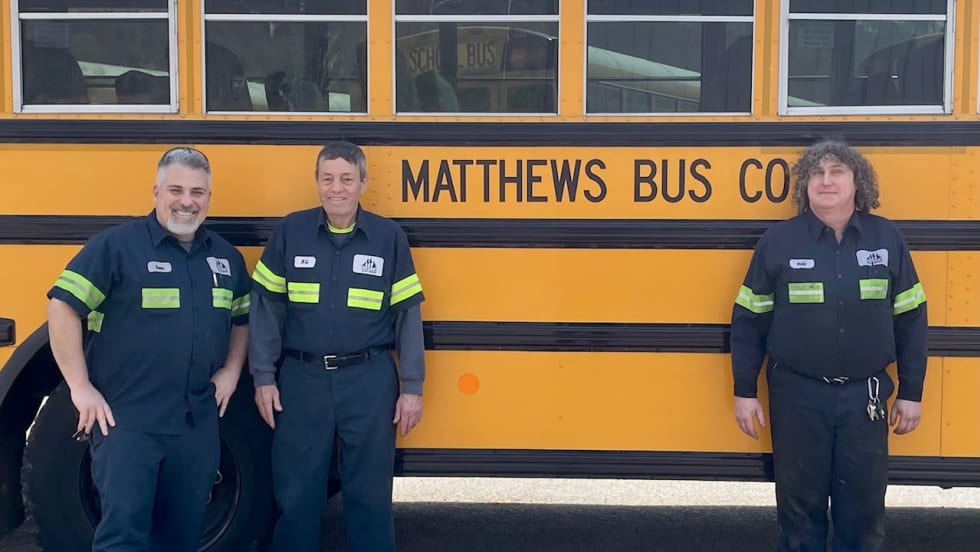
Pennsylvania School Bus Maintenance Team Praised for Dedication to Safety
Matthews Bus Company’s West Jefferson received a letter of commendation from the Pennsylvania State Police for their fleet inspections.
Read More →
2026 State of Student Transportation Report
Student transportation teams are being asked to do more with less, facing driver shortages, rising costs, and increasing safety expectations. This report uncovers how fleets are adapting, where technology is making the biggest impact, and why student ridership tracking is emerging as a top priority. Download the report to explore the key trends shaping 2026 and what they mean for your operation.
Read More →
From Chaos to Clarity: How School Districts Are Running Leaner Transportation Operations
Covering 38 routes on a Friday afternoon. Buses idling while routes overlap. Parents calling nonstop about late arrivals. Sound familiar? This whitepaper explores how district transportation leaders solved these exact problems — and what measurable results followed.
Read More →
The New Playbook for Safer, Smarter School Bus Maintenance
As school districts juggle aging buses, technician shortages and rising safety expectations, proactive fleet maintenance is becoming essential. This guide explores how telematics, predictive maintenance and real-time vehicle data can help transportation departments reduce breakdowns, extend vehicle life, improve compliance and keep students safer on the road.
Read More →
2026 School Bus Fleet Vendor Directory & Buyer's Guide
Searching for the right equipment, technology, or services for your school transportation program? This industry guide brings together manufacturers and suppliers across the entire school bus market, all in one place. Download it to find the partners who can help move your operation forward.
Read More →