




Invest in your technicians or risk the consequences
School bus technicians must stay even — or ahead — of the technology curve.
Just when you finally get comfortable with a computer program, someone from the MIS department shows up cradling a box under his arm. With a speedy series of mouse clicks, he trashes your “old reliable” and replaces it with a “new and improved” program that takes six months to get comfortable with, until an “upgrade” turns the tables again. I think you see where I’m going with this. Change is the only constant these days. It will be forced upon you like the insincere “Have a nice day!” you get from the counter help at the local fast-food joint. Either you make every effort to keep up with this roiling change, or you sink further and further behind, until you “tilt” like a banged-up pinball machine.
The technology curve
School bus technicians must stay even — or ahead — of the technology curve. SBF reaches several thousand fleet managers, garage foremen and shop supervisors. They are loyal readers who depend on us to provide a cutting-edge perspective of key maintenance developments in the industry. From our conversations with them, we know they’re concerned about the proliferation of computerized components in school buses, such as electronic engines and transmissions and ABS systems. The diagnostic equipment can be even more intimidating. Handheld diagnostic tools are giving way to laptop computers. And don’t forget the guy with the box under his arm. We also know that budgets are often too tight — and staffing too lean — to send technicians to off-site training facilities operated by industry manufacturers and vendors. But that must change. Transportation supervisors need to make it clear to the budget-minders that more money is needed for training. The instructional programs offered by body, chassis and engine manufacturers, among others, are worth every penny spent on air fare, room and board and any tuition. Not only do these training sessions improve the morale of your garage staff, they also improve their productivity. With hands-on training from factory reps, your technicians can work at optimal efficiency. This means finishing jobs faster and reducing the number of procedures that have to be repeated because they weren’t done properly the first time around. Moreover, technicians who are sent to off-site training will appreciate the gesture and will be less likely to leave their jobs, reducing costly turnover. The return on investment won’t be obvious, but it will be there.
Safety is the result of training
And we must also remind ourselves that the proficiency of the garage staff impacts the safety of the entire operation. In his article on technician training, “Essential Training Strategies for School Bus Mechanics,” Editor Steve Hirano talked with one transportation director who said the critical nature of the work done by school bus technicians is only a notch below that of airline mechanics. I would respectfully disagree. There are more hazards on the ground than in the air. A poorly maintained brake system on a school bus carrying 84 children on a field trip along winding mountain roads can be every bit as dangerous as an airliner with a component failure. Most airliners are designed with redundant safety systems; school buses, though structurally designed for crash protection, have less margin for error. There is no fall back if a under-trained technician botches a repair job. Even the most skilled driver is helpless in a poorly maintained bus. We need to rethink our funding priorities if we won’t invest in the training of our technicians. It’s clear that they’re our front line against disaster.
More Maintenance

Cummins on Smarter, Simpler Engine Innovation
Cummins discusses its first-ever gasoline engine for school buses, EPA 2027, and why bus fleets still want durable, simpler internal combustion options.
Read More →
Report: 72% of Diesel School Buses Now Use Advanced Low-Emission Engines
New data shows advanced low-emission diesel technology continues expanding across school bus fleets, even as electric bus adoption gains momentum.
Read More →
Vampire Tools' CAIMAN 7.5-Inch Multi-Purpose Screw Extractor Long-Nose Pliers with Crimper
Vampire Tools introduced the VAMPLIERS Caiman 7.5-inch multi-purpose pliers, combining screw extraction, cutting, crimping, and gripping functions into a single tool designed for fleet maintenance professionals.
Read More →
How Advanced Diagnostics Helps Bus Fleets Stay Ahead of Repairs
Chat with Noregon’s Kevin Smallhorn at ACT Expo about bus diagnostic tools, telematics integration, CNG maintenance support, and strategies to help reduce downtime and improve uptime.
Read More →
How School Bus Fleets are Getting Ahead of Breakdowns
Don’t let bus downtime wear you down. Here’s how bus operators are shifting from manual processes to AI-powered, data-driven maintenance systems for improved reliability and safety.
Read More →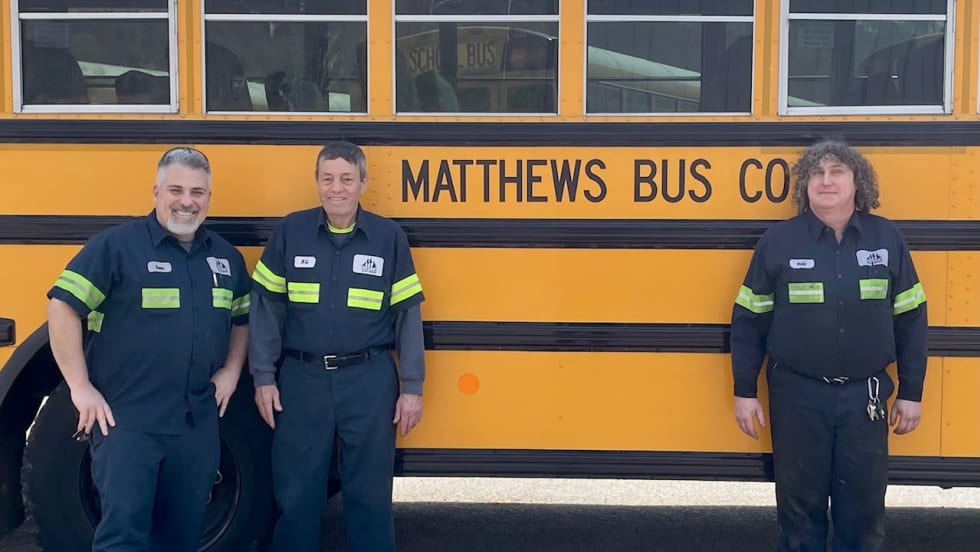
Pennsylvania School Bus Maintenance Team Praised for Dedication to Safety
Matthews Bus Company’s West Jefferson received a letter of commendation from the Pennsylvania State Police for their fleet inspections.
Read More →
2026 State of Student Transportation Report
Student transportation teams are being asked to do more with less, facing driver shortages, rising costs, and increasing safety expectations. This report uncovers how fleets are adapting, where technology is making the biggest impact, and why student ridership tracking is emerging as a top priority. Download the report to explore the key trends shaping 2026 and what they mean for your operation.
Read More →
From Chaos to Clarity: How School Districts Are Running Leaner Transportation Operations
Covering 38 routes on a Friday afternoon. Buses idling while routes overlap. Parents calling nonstop about late arrivals. Sound familiar? This whitepaper explores how district transportation leaders solved these exact problems — and what measurable results followed.
Read More →
The New Playbook for Safer, Smarter School Bus Maintenance
As school districts juggle aging buses, technician shortages and rising safety expectations, proactive fleet maintenance is becoming essential. This guide explores how telematics, predictive maintenance and real-time vehicle data can help transportation departments reduce breakdowns, extend vehicle life, improve compliance and keep students safer on the road.
Read More →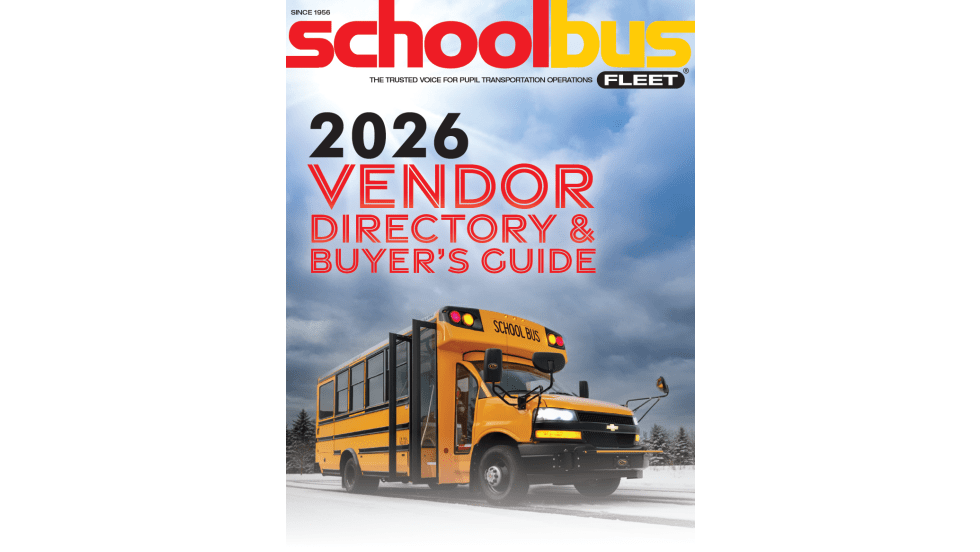
2026 School Bus Fleet Vendor Directory & Buyer's Guide
Searching for the right equipment, technology, or services for your school transportation program? This industry guide brings together manufacturers and suppliers across the entire school bus market, all in one place. Download it to find the partners who can help move your operation forward.
Read More →