




Competition Fierce for Aftermarket Parts Sales
School bus operators are in a strong position to reap savings as manufacturers and other parts suppliers vie for lucrative aftermarket sales.
Aftermarket parts for school buses are a hot commodity. Or a cold commodity. Or somewhere in between. It depends on who you talk to, where they're located and whether you're buying or selling. For bus manufacturers, aftermarket parts sales seem to be taking on a higher priority. That may be the result of tighter school budgets, which have led to a flattening of school bus purchases and, consequently, stronger emphasis on maintaining the fleet's older vehicles. In any case, bus manufacturers are pursuing a greater share of the aftermarket parts business by encouraging their dealer networks to do the same. "They realize that there's money there," says Nicole Cash, owner of Woodland Parts Supply in Bonne Terre, Mo. "I know here in Missouri there has been a major push for the dealers to sell more aftermarket parts, which has led to increased competition for me." "The competitiveness of the market is driving us that way," says Verna Borders, vice president of sales and marketing for AmTran Corp. in Conway, Ark. Although AmTran's parts sales have doubled in the past three years, the company recently created a dealer parts council to find ways to further increase aftermarket parts sales. Harlow Hageness, owner of Harlow's Bus Sales in Rolette, N.D., says he employs three full-time parts dealers and has primary responsibility for a territory that includes North and South Dakota, Montana, Wyoming and Idaho. "Parts sales has been a very important part of our business," he says. Harlow's is an AmTran dealer but also sells parts for other bus and chassis manufacturers. At Thomas Built Buses, the parts division has been bolstered by the recent opening of a 61,600-square-foot parts distribution center near the company's headquarters in High Point, N.C. The center doubles the size of the previous facility and stocks 16,000 line items. "We are really pleased with the growth of our parts sales," says Ron Moore, sales support manager for Thomas Built. "That's one of the reasons why we invested so heavily in our new parts facility." "Part sales are a big part of any OEM," says Matt McConnell, product manager at Freightliner Custom Chassis Corp. in Gaffney, S.C. "We push our dealers hard on parts sales because it's important that the customer have parts immediately." To help dealers maintain their inventory, McConnell says Freightliner has eight major parts distribution centers in North America that are open 24 hours a day, seven days a week.
Tough competition seen
How has this push for increased aftermarket parts sales by the manufacturers affected independent school bus parts suppliers? "It's become more competitive because there are so many of us parts suppliers vying for the same dollar," says Manny Mendelsohn, vice president of School Bus Parts Inc. in Plumsteadville, Pa. He says this increased competitiveness has forced his company, which has warehouses in four states, to range farther outside its territories to maintain its sales numbers. "You have to run twice as hard to stay where you were," he says. In addition, the parts buyers are in a better position to bargain for lower prices. "We're hammered more and more for better and better pricing," Mendelsohn says. "In this day and age, a nickel makes a difference." "Everybody's scrambling for that sale," agrees Leo Morrisey, sales manager for Universal Coach Parts, a national parts supplier in Des Plaines, Iowa. "We're doing more direct marketing and telesales."
El Niño hurts business
Morrisey says his business has been slowed by El Niño. The much-publicized weather pattern has produced a remarkably mild winter in the Midwest, resulting in less stress on heater motors, starters and alternators. Thus, school bus operators have not had to replace nearly as many of these components as usual. "We didn't have one day below zero until last week," Morrisey laments. Northland School Bus Parts in Rogers, Minn., has seen its business steadily increase over the past decade. To compete effectively against the dealers, the company tries to provide pricing advantages. "I can usually beat the OEMs," says Curt Tiebel, Northland's general manager. "We try to be a little cheaper." That's not to say, however, that the company allows its price points to drop too far. "I will bargain with some people, but I do have a bottom line. If you cut your prices far enough, you might as well shut your doors." Tiebel is confident that he can provide the service that his customers need because of his school bus parts experience, which spans over a decade. "Most people know that when they call me that I'll get them the right part," he says. "That helps us a lot."
Internet sales boost?
At least one regional school bus parts dealer has turned to the Internet to expand its marketing attack. Chalk's Truck Parts, which does most of its business in Texas, developed its own Website about a year ago but has been disappointed with the results. "We have yet to generate a single sale from the site," says Larry Colley, vice president of the Houston, TX-based parts supplier. Although the site has generated several leads, many prospective customers are confused about the company's product line. "They're looking for hats and pins and knick-knacks like that," Colley says. "Or they're looking for complete buses." On the positive side, the Website has allowed Chalk's to reach customers outside the firm's usual territory. One inquiry came from as far away as Peru, but two weeks of negotiations didn't result in any kind of transaction, Colley said. Despite its lack of financial return, Chalk's Website has not been a total loss. "It's like the trade shows," Colley says. "You don't go there for a sale, you go there for the exposure and visibility." Kevin Looker, general manager of Transportation Accessories Co. (TAC) in New Albany, Ohio, says the Internet is out of reach for most people involved in school bus parts purchasing. "I would say maybe 30 percent of the people I deal with are ready for that," he says. "I don't see it really happening for at least three years." Looker says the Internet also may be too impersonal for many aftermarket parts buyers. "Face-to-face contact is what most of our customers want," he says. "Our salespeople call on them every two weeks or so." John Harris, transportation supervisor at Kettle Falls School District in northeast Washington state, takes a more optimistic view of the Internet's eventual use for parts shopping and ordering. "There's no doubt about it," he says. "They already have a page on the Internet where you can talk with other districts and look for hard-to-find parts that someone else may have."
More Maintenance

Cummins on Smarter, Simpler Engine Innovation
Cummins discusses its first-ever gasoline engine for school buses, EPA 2027, and why bus fleets still want durable, simpler internal combustion options.
Read More →
Report: 72% of Diesel School Buses Now Use Advanced Low-Emission Engines
New data shows advanced low-emission diesel technology continues expanding across school bus fleets, even as electric bus adoption gains momentum.
Read More →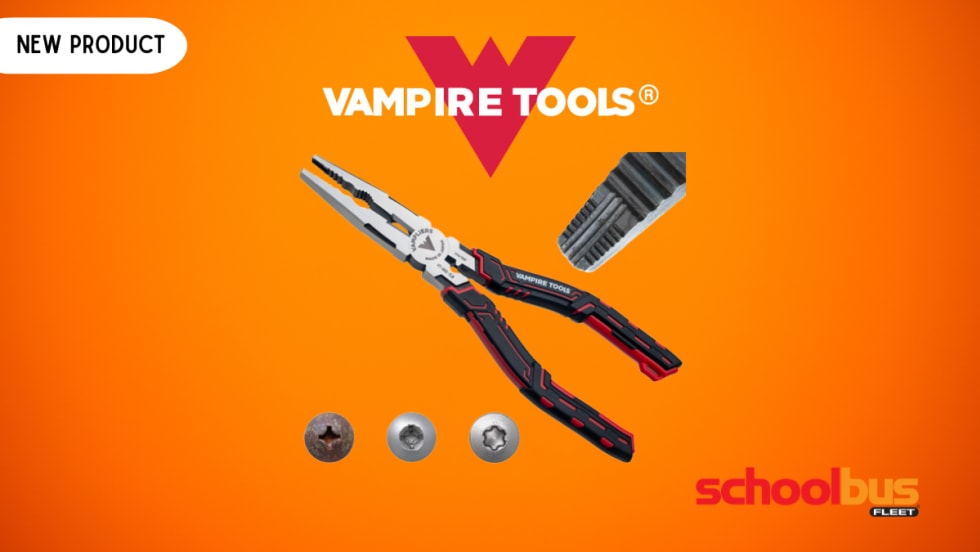
Vampire Tools' CAIMAN 7.5-Inch Multi-Purpose Screw Extractor Long-Nose Pliers with Crimper
Vampire Tools introduced the VAMPLIERS Caiman 7.5-inch multi-purpose pliers, combining screw extraction, cutting, crimping, and gripping functions into a single tool designed for fleet maintenance professionals.
Read More →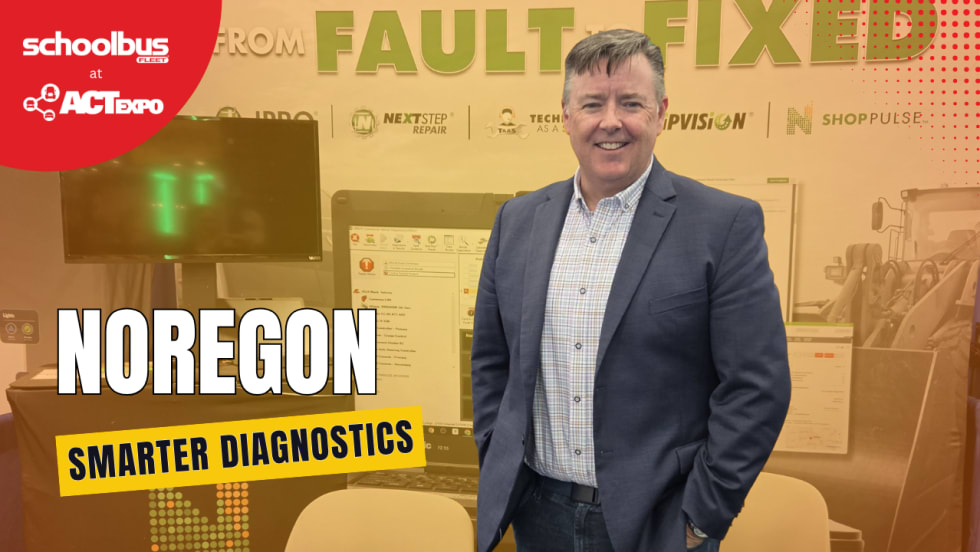
How Advanced Diagnostics Helps Bus Fleets Stay Ahead of Repairs
Chat with Noregon’s Kevin Smallhorn at ACT Expo about bus diagnostic tools, telematics integration, CNG maintenance support, and strategies to help reduce downtime and improve uptime.
Read More →
How School Bus Fleets are Getting Ahead of Breakdowns
Don’t let bus downtime wear you down. Here’s how bus operators are shifting from manual processes to AI-powered, data-driven maintenance systems for improved reliability and safety.
Read More →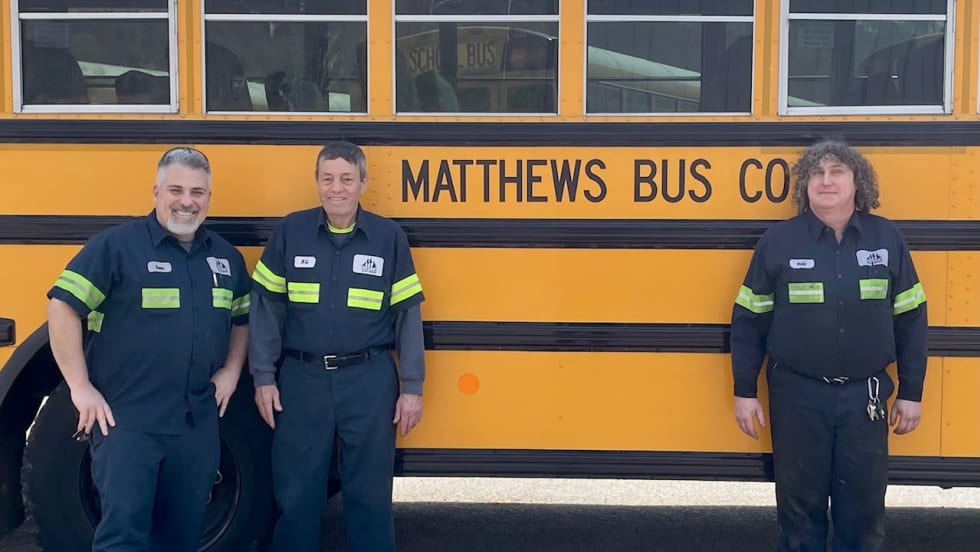
Pennsylvania School Bus Maintenance Team Praised for Dedication to Safety
Matthews Bus Company’s West Jefferson received a letter of commendation from the Pennsylvania State Police for their fleet inspections.
Read More →
2026 State of Student Transportation Report
Student transportation teams are being asked to do more with less, facing driver shortages, rising costs, and increasing safety expectations. This report uncovers how fleets are adapting, where technology is making the biggest impact, and why student ridership tracking is emerging as a top priority. Download the report to explore the key trends shaping 2026 and what they mean for your operation.
Read More →
From Chaos to Clarity: How School Districts Are Running Leaner Transportation Operations
Covering 38 routes on a Friday afternoon. Buses idling while routes overlap. Parents calling nonstop about late arrivals. Sound familiar? This whitepaper explores how district transportation leaders solved these exact problems — and what measurable results followed.
Read More →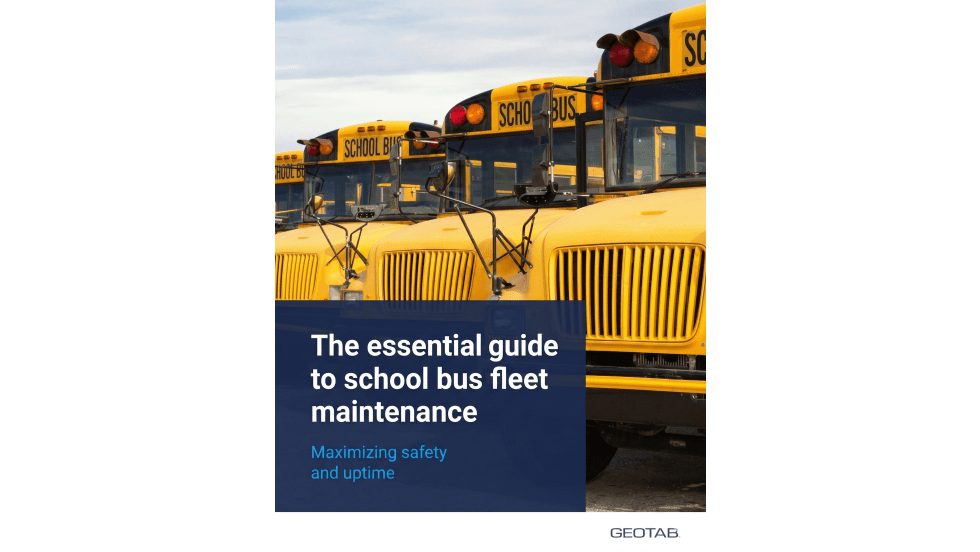
The New Playbook for Safer, Smarter School Bus Maintenance
As school districts juggle aging buses, technician shortages and rising safety expectations, proactive fleet maintenance is becoming essential. This guide explores how telematics, predictive maintenance and real-time vehicle data can help transportation departments reduce breakdowns, extend vehicle life, improve compliance and keep students safer on the road.
Read More →
2026 School Bus Fleet Vendor Directory & Buyer's Guide
Searching for the right equipment, technology, or services for your school transportation program? This industry guide brings together manufacturers and suppliers across the entire school bus market, all in one place. Download it to find the partners who can help move your operation forward.
Read More →