



Hood Discusses NASDPTS Term, Issues Ahead
Outgoing NASDPTS president Charlie Hood reflects on the past two years in pupil transportation and discusses the issues that lie ahead.


Charlie Hood says that his time at the helm of NASDPTS has been personally and professionally rewarding.
As state pupil transportation directors from across the country gather in Portland, Ore., a changing of the guard will take place.
Florida state director Charlie Hood will wrap up his two-year term as president of the National Association of State Directors of Pupil Transportation Services (NASDPTS). He will hand over the reins to Arkansas state director Mike Simmons.
During these past two years of increased focus on NASDPTS, Hood and the association have continued to collaborate with other industry organizations, particularly under the American School Bus Council (ASBC) banner.
Hood discussed those collaborations, the recent campaign to U.S. Transportation Secretary Ray LaHood, financial challenges and more in an interview with SBF Executive Editor Thomas McMahon.
SBF: How does it feel to be ending your two-year term as president of NASDPTS?
CHARLIE HOOD: NASDPTS is a tremendous asset to its members and to the national student transportation community in general. I’ve been honored that our members entrusted me with the position. It has been personally and professionally rewarding, so leaving it is somewhat bittersweet. The organization is in great hands with Mike Simmons taking the reins soon, and he’ll have the continued support of our board and members. As an organization, we have a very professional, well-focused team, and that team is all our members. It’s much bigger than the person currently in the president’s seat or any one individual.
As you think back over the term, what stands out most?
The last two years of working more intently within NASDPTS and with the other organizations and agencies that share our goals have really validated my basic belief that we need each other. Each student transportation organization and each agency we work with should maintain its focus and strengths. This experience has reinforced my belief, however, that it’s more important than ever to keep our institutional egos in check. It’s not about “NASDPTS did this” or “so and so did that.” More than ever, we need to work cooperatively and productively toward the end goal — making sure that every student in the U.S. who lives far enough from school to require transportation has access to a yellow school bus.
After a campaign by many in pupil transportation, Secretary LaHood pledged to create educational materials promoting the benefits of school buses. Are you pleased with the outcome?
Everyone who contributed to this milestone should be pleased. Many of your readers from all over the country contacted their congressional representatives to promote this result when the opportunity arose last winter and spring. Having Secretary LaHood publicly acknowledge the value of school buses and pledge his agency’s support was a large and necessary first step. To call it an outcome, however, would be premature. The ASBC and all the yellow school bus champions throughout the U.S. have a lot of work to do. We don’t pretend that we have the resources to create a public awareness campaign on the magnitude of “Got Milk?” or “Click It or Ticket,” but the latter is an example of what we’re asking NHTSA [National Highway Traffic Safety Administration] to push toward with our help. Success is imperative, unless we believe it’s an option for yellow school bus transportation to be viewed as optional or ancillary to public education.
Financially speaking, it’s been a tough couple of years for school transportation. Do you have a sense of whether things will be improving in the near future?
Some states like Florida, Nevada and California are probably going to take longer to return to financial health due to the huge backlog of home foreclosures, high unemployment and the low consumer spending those create. School transportation and its funding are an integral part of the overall education program in most states. In that sense, current financial challenges are not unique to our sector. I don’t have a crystal ball, but we should all pay attention to the larger picture of state and federal trends and priorities in public education programs and financing if we want to predict the future of student transportation.
What do you see as the key issues that Mike Simmons will take on?
Internally, Mike will have the opportunity to bring about some improvements in services to our members. The biggest improvement he’ll oversee is a complete revamping of our Website. He’ll be shepherding our continued oversight of new or potential rulemakings by the federal agencies, our responses to NTSB [National Transportation Safety Board] recommendations, our frequent communications of news items to members, and comprehensive updates to key NASDPTS position papers and guidance.
What about the Portland conference are you looking forward to most?
Apart from the obvious appeal of the locale, especially to a Florida flatlander, I am always energized and renewed by our conference. The workshops and the opportunity to pick our colleagues’ brains are necessary for our staff development as state transportation leaders. I am particularly looking forward to the keynote presentation by Lenore Skenazy, nationally syndicated columnist and humorist. Her NPR commentaries were filled with entertaining irony. The presentation, “Why Does an Old Fashioned Childhood Sound so Radical?” promises to be funny and thought-provoking.
More Management

Zum Reaches 19 States With New York Expansion
The addition of the Empire State to the student transportation company's roster marks a growing expansion in the Northeast as it scales its tech and school bus services.
Read More →
First Student Updates Its Parent App
First View connects both yellow bus and alternative transportation, giving families one platform to track student trips for the new school year, with 15 languages supported.
Read More →
The Back-to-School Checklist Every Director Should Complete Before the First Bell
Help your transportation team start the school year strong with these tips for contingency planning, communication, fleet visibility, technology, and trip management.
Read More →
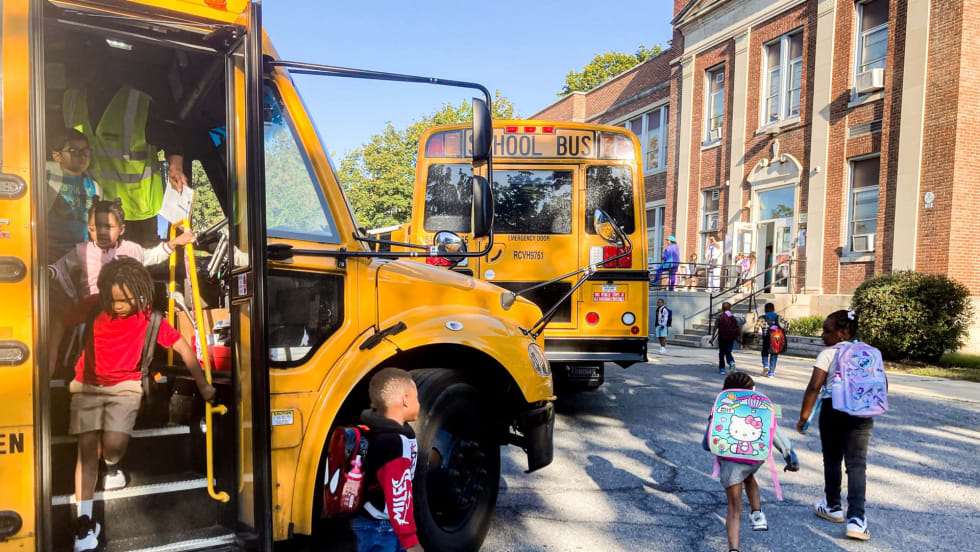
How a New York District Cut Nearly $1M in Transportation Costs While Expanding Bus Access
A data-driven overhaul with BusRight reduced Poughkeepsie City School District's planned routes from 26 to 17 while extending school bus service to about 1,200 additional students.
Read More →
Budgets Down, Enrollment Shifting: What the Data Says Districts Should Watch
School transportation departments face two converging challenges this year: tightening budgets and shifting enrollment. Most districts still address these issues separately, but the assumption that either trend will simplify operations is proving incorrect.
Read More →
These 8 School Transportation Companies Made the 2026 Inc. 5000 List
Find out which school transportation contractors, technology providers, and suppliers ranked among America’s fastest-growing private companies.
Read More →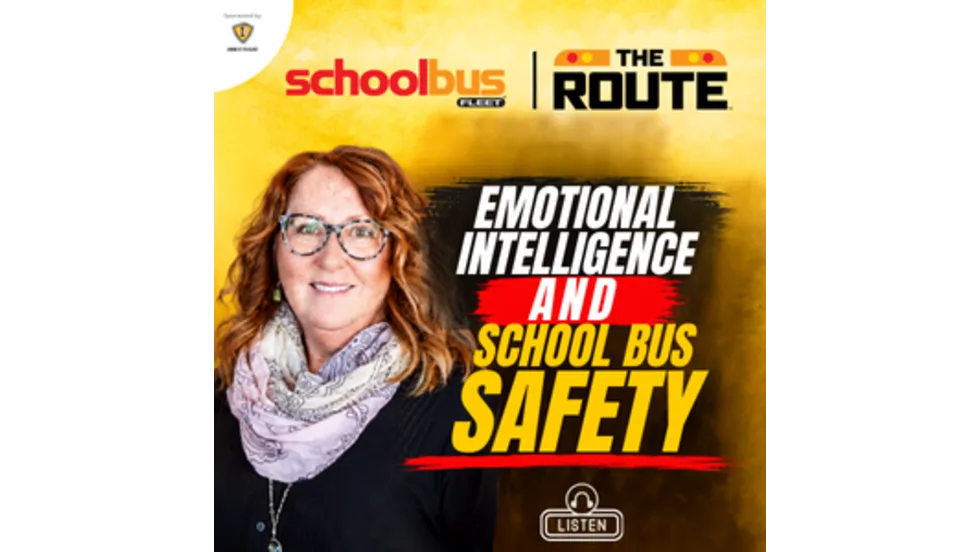
The Link Between Emotional Intelligence and School Bus Safety
How can emotional intelligence help transportation pros navigate stress, manage change, and build stronger relationships? Listen to find out.
Read More →
What Emotional Intelligence Has to Do With School Bus Safety
In this video, discover how emotional intelligence can help transportation leaders and drivers navigate stress, manage change, and build stronger relationships. The Route is sponsored by IC Bus.
Read More →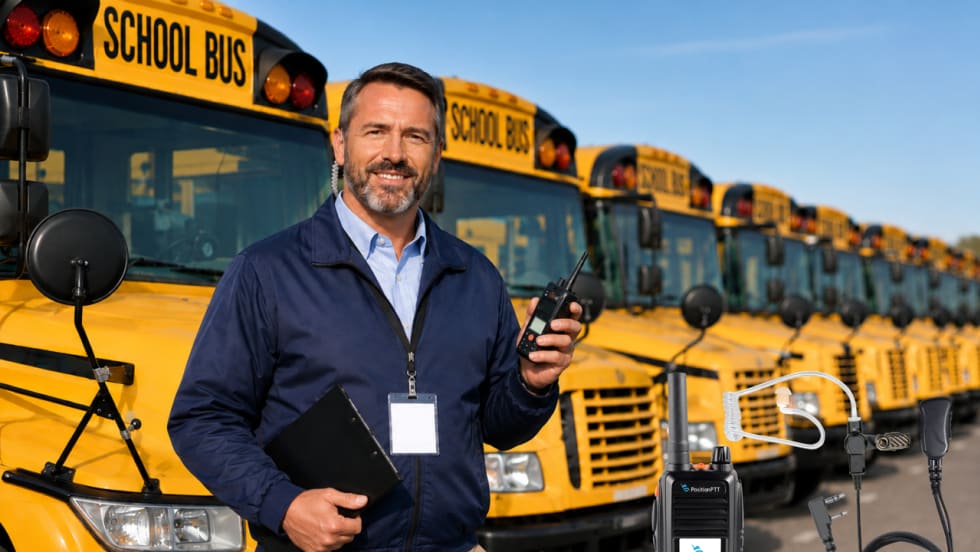
Beyond Two-Way Radios: School Bus Communications Evolve With Push-to-Talk Over Cellular
PRYME Radio and PositionPTT join forces to advance hands-free radio use and reduce distracted driving. See how PoC compares with traditional radios on range, cost, safety, and connectivity.
Read More →
Have School Districts Adapted to Bus Driver Shortages or Simply Accepted Less Service?
According to a recent report from HopSkipDrive, many districts appear to have recalibrated what "normal" transportation service looks like.
Read More →